The sunroom shade problem is heat plus contrast
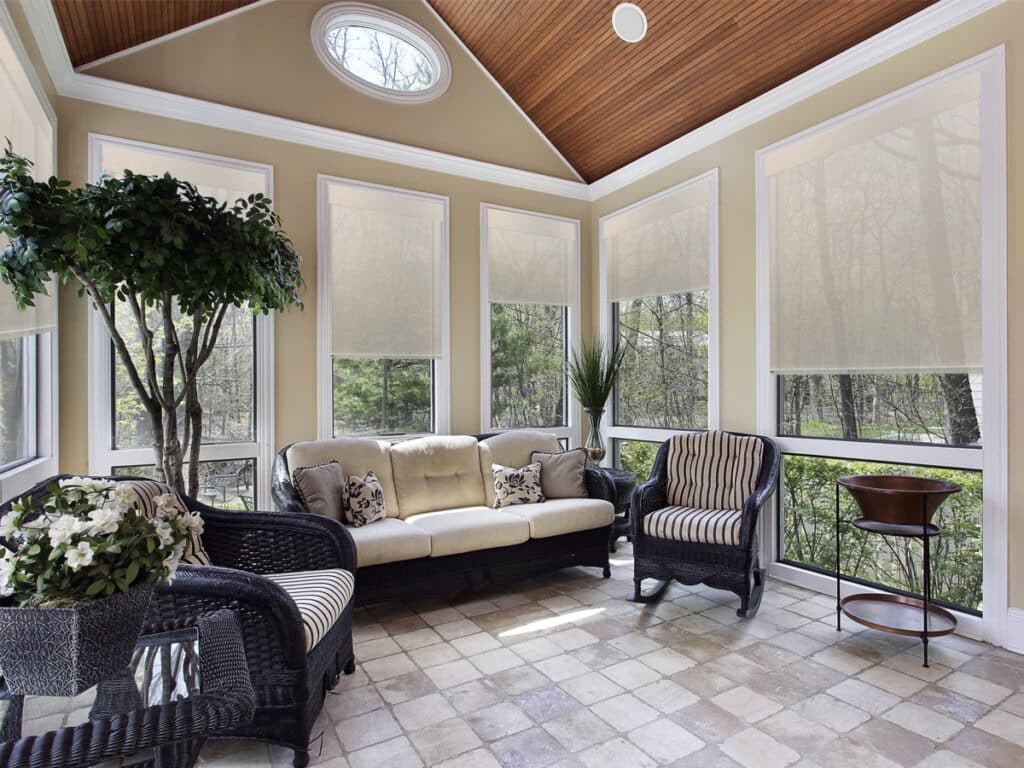
A sunroom can gain more solar energy than a typical living room because it has glass on multiple walls and often faces the brightest part of the yard. The result is not just a hot room. It is a monitor or television washed out by glare, uneven fading on the floor, and a sharp transition between a shaded seat and sunlit glass. Sunroom roller shades give you a precise way to control the opening without hiding the architecture.
World Wide Shades can design a consistent system for a three-season room, four-season room, or glass-heavy addition. Start with a room plan in the Custom Shade Builder and note each window's direction before selecting fabric.
Openness factor: the key solar-shade number
Solar roller shade fabric is often described by openness factor, the approximate percentage of open area in the weave. A 1% fabric has tiny openings and stronger glare reduction; 3% offers a tighter balance; 5% preserves more view and daylight; 10% feels open but generally admits more glare.
For many sunrooms, 1% to 5% openness is the practical range. Use 1% or 3% on a west-facing wall where late-day sun hits eyes and screens. Use 5% where the view is important and direct glare is less severe. Use separate openness factors by exposure rather than forcing every window to use one fabric.
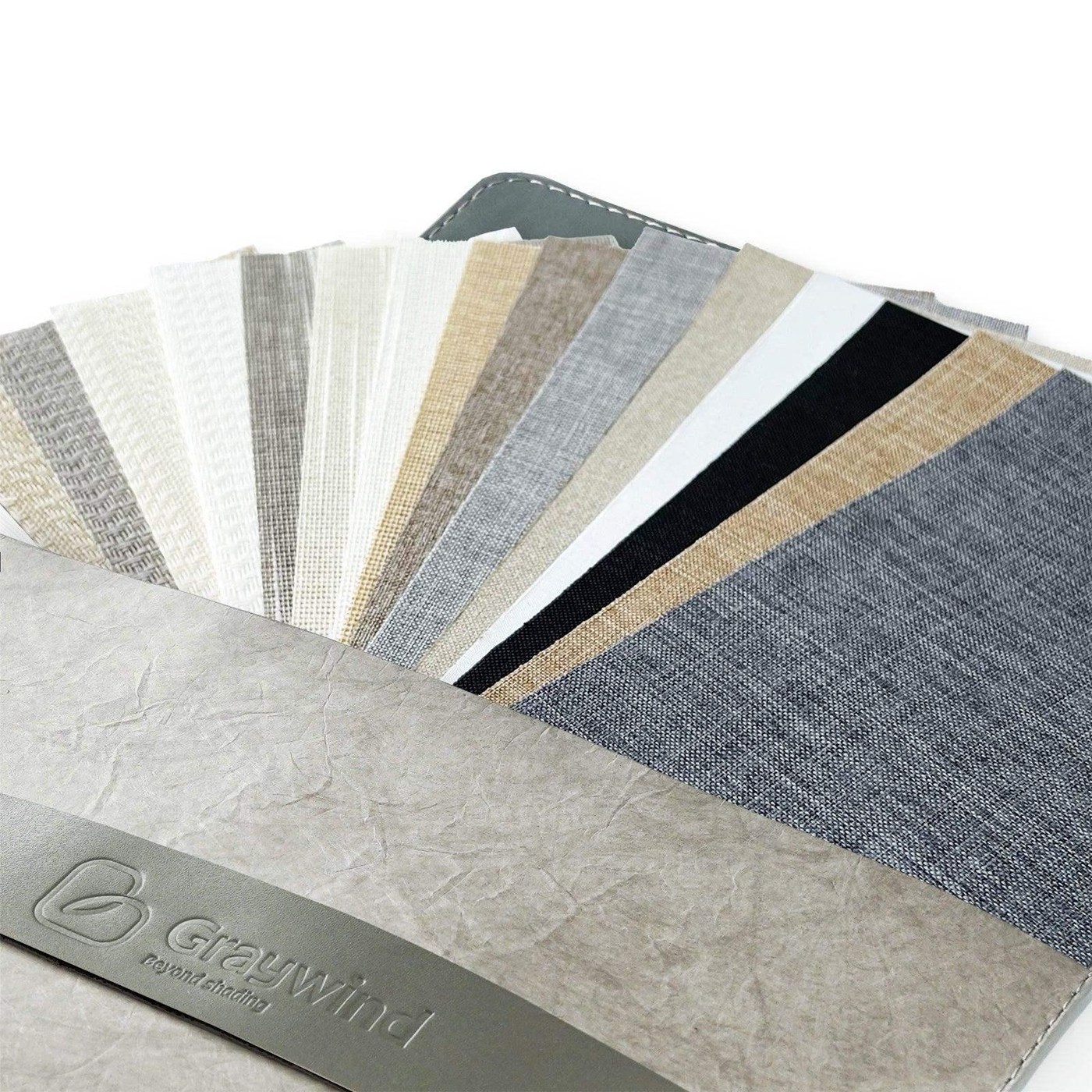
Order World Wide Shades swatches and hold them at the glass in morning and afternoon light. Then ask an expert to compare openness factors before you commit to a large multi-window order.
Heat control: what shades can and cannot do
Exterior shading, low-emissivity glass, air sealing, ventilation, and HVAC capacity all affect sunroom temperature. Interior shades can reduce direct radiation and make seats more comfortable, but they cannot erase the heat already absorbed by the glass and floor. For the most meaningful improvement, close the shades before the sun reaches the glass rather than waiting until the room is already hot.
Track the room for three sunny days. Record the temperature at the seating area at 2 p.m. with shades open and then with them closed. A measured change of 3 to 8 degrees Fahrenheit is possible in some rooms, but it varies widely with glazing, orientation, shade color, and ventilation. Treat that range as a planning example, not a guarantee.
For broader strategies, read energy-efficient window shades and best shades for south-facing windows. World Wide Shades can help you decide whether a fabric upgrade, a mounting change, or a ventilation fix deserves priority.
Daytime glare and evening privacy
A solar screen can preserve a daytime view while lowering contrast, but privacy reverses when the inside is brighter than the outside. At night, a lit sunroom may be visible through a 5% or 10% fabric. If the room is used after dark, pair the solar layer with a room-darkening roller shade, drapery, or another privacy layer.
A layered plan might use 3% solar shades on all-day windows and a secondary opaque layer on the wall facing neighbors. If you mainly use the sunroom for morning coffee, a light-filtering fabric may be enough. Compare material behavior in the light-filtering shades guide and UV protection window shades.
Build a day-to-night solution with World Wide Shades, or contact the team for help selecting coordinated fabrics.
Inside mount, outside mount, or side channels
Inside mount keeps the sightline clean when frames are deep and square. Outside mount adds overlap and can reduce bright strips at the sides, which is useful on a west-facing wall. In a sunroom, adjacent windows often have different trim depths, so measure each opening rather than assuming the grid is perfectly uniform.
If edge light is especially distracting, side channels can guide the shade and close some gaps. They are more visually present than a standard roller shade and require a clear, straight mounting surface. Use them when blackout or strong glare control matters more than a minimal hardware profile.
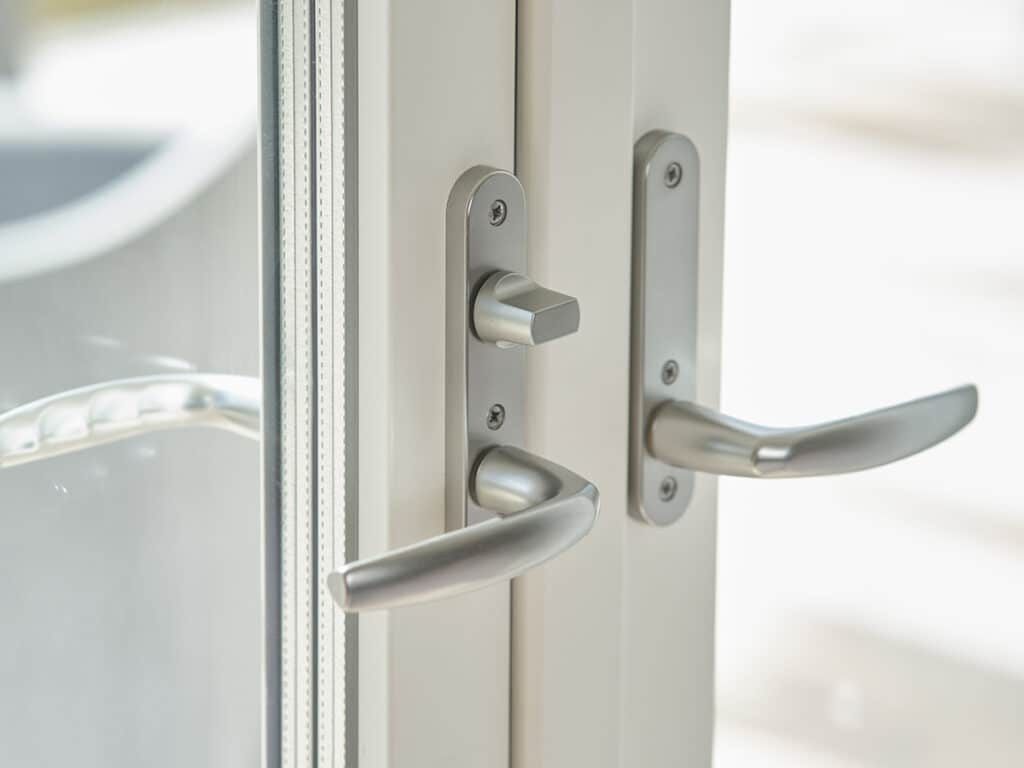
Leave room for handles, window cranks, screens, and doors. For installation details, see how to install roller shades. If your sunroom has a corner meeting point or a transom, send photos to World Wide Shades so the plan accounts for every obstruction.
Fabric color and view quality
The right color depends on whether you prioritize a bright interior or an easier view. Light-colored fabrics can reflect more daylight into the room and coordinate with pale floors. Darker screen fabrics often make the outside view feel more legible because they reduce the interior reflection at the eye, although the exact result depends on openness and lighting.
Use a neutral shade across multiple exposures, then vary openness where the sun demands it. Warm gray, natural beige, and soft white are flexible choices for a sunroom that connects to a kitchen or living room. Use the window shades color guide to compare undertones before ordering.
Motorization for tall and wide glass
A sunroom may have windows that are too high to reach or too wide for comfortable manual operation. Motorization lets you lower several shades together before peak sun, raise them for a view, and avoid pulling chains across a walkway. Rechargeable motors often run for months between charges, depending on size and use; hardwired power can be appropriate when the wiring is already accessible.
Group shades by exposure instead of opening every window at once. A west wall can close at 3 p.m. while a north wall stays open. If you want phone or voice control, compare smart-home motorized shades setup with motorized shades for Alexa and Google Home. Talk with World Wide Shades about battery access and control placement.
Cost planning for a glass-heavy room
A sunroom budget depends on the number of openings more than the room's square footage. Many custom manual or cordless roller shades are roughly $150 to $600 per opening, while motorization can add $200 to $500 per shade. Oversized shades, side channels, specialty solar fabric, and installation increase the total.
Start with the brightest wall and select one or two samples. If the result controls glare and keeps the view comfortable, extend the same fabric family to the remaining windows. Request an itemized quote from World Wide Shades so the price shows fabric, hardware, and installation separately.
A sunroom plan that works through the day
Choose openness by exposure, close shades before the room overheats, and plan for the way privacy changes after sunset. Use solar fabric where the view matters, an opaque layer where nighttime use requires it, and motorization when height or width makes daily adjustment difficult.
World Wide Shades can help you create a coordinated plan without treating every window as identical. Design your shades, order samples, or call (844) 674-2716 for help with a multi-wall layout.
For help grouping a tall bank of shades, contact World Wide Shades at (844) 674-2716.
Sunroom roller shade FAQ
A 1% to 5% solar screen is a common starting range. Use lower openness for stronger glare control and higher openness when preserving daylight and the view matters more. Exposure should guide the final choice.
They can reduce direct glare and improve comfort at the window, but the result depends on glass, ventilation, shade timing, and HVAC. Closing shades before peak sun usually works better than waiting for the room to heat up.
Yes. Solar screen fabrics are designed to reduce glare while maintaining daytime view-through. A 5% fabric generally feels more open than a 1% fabric, but order samples because lighting changes the perceived result.
Not reliably when the room is brighter than outside. Add a room-darkening or opaque layer if the sunroom is used after dark or faces neighbors.
Many custom manual or cordless shades fall around $150 to $600 per opening, while motorization may add $200 to $500. Exact pricing depends on dimensions, fabric, hardware, and installation.
Yes. Share a window map and photos through the contact page, or use the builder and swatches to begin a coordinated plan.