Arched windows are a highlight feature—until the sun hits at the wrong angle, privacy disappears at night, or the “almost fits” off-the-shelf shade makes the arch look awkward. The good news: you have several arched window shade solutions that can look truly custom, even when your arch isn’t a perfect half-circle.
In this guide, you’ll learn the most practical ways to cover arched windows (fixed and operable options), how measuring usually works, what materials and light-control levels make sense, and how to avoid the most common mistakes homeowners run into.
Throughout the process, remember you’re not alone. World Wide Shades helps homeowners plan specialty-window projects every day—from one statement arch to an entire home of mixed shapes. When you’re ready, you can start with our free online tools, request help, and get the exact look you want.
Why arched windows are harder to cover (and why “close enough” looks wrong)
Arches create three challenges that rectangles don’t:
- Curves magnify gaps. A small mismatch at the edge is far more visible on a curved line than on a straight one.
- Mounting depth is inconsistent. Many arched windows sit in deep trim, while others have shallow framing that limits inside-mount options.
- Light comes from higher angles. Even when the lower window has a shade, the arch can create strong glare patches that shift throughout the day.
That’s why the best arched window shade solutions start with a plan: decide whether you want the arch covered, partially covered, or left uncovered for architectural drama.
If you want a quick recommendation from a specialist, call World Wide Shades at (844) 674-2716 or reach out through our contact page.
The 7 best arched window shade solutions (with pros, cons, and best uses)
There isn’t one “best” product for every arch. The right choice depends on whether you need privacy, glare control, insulation, or a statement design.
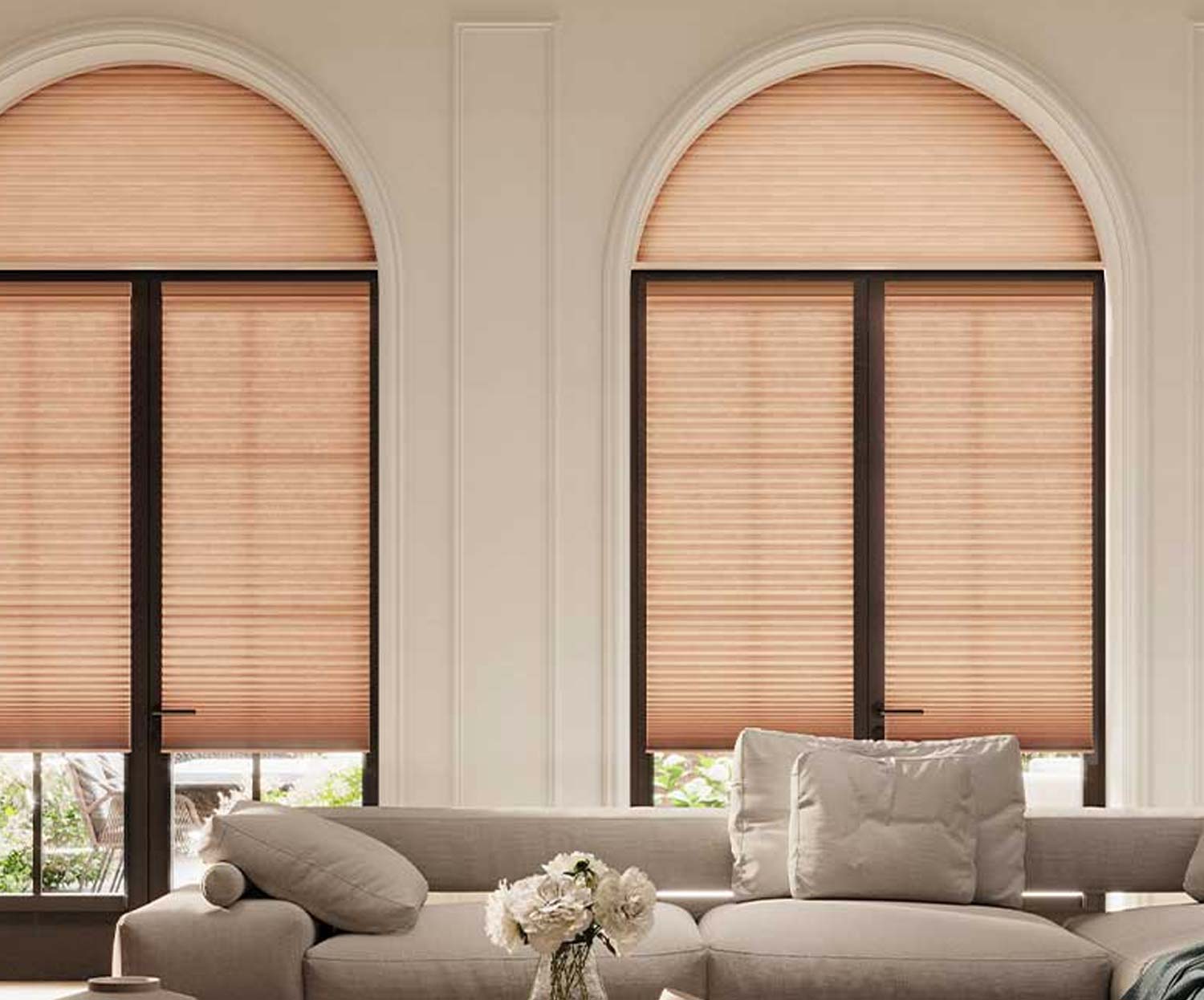
What they are: A shaped, stationary shade designed to match the arch. Typically cellular material, mounted inside the arch frame.
Why homeowners pick them:
- Looks like it was built with the window
- Excellent glare control for high sun
- Cellular styles can add noticeable insulation
Tradeoffs:
- Often non-operable (you don’t raise/lower it)
- Cleaning can require a soft brush or careful vacuuming
If you’re comparing insulation-focused styles, also read our guide to energy-efficient window shades.
Want help visualizing color and texture? Order samples from World Wide Shades on our swatches page and match the arch shade to the rest of the room.
What they are: A hard, framed solution custom-shaped to the arch, with louvers that can be fixed or adjustable.
Best for:
- Classic or transitional interiors
- Homeowners who want a “built-in” architectural feel
- Very high-end curb appeal and resale-friendly upgrades
Tradeoffs:
- Usually more expensive than fabric solutions
- Not the most minimal look
If you’re choosing finishes across multiple rooms, you’ll also like window shades color guide.
What it is: A deliberate design choice. You cover the standard window with a roller shade, Roman shade, or cellular shade—and keep the arch open.
Best for:
- Rooms where you want daylight and privacy lower down
- Homes with attractive landscaping where the arch frames the view
Tradeoffs:
- You may still have morning/afternoon glare from the arch
- Nighttime privacy at the arch stays open unless the room is set back
If you love this “top open” look but need more comfort in bedrooms, see best window shades for bedroom and light filtering shades guide.
You can price out a clean, modern lower-window solution in minutes with the World Wide Shades Shade Builder.
What it is: A Roman shade on the rectangular portion, plus a stationary arched fabric treatment (often a valance-like topper) that visually completes the window.
Best for:
- Soft, layered rooms (living rooms, dining rooms)
- Homeowners who prefer fabric texture over minimal lines
Tradeoffs:
- Stacking fabric can reduce the visible glass when raised
- Precise matching at the curve is crucial
If you’re deciding between Roman and roller approaches, compare styles in roller shades vs roman shades.
What it is: Instead of forcing a shade into the arch, you use a high-performance shade on the main window and address the arch glare with other elements (window film, interior design choices, or accepting some light).
Best for:
- Rooms with screens, TVs, or workspaces
- South- or west-facing rooms with strong glare
For sun management, also read UV protection window shades and best shades for south-facing windows.
If you want to compare sun-control products specifically, our post on solar shades vs roller shades breaks it down clearly.
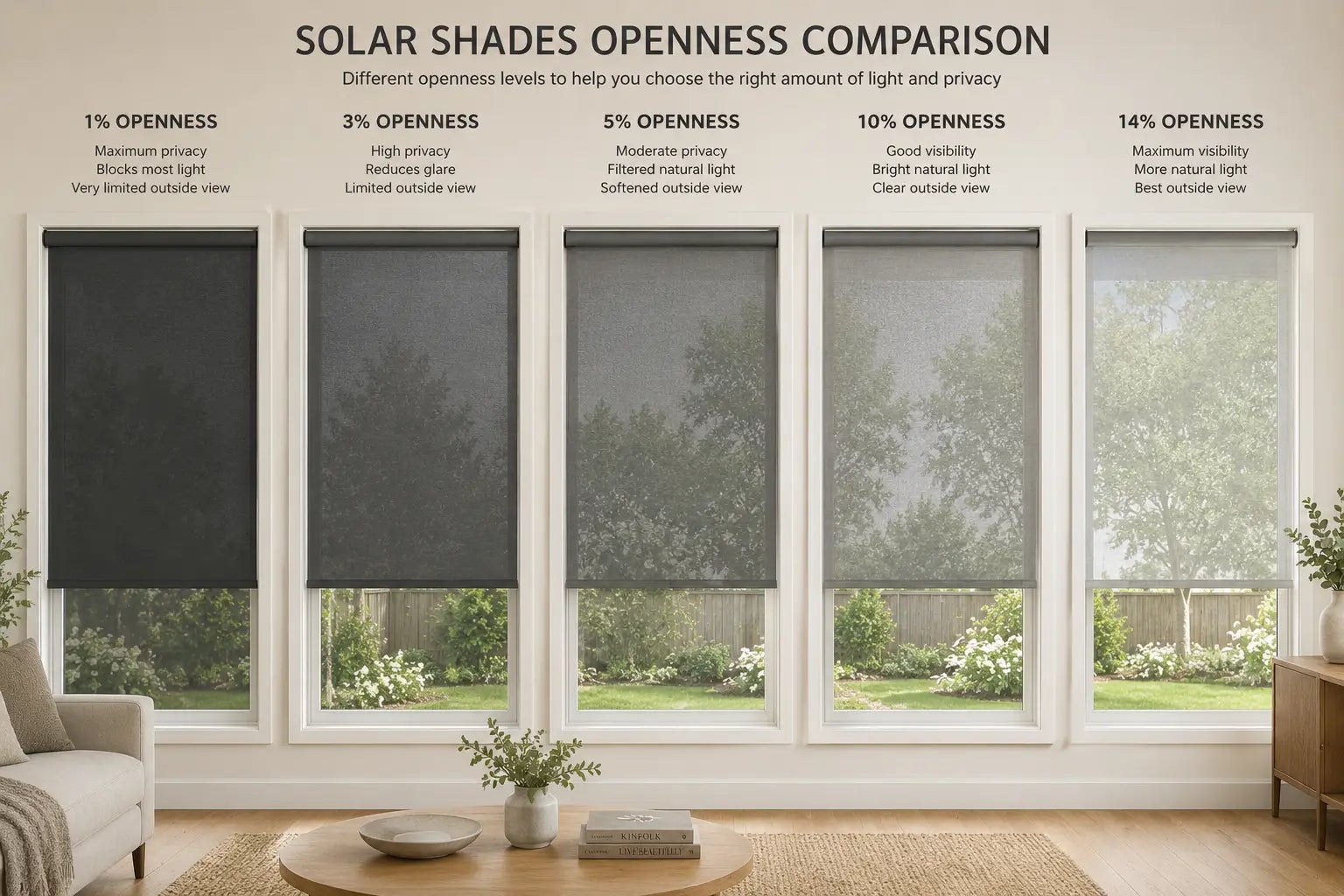
Start with a glare-friendly fabric and openness factor using World Wide Shades swatches.
What it is: Some arches are true half-circles (“perfect arches”), while others are elongated or eyebrow-shaped. Many manufacturers use different ordering methods depending on the geometry.
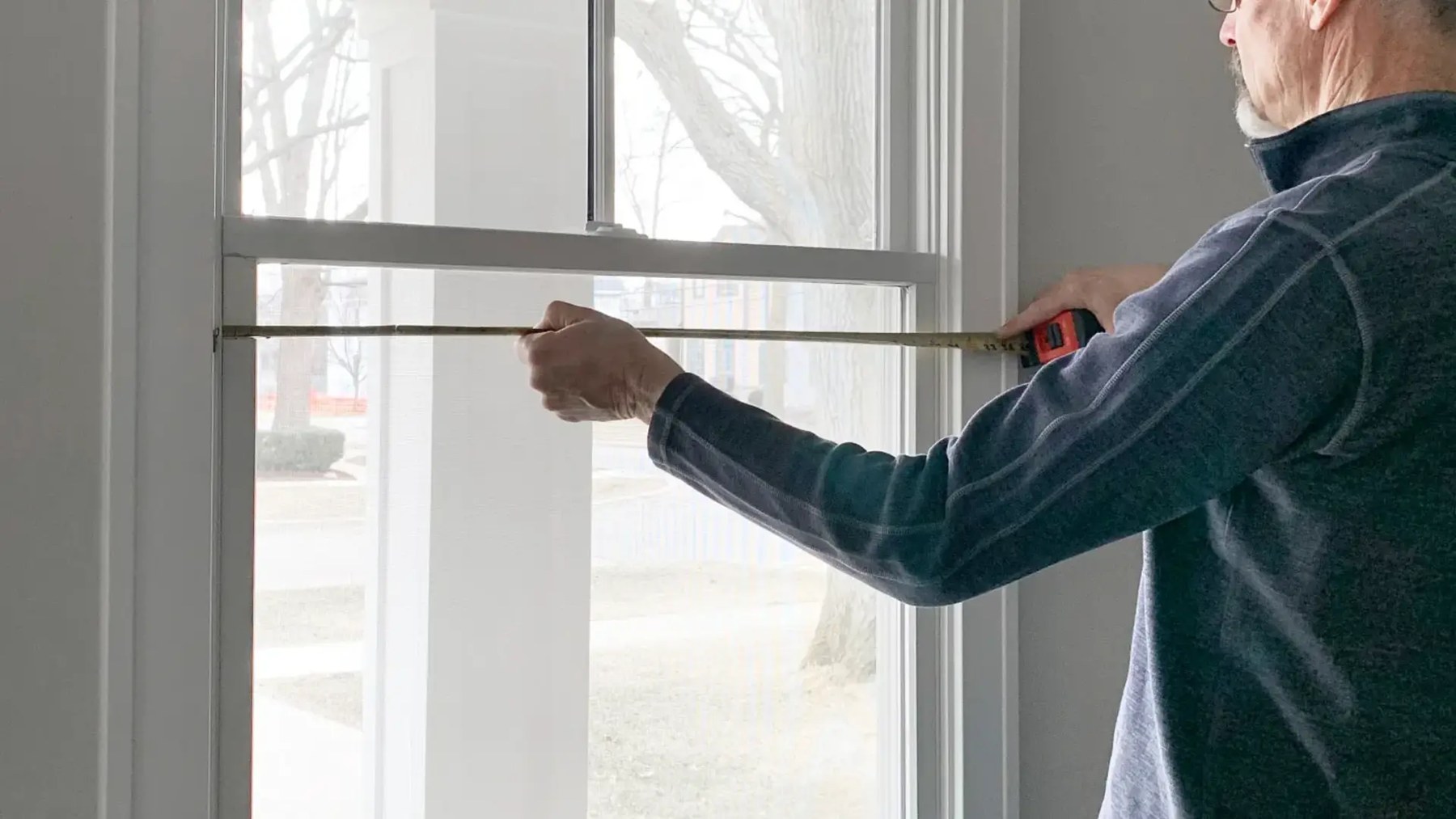
A common measuring approach for traditional arches is:
- Measure width at the bottom of the arch (left to right).
- Measure height from the midpoint up to the highest point of the arch.
Guides like those from American Blinds explain this width/height method and note that non-perfect arches may require a template.
Why it matters: A template-based order often produces the cleanest edge alignment—exactly what makes an arched window treatment look custom.
If you want help deciding whether your arch needs a template, contact World Wide Shades at (844) 674-2716 or use our contact form.
What it is: Combine a stationary arch solution (often cellular) with a motorized shade on the rectangle below.
Best for:
- High windows that are hard to reach
- Homes where daily light control matters
- Smart-home households
For smart-home planning, see smart home motorized shades setup and motorized shades Alexa Google Home.
You can build a motorized quote fast with the World Wide Shades Shade Builder.
How to measure an arched window for shades (the practical homeowner version)
Measuring arches doesn’t have to be intimidating, but it does require precision.
Common types include:
- Perfect half-circle
- Elongated arch (taller legs before the curve starts)
- Eyebrow arch (flatter curve)
- Quarter arch (one straight side + curve)
Why this matters: different arches may need extra measurements (like “leg height”) or even a physical template.
- Inside mount looks the most built-in, but needs enough depth.
- Outside mount can cover more glass and reduce light gaps, but changes the trim look.
- Split coverage (arch uncovered, shade below) is often the simplest.
If you’re weighing mount types generally, our inside mount vs outside mount shades guide is a must-read.
Many measuring guides for arches recommend:
- Width: left to right at the bottom of the arch.
- Height: from the centerline up to the highest point.
That approach is outlined in measuring instructions from Select Blinds and similar resources.
A template is usually the safest choice if:
- The arch is elongated or not symmetrical
- The trim is uneven
- You want a tight, finished edge with minimal gaps
World Wide Shades can walk you through the simplest way to confirm fit before you order. Call (844) 674-2716 or message us on /contact.
Design tips that make arched window shades look custom
Even a perfectly measured shade can look “off” if the design isn’t coordinated.
- In minimal rooms, choose smooth roller shades below and a clean cellular insert above.
- In traditional rooms, consider Roman fabric below and a shaped topper above.
If your lower window shade has a cassette or valance, coordinate the finish so the overall window reads as one unit. For ideas, see roller shade valance options.
If you expect small light gaps at the curve, a slightly darker or more textured fabric can visually “forgive” the edge more than bright white.
Order a set of room-matching samples through World Wide Shades on /swatches.
Common mistakes to avoid (these ruin the custom look)
Many arches look “round” but are slightly taller or flatter. That’s when a template or extra leg measurements make the difference.
A heavy, stacked fabric shade can overpower a delicate arch. If you want clean lines, stick to cellular or roller solutions.
Arches are often above eye level, so homeowners ignore them—until a neighbor’s second story can see in at night, or the sun creates a bright hotspot.
If you’re upgrading a room for sleep, combine an arch strategy with the right main shade. Start with best window shades for bedroom and best fabrics roller shades.
Cost expectations: what drives price for arched window coverings
Arched treatments vary widely, but pricing typically depends on:
- Size and complexity of the shape
- Whether it’s operable or stationary
- Material choice (cellular vs wood vs fabric)
- Whether a template is required
If you’re budgeting for a full-home project, our guide on how much do custom roller shades cost helps set expectations, even if you’re mixing product types.
To get a real number for your window sizes, build your project in the World Wide Shades Shade Builder.
FAQs about arched window shade solutions
Cover the arch if you need glare control, insulation, or privacy. Leave it uncovered if the view and architectural statement matter more and the sun isn’t a daily problem.
If you’re unsure, World Wide Shades can help you weigh both options—call (844) 674-2716 or use /contact.
A stationary cellular arch insert paired with a matching shade on the window below is one of the easiest ways to get a built-in look with strong performance.
Roller shades are typically best for the rectangular portion below the arch. For the curved section, homeowners usually choose a stationary insert, shutters, or a decorative topper.
A non-symmetrical arch is a strong sign you’ll need a template-based order. It’s the most reliable way to avoid visible gaps and crooked lines.
Keep fabric color consistent, coordinate valances/cassettes, and choose a top solution that matches the style of the room. Use sample swatches first so the arch doesn’t end up looking like an afterthought.
Get started with World Wide Shades samples at /swatches, then price the project in /builder.
Ready to make your arched windows look truly custom?
Arched windows deserve a solution that respects the architecture and solves the real problems: glare, privacy, and fit. Whether you want a subtle, modern insert or a bold built-in shutter look, the key is choosing the right approach for your arch type—and measuring carefully.
When you’re ready to plan your window, World Wide Shades can help you move from “not sure what fits” to a clean, custom-looking result.
- Build your shade options now with the World Wide Shades Shade Builder.
- Order matching samples from /swatches.
- Call (844) 674-2716 or message us at /contact for project help.