Give Curved Details Room to Breathe
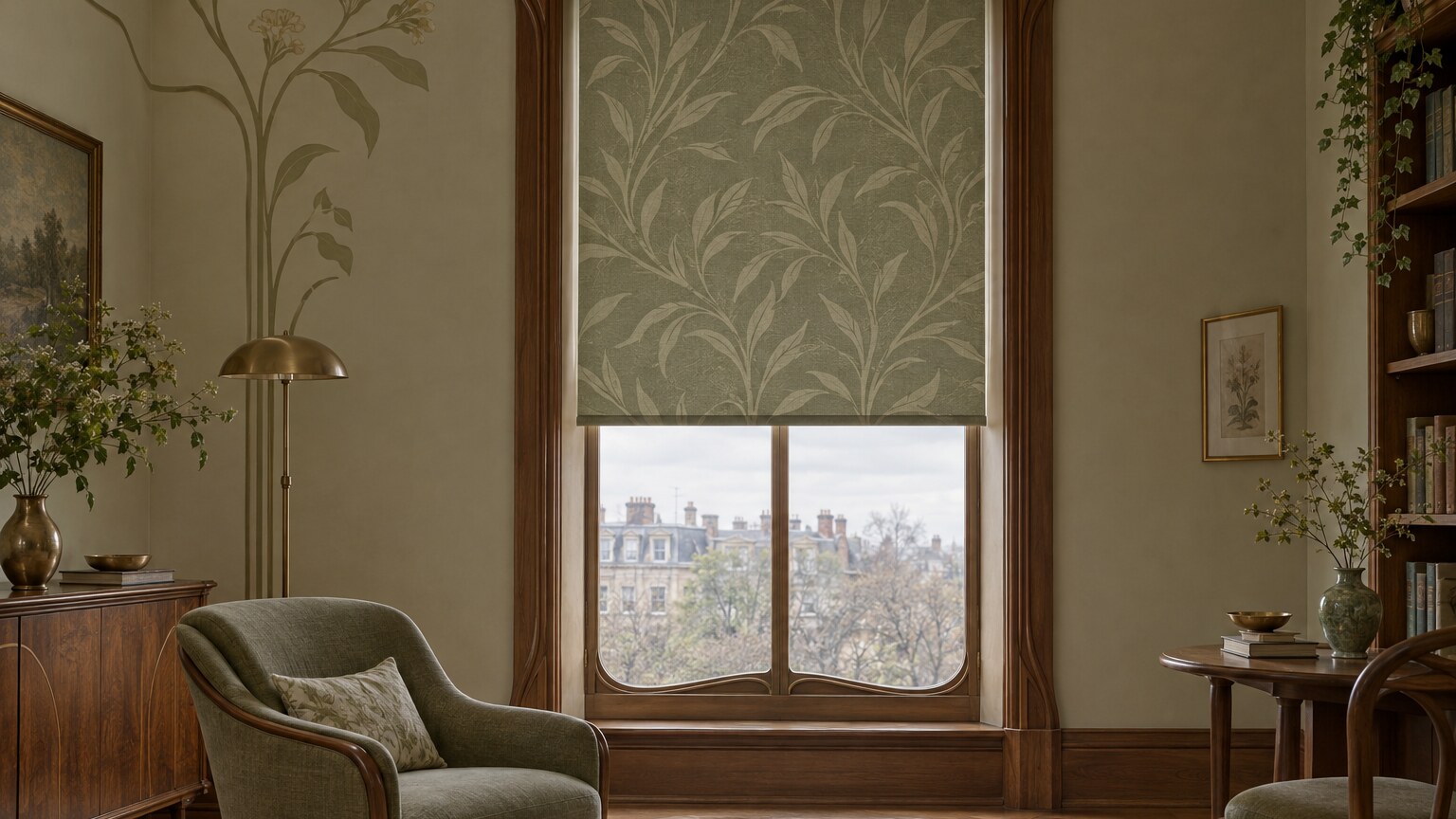
Art Nouveau roller shades work best when they support the room's decorative character rather than compete with every flourish. A curved chair back, branching light fixture, or botanical wallpaper already supplies movement. The shade can provide a quieter surface that makes those details easier to appreciate.
The historical reference is specific: the Metropolitan Museum of Art describes Art Nouveau's nature-derived sinuous lines and whiplash curves, rather than simply an abundance of floral decoration (The Met's Art Nouveau overview). For a present-day interior, translate that vocabulary through proportion, color, and thoughtful repetition instead of trying to reproduce an entire period room.
At World Wide Shades, approach the window as one element in that composition. Decide what deserves attention, what needs visual calm, and what the room requires from its light control before choosing a fabric.
Start your Art Nouveau-inspired shade configuration with World Wide Shades, using the room's strongest existing feature as your starting point. Keep the first version simple so you can judge its relationship to the architecture.
Choose One Main Source of Movement
A room can contain several curves without needing several competing patterns. Identify a primary feature: perhaps the scrolling arms of a sofa, the branches in wallpaper, or the shape of a stained-glass panel. Let the window treatment echo its mood rather than duplicate its outline.
The V&A describes the whiplash as an ornamental S-curve and shows its appearance across ironwork, textiles, glass, and other decorative objects (V&A's explanation of the whiplash). That shared vocabulary suggests a useful design approach: repeat the feeling of a line across different materials, not necessarily the same motif on every surface.
With carved casings or elaborate upper trim, start with a restrained shade fabric. A quiet ivory, muted green, or warm gray can leave the woodwork readable. Consider an inside-mount arrangement only if the available recess and chosen system allow it without interfering with handles or operation.
An outside mount may solve a coverage problem but can conceal part of the casing. Compare those consequences before choosing the cleaner-looking option in isolation. The most discreet installation is not automatically the one that serves the room best.
In a plain room with a curved sofa and botanical art, the shade has more freedom to contribute color or fine texture. A soft moss shade could connect foliage in the artwork with upholstery across the room. A pale neutral could instead keep attention on a sculptural chair.
Avoid adding a floral motif merely to make the reference obvious. A solid fabric can be the more convincing choice when its color and placement bring the room together.
Build a Palette From Existing Materials
Begin with what will remain: flooring, wood trim, stone, upholstery, and larger artworks. Choose one dominant neutral, one supporting color, and a small accent. This is a design framework, not a rule about which colors are historically correct.
For dark wood and warm metal, consider cream, softened olive, mushroom, or a muted blue-green. For pale walls and colorful glass, test a quieter neutral drawn from the glass's background rather than its brightest jewel tone. These combinations let the decorative elements stay distinct.
Look at undertones as carefully as color names. An ivory sample that appears balanced beside a walnut table may turn noticeably yellow against cool white trim. The window shades color guide offers a useful companion when narrowing a palette.
World Wide Shades samples should be assessed beside the actual finishes, not only beside a phone photograph. Hold the fabric vertically at the window, then move it near the furniture it needs to coordinate with.
Request swatches for your Art Nouveau roller shades before committing to a color. Compare a close match, a softer alternative, and a deliberate contrast so your decision has a clear basis.
Let Fabric Texture Supply the Subtle Detail
Texture can connect a flat roller shade to a room with carved, upholstered, or patterned surfaces. Look for a fabric whose visual texture is noticeable up close but does not create a second dominant pattern from across the room. Inspect individual samples rather than assuming all fabrics described as linen-like look alike.
If wallpaper has small, tightly packed botanical details, try a smoother shade. If the room consists mostly of plain painted walls and polished surfaces, a restrained woven appearance may add the missing softness. The goal is a useful difference in scale.
Compare fabrics with the shade area in mind. A tiny sample can make an obvious weave seem modest, while a large expanse may reveal more directional variation than expected. Ask about available sample sizes and product photographs if the surface character is central to your decision.
The guide to the best fabrics for roller shades can help frame those comparisons. Treat the decorative finish and the light-control specification as separate questions, even when one fabric needs to answer both.
Match Light Control to the Room's Routine
Art Nouveau-inspired styling does not remove ordinary needs for privacy, sleep, or a comfortable view of a screen. Write down when the room is occupied and what the window faces. Then choose the light-control category before settling on the final color.
For a living room, decide whether your priority is maintaining a bright atmosphere or reducing light more substantially. For a bedroom, consider whether the selected fabric and mounting arrangement will meet your darkness expectations. Do not assume a decorative fabric name tells you how much light the finished treatment will admit.
The distinction between fabric opacity and complete window coverage matters. Ask World Wide Shades about the chosen system's edge clearances and installation options rather than treating “blackout fabric” as a promise of a completely dark room.
For related considerations, read the light-filtering shades guide and the comparison of blackout curtains versus blackout shades. Use those discussions to separate your daytime preference from your nighttime requirement.
Discuss privacy and light control with World Wide Shades at (844) 674-2716 before finalizing an uncertain fabric choice. Describe the room's use and the lighting problem you want to solve, not just the decorative style.
Coordinate the Top Treatment Without Overbuilding It
The upper edge of the shade deserves attention because it sits near trim, curtain hardware, and the ceiling line. Decide whether the roller should be visually present or whether a compatible covering should make the mechanism less prominent. Confirm the options available for your particular configuration.
In a room with an ornate cornice, a simple treatment near the top of the window can prevent competing horizontal bands. In a room with sparse trim, a restrained valance or cassette may help the window feel finished. Neither choice needs an applied curve to belong beside curved furniture.
Match finishes to their neighbors rather than to every metal object in the room. A finish near a dark bronze curtain rod has a different visual task from one set against painted trim. If an exact match is unavailable, a quiet neutral may be preferable to a conspicuously close imitation.
Review the roller shade valance options before building layers around the window. Resolve the functional top treatment first, then decide whether the room still needs decorative framing.
Use Drapery as a Supporting Layer
If you want a softer outline, combine a simple shade with side panels whose folds introduce movement. Keep their role clear: decorative panels frame the opening, while operable panels need enough room and suitable hardware to move. Discuss clearance so neither layer obstructs the other.
With botanical wallpaper, plain drapery often creates a useful pause. With solid walls and understated shades, a larger-scale botanical textile may become the focal point. Avoid using unrelated small floral patterns on the shade, curtain, rug, and cushions just to reinforce the theme.
World Wide Shades can be part of a layered scheme without making the roller shade its most ornate feature. Let the straight lower edge provide contrast to flowing fabric, curved furniture, or climbing plant forms elsewhere in the room.
Explore a restrained roller shade foundation in the builder, then compare it with your planned curtain fabric. Make sure the combination works with the shade lowered as well as raised.
Apply the Look to Different Rooms
For a curved velvet sofa, carved cabinet, or prominent decorative lamp, choose the shade as a backdrop. Repeat one subdued upholstery or artwork color rather than introducing another saturated accent. The living room roller shade guide can help keep the room's daily use in view.
Place your sample where it will be visible behind the furniture, not flat on a table. A color relationship that looks appealing side by side may feel different when one surface is illuminated by the window.
Let bedding or wallpaper supply the main pattern, and give the shade a quieter role. If you prefer a rich shade color, simplify nearby textiles so the window reads as intentional rather than heavy. Consider the appearance of the entire lowered shade when making that choice.
Review the bedroom window shade guide alongside your preferred palette. A beautiful daytime composition is only successful if the nighttime setup also suits the person sleeping there.
An Art Nouveau influence does not require every room to follow the same vocabulary. Connect adjacent rooms through one fabric family or a related neutral, then let artwork and furnishings vary. If a renovation also involves glazing technology, compare smart glass versus motorized roller shades before deciding which approach belongs in the design.
Frequently Asked Questions
No. A solid shade can coordinate with curved furniture, botanical artwork, or decorative trim without repeating their patterns. Choose a print only when the window needs to be a focal point and the rest of the room leaves enough visual space for it.
Start with colors already present in your fixed finishes or largest furnishings. Try one quiet neutral and two related alternatives rather than assuming a particular green or gold is required. World Wide Shades swatches let you compare those directions in the room.
Yes, as a design choice, a simple contemporary treatment can serve as a restrained backdrop. Keep its proportions, finish, and placement considerate of the existing architecture. Avoid describing the shade itself as a historical reproduction unless that claim is supported for the specific product.
Not automatically. Balance how much trim would be covered against the coverage and installation requirements of the window. Ask for guidance on the actual opening and system rather than deciding from a styled photograph of a different room.
Limit literal motifs and give useful objects room to stand on their own. One expressive light fixture, a curved chair, and a well-chosen shade color can establish the relationship without filling every surface with vines. Leave some plain areas so the details remain legible.
Bring the Window Into the Composition
The strongest Art Nouveau roller shades are not necessarily the most decorative ones. They establish the right balance between flowing detail and visual rest while meeting the room's practical needs. Choose the focal point, test a small group of fabrics, and resolve the mounting and light-control questions together.
Contact World Wide Shades at (844) 674-2716 to discuss your window, palette, and preferred configuration. Bring photographs and sample references so the conversation can focus on the choices that matter in your room.