Roller shades vs window film: the short answer
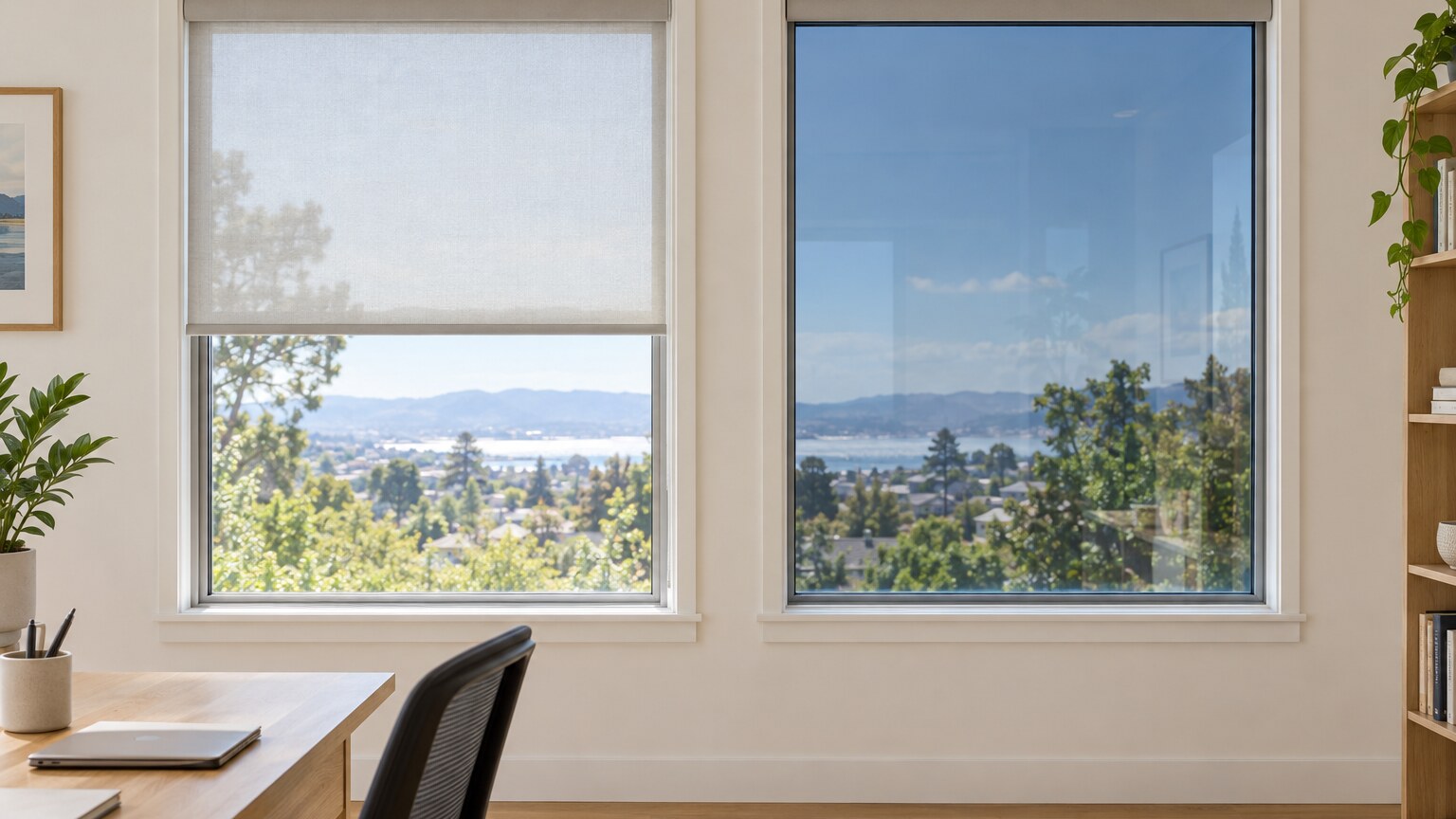
The choice between roller shades vs window film starts with a simple question: do you want adjustable coverage or solar control that stays on the glass? Operable shades let you change coverage as sunlight and privacy needs change, while solar-control film treats the glazing without requiring a fabric covering across your view (U.S. Department of Energy, 3M).
For a bedroom, flexible darkness and privacy may matter more than an uninterrupted view. For a sunny living room overlooking a garden, preserving that view may come first. Neither preference automatically settles which product will deliver better heat control; the specific fabric, film, glass, and installation matter.
World Wide Shades recommends defining the room's most frustrating problem before choosing a treatment. Is the afternoon sun uncomfortable, the television hard to see, or the room too exposed after dark? Those are different buying priorities, even when they involve the same window.
Start by exploring adjustable coverage in the World Wide Shades shade builder. Use your room's daily routine, not just its brightest moment, to guide the comparison.
What each treatment actually changes
A roller shade moves fabric across the window opening, so raising or lowering it changes which parts of the window remain exposed. The DOE identifies this ability to adjust window coverings as useful for balancing daylight, privacy, summer heat gain, and beneficial winter sunshine (U.S. Department of Energy).
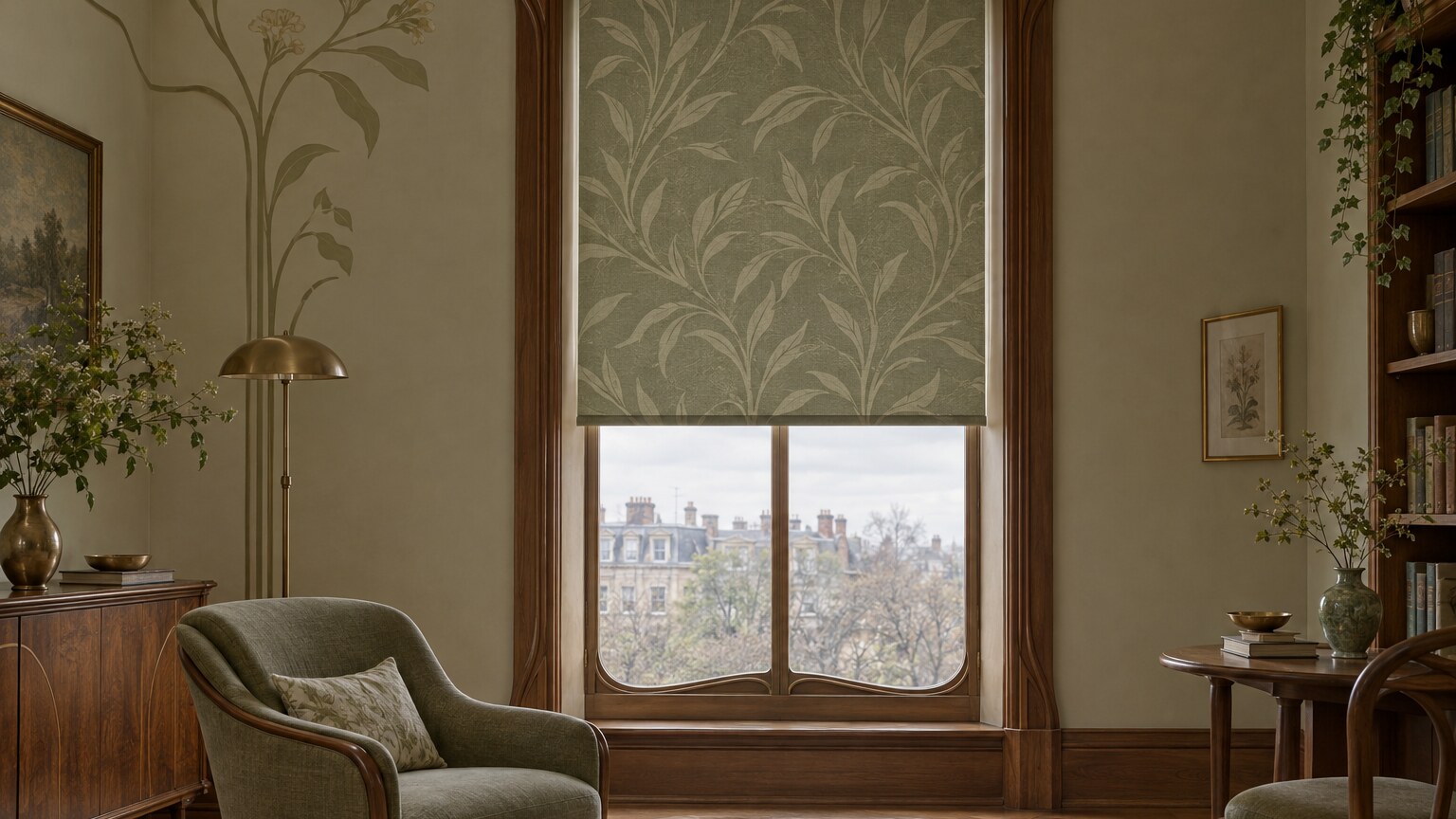
Think of fabric selection as a second decision after choosing the roller format. A view-through solar screen, a light-filtering fabric, and a blackout fabric should not be treated as interchangeable products. Our guides to roller-shade fabrics and light-filtering shades provide useful starting points for comparing those options.
Solar-control film is applied to glazing and is engineered to reduce solar heat transmission while retaining some visible light and outward visibility (3M). This article compares that product category with shades, not decorative privacy film or temporary insulating plastic.
Even within solar-control films, appearances and priorities differ. LLumar distinguishes reflective, neutral, ceramic, spectrally selective, and low-e products, rather than presenting all window film as the same treatment (LLumar). Ask for the actual proposed product, not a generic promise about “tint.”
How they compare in everyday use
Use this table to frame a purchase discussion, not to rank every shade above or below every film. The comparison describes adjustable coverings and solar-control films generally; individual product specifications still govern performance (U.S. Department of Energy, 3M).
| Consideration | Roller shades | Solar-control window film |
|---|---|---|
| Daily adjustment | Coverage changes when raised or lowered | Solar treatment remains on the glass |
| Daylight choice | Open the shade or choose a filtering fabric | Select the film's light transmission before installation |
| Outdoor view | Fully open coverage preserves an untreated view | View remains through treated glazing |
| Heat-control comparison | Evaluate fabric and installed coverage | Evaluate the specific film-and-glass combination |
| Seasonal flexibility | Open to admit useful winter sunshine | Consider whether continuous solar reduction suits the climate |
| Main buying question | Which fabric and coverage suit this room? | Which film is suitable for this glass and desired appearance? |
World Wide Shades suggests keeping your daylight preference separate from your heat-control goal. “I want less heat” does not necessarily mean “I want a darker room,” and “I want privacy” does not necessarily mean “I want reflective glass.”
If you are also considering switchable glazing, make that a separate comparison rather than treating it as ordinary solar film. Read our smart glass versus motorized roller shades guide to continue exploring the decision.
To compare the fabric side of that decision, request World Wide Shades swatches. Review the samples beside the room's existing finishes before narrowing your choices.
Which is better for heat control?
There is no responsible category-wide winner without specifying the products and window. The DOE notes that window attachments differ in their energy benefits and that greater solar-screen openness increases visibility and light transmission while reducing protection against glare and solar heat gain (U.S. Department of Energy).
That means a loosely woven, view-focused screen should not inherit the performance claims of a denser fabric. Likewise, a nearly clear film should not inherit the specifications of a darker reflective product. Ask each supplier for relevant product data and the conditions behind it rather than comparing the strongest advertising number from each category.
Reducing unwanted sunshine is not the same task as slowing heat flow through a window. The DOE distinguishes solar heat gain coefficient, which concerns admitted solar energy, from U-factor, which measures heat flow through glazing. SHGC is expressed on a 0-to-1 scale; a lower value means less solar heat is transmitted through the glazing assembly (DOE window-purchasing guidance). Use those glazing ratings to compare actual window systems, not as a substitute for the specifications of a shade fabric or window film.
If your main complaint is summer afternoon overheating, focus the discussion on solar control. If it is winter discomfort near the glass, ask about insulation and the condition of the window as well. Our energy-efficient window shades guide can help frame that broader conversation.
Avoid translating a product's solar-rejection percentage directly into an equal reduction in cooling bills. DOE research finds that climate and the balance between cooling benefits and lost winter solar heat influence overall energy results (DOE window-attachment study).
Which gives better daylight and glare control?
Shades offer a practical advantage when your preferred light level changes during the day: you can adjust coverage rather than live with one fixed treatment setting. The DOE recommends opening coverings on windows without direct sunlight to retain daylight while using coverage to limit unwanted summer solar gain elsewhere (U.S. Department of Energy).
Consider a home office used for video calls in the morning and detailed desk work later. You might value an adjustable shade that responds to those activities more than a treatment selected around one afternoon condition. Our commercial roller shades for offices guide offers related considerations for work-focused spaces.
Film deserves consideration when the goal is solar control without lowering a covering across the view. Manufacturers offer films with different visible-light characteristics, including spectrally selective options intended to limit light reduction while providing solar control (LLumar).
For a living room, ask yourself whether you prefer an untreated view when conditions allow or a continuously treated view without fabric in front of it. World Wide Shades encourages making that preference explicit before shopping by color alone.
If balancing a television, bright windows, and a view feels complicated, contact World Wide Shades or call (844) 674-2716. Describe when the room becomes uncomfortable and what you still want to see outside.
Privacy and darkness require their own decision
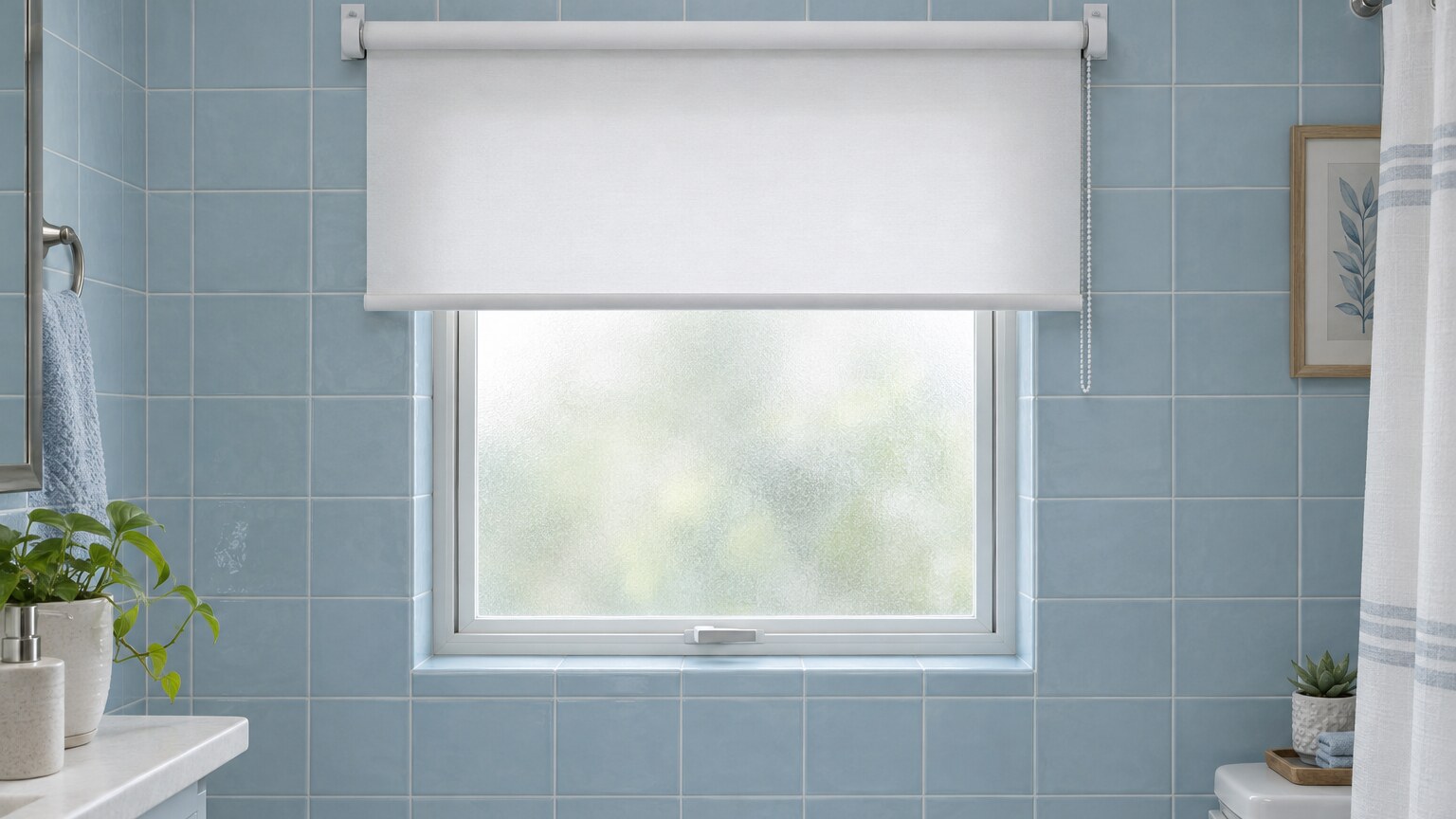
Do not assume that a heat-control product automatically solves every privacy concern. LLumar separates solar-control products from decorative privacy films, and its FAQ notes that films range from virtually clear to opaque (LLumar residential film overview, LLumar architectural film FAQ).
Ask a film installer to explain the proposed product's privacy under your actual daytime and nighttime lighting conditions. A daytime demonstration is not enough evidence for a bedroom decision after dark. If privacy is essential, request a clear description of what observers can see rather than accepting “privacy film” as a complete specification.
For a bedroom, make darkness a separate selection criterion instead of treating it as a side effect of heat reduction. Compare the fabric choice and installation approach with your sleep preferences in mind. Our guides to bedroom window shades and blackout curtains versus blackout shades can help organize those priorities.
World Wide Shades recommends deciding which concern is nonnegotiable first. You can then judge whether a single treatment meets that requirement or whether separate daytime and nighttime solutions make more sense.
Installation, compatibility, and long-term value
Film selection needs a glass-compatibility review, not just an appearance sample. For example, 3M's flat-glass warranty bulletin makes thermal-shock coverage conditional on recommended glass types and other requirements, so compatibility and warranty terms should be confirmed for the exact installation (3M warranty bulletin).
Before authorizing film, ask the installer to identify the glazing, explain the approved combination, and provide written warranty terms. Also ask the window manufacturer how the proposed application relates to its own warranty. Do not substitute a general statement about film safety for a review of your windows.
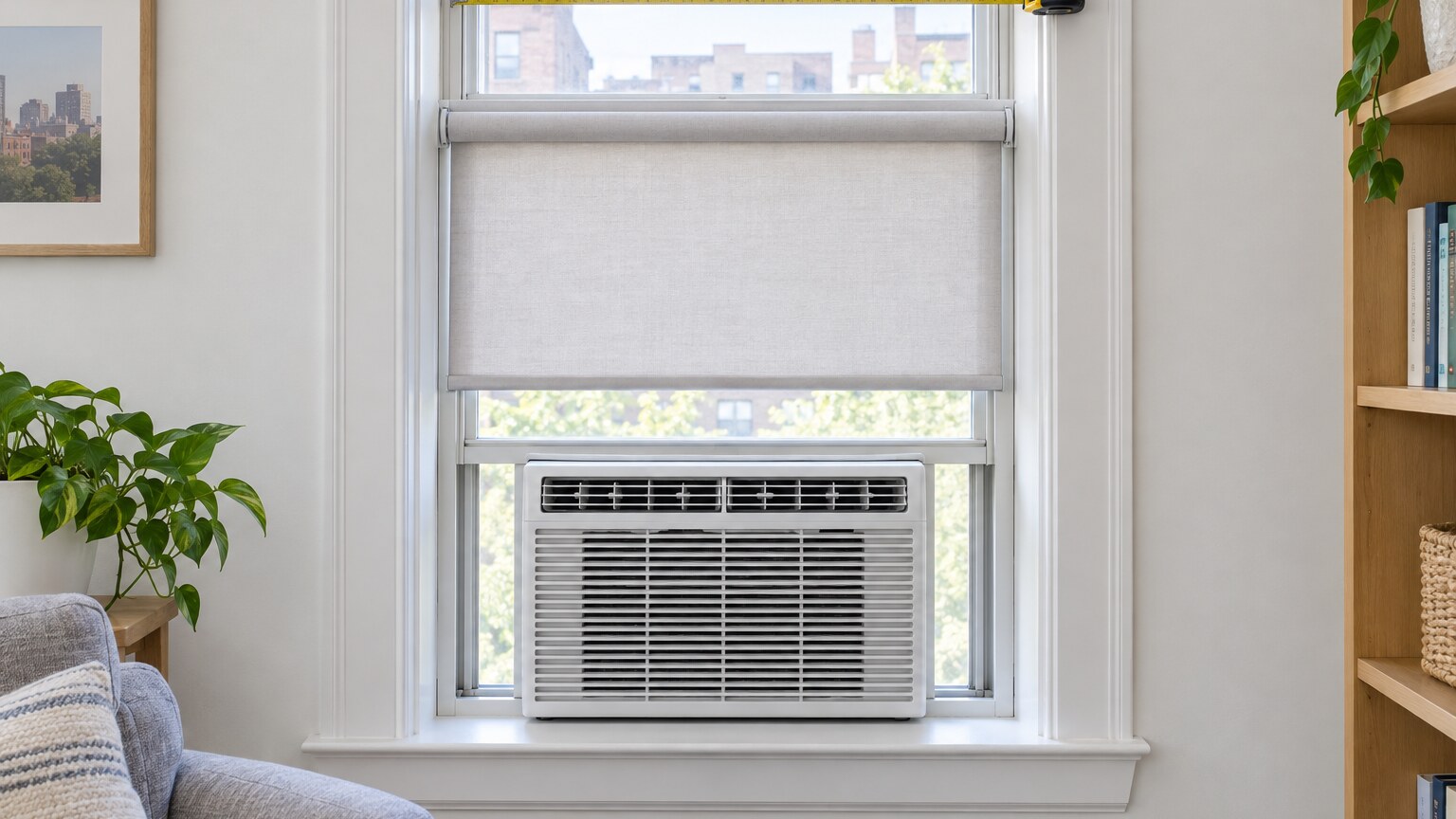
For shades, compare the proposed mounting approach, fabric, controls, and finish as one project. The roller-shade installation guide and custom roller-shade cost guide are useful preparation for that discussion.
Compare complete quotes rather than a film material price against a finished shade price. Clarify installation, removal of existing treatments, controls, and any additional work included in each proposal. World Wide Shades can be part of the shade-planning conversation without requiring you to dismiss a suitable film option.
When you are ready to explore that side of the project, build your roller shade configuration. Keep the film proposal nearby so you can compare complete solutions.
When combining shades and film makes sense
These treatments are not mutually exclusive: 3M explicitly notes that window film can be used with shades, blinds, or curtains (3M). A combined approach is worth discussing when you want continuous solar control plus adjustable coverage for changing activities.
Imagine a sunny living room where the view matters most during the day, but privacy matters most in the evening. Or consider a bedroom where heat is the daytime concern and darkness is the nighttime priority. These are good scenarios for comparing layered proposals rather than forcing one product to satisfy every goal.
A combination should still earn its cost. Ask what each layer adds, and avoid assuming their advertised performance percentages can simply be added together. World Wide Shades recommends a room-specific decision rather than automatically treating every window alike.
Frequently asked questions
No category-wide guarantee is justified without comparing specific products and conditions. The DOE describes different benefits for different attachments and shows that climate affects overall energy outcomes (DOE window-attachment study).
Some films are designed to preserve substantial daylight while reducing solar heat transmission. Ask for the proposed film's visible-light specifications and appearance sample rather than assuming every solar film will look dark (LLumar).
Window film can be paired with other treatments, including shades. Have the film installer confirm the proposed glass, film, and treatment arrangement before proceeding, because the film warranty includes application-specific conditions (3M, 3M warranty bulletin).
Do not treat UV protection as a promise that fading will stop. LLumar identifies ultraviolet radiation, infrared radiation, and visible light as contributors, so a UV-blocking claim addresses only part of the issue (LLumar architectural film FAQ).
Start with the room's priority: adjustable coverage, retained views, darkness, or continuous solar control. Then compare actual proposals against that priority instead of searching for one universal winner.
For help choosing the shade portion of your solution, contact World Wide Shades or call (844) 674-2716. Bring your questions about glare, privacy, and daylight so the conversation stays focused on how you use the room.