Why Tall Narrow Windows Need Different Shade Engineering
Tall narrow windows — sidelights next to front doors, stairwell windows, transom-style verticals, and narrow floor-to-ceiling panels — create a specific engineering challenge that standard-proportioned windows do not. A shade that is 18 inches wide and 84 inches tall behaves very differently on the roller tube than a shade that's 48 inches wide and 48 inches tall, even though both might use the same square footage of fabric. World Wide Shades custom-builds every roller shade to the exact width and drop measurement you provide, and for tall narrow openings specifically, that means paying close attention to fabric weight, tube diameter, and mount hardware in ways off-the-shelf shades often can't accommodate.
This guide covers what actually changes for tall narrow windows — fit tolerances, weight distribution, and how fast (or slow) a shade should deploy — so you order the right configuration the first time. If you're not sure how narrow windows compare with wider openings, our best roller shades for wide picture windows guide covers the opposite end of the spectrum. Ready to get exact measurements? Start with the World Wide Shades builder, which accepts custom width and drop down to the eighth of an inch.
Defining "Tall Narrow" for Shade Purposes
For the purposes of shade fabrication, World Wide Shades generally treats a window as "tall narrow" when the height-to-width ratio exceeds roughly 2.5:1 — for example, an 18-inch by 60-inch sidelight, a 24-inch by 72-inch stairwell window, or a 30-inch by 96-inch floor-to-ceiling panel. Below that ratio, standard roller shade hardware handles the proportions without special consideration. Above it, three factors change meaningfully: fabric tracking, tube deflection, and headrail mounting strength.
Fabric Tracking on Narrow Rollers
On a roller shade under 24 inches wide, even a small manufacturing tolerance or installation misalignment becomes visually obvious as the fabric edge drifts left or right during operation — a problem rarely noticeable on a 60-inch-wide shade where the same tolerance is proportionally tiny. World Wide Shades manufactures narrow shades (under 24 inches) with a tighter fabric-to-tube tolerance, typically within 1/16 inch, specifically to prevent this drift. We also recommend dual-side channel tracks for shades taller than 72 inches paired with widths under 24 inches, since the combination is the most prone to tracking issues without lateral guidance.
Standard roller shade brackets are designed for shades where the mounting points sit close to the fabric's center of gravity. On a tall narrow shade, the vertical drop creates more leverage on the bracket than a short wide shade of the same square footage. World Wide Shades reinforces bracket hardware on any shade taller than 84 inches regardless of width, and recommends inside mount with full bracket engagement rather than a shortened bracket, which is more prone to sag over time on tall drops.
Fabric Weight and Roller Tube Selection
Roller tube diameter needs to increase as drop length increases, because a longer length of fabric wound onto a thin tube creates a larger finished roll diameter, which can bind against the headrail or bracket at full-open position. World Wide Shades uses a 1.5-inch tube for drops up to 72 inches, stepping up to a 1.9-inch tube for drops between 72 and 108 inches, and a 2.5-inch heavy-duty tube above 108 inches. Tall narrow windows — which frequently exceed 84 inches in drop for stairwells or floor-to-ceiling installations — often need the 1.9-inch or 2.5-inch tube even though the shade is narrow, since tube sizing follows drop length and fabric weight rather than width alone.
- 1.5-inch tube: Rated for light to medium fabrics up to approximately 8 oz per square yard, suitable for most light filtering polyester and sheer fabrics.
- 1.9-inch tube: Rated for medium to heavy fabrics up to approximately 12 oz per square yard, covering most blackout and solar fabrics.
- 2.5-inch heavy-duty tube: Rated for the heaviest blackout and dual-shade fabric combinations, and required for most motorized tall narrow installations above 90 inches of drop.
Choosing a lighter fabric for a tall narrow window can actually work against you — very light fabric on a tall drop has less weight to keep it hanging straight and flat, making it more prone to billowing in drafty stairwells or near HVAC vents. For a full breakdown of fabric weights and use cases, see our best fabrics for roller shades guide.
Deploy Speed: Manual vs Motorized Considerations
On a tall narrow shade, a standard bead-chain loop needs to be long enough to reach a comfortable height for pulling — typically the chain length should be roughly 75% of the drop length. A 90-inch-tall shade with a chain only sized for a 60-inch shade will require excessive reaching, which becomes both an ergonomic issue and, in homes with children, a safety issue if the chain hangs too low. Our child-safe window treatments guide covers cordless and continuous-loop options appropriate for tall shades in homes with kids.
Motorized tall narrow shades take proportionally longer to fully cycle simply because there is more fabric to travel. A standard World Wide Shades Wi-Fi motor moves fabric at approximately 6 inches per second, meaning a 96-inch drop takes about 16 seconds for a full open-to-close cycle, compared to roughly 8 seconds for a 48-inch drop. If deploy speed matters for your use case — for example, a stairwell shade you want to close quickly for evening privacy — our heavy-duty motor option increases speed to approximately 8 inches per second, cutting a 96-inch cycle down to about 12 seconds. This is a detail worth discussing directly; call World Wide Shades at (844) 674-2716 to confirm which motor tier fits your specific drop length and use case.
Because tall narrow shades often require the 1.9-inch or 2.5-inch tube for weight reasons, motor torque needs to scale accordingly. Standard motors rated for lighter shades can strain or stall on a heavy blackout fabric at a 100-inch drop. World Wide Shades automatically matches motor torque rating to your specified fabric and drop length within the online builder, so this is handled during configuration rather than left for you to calculate manually.
Mount Style Recommendations for Tall Narrow Windows
Inside mount is generally preferred for tall narrow windows when the window frame depth allows at least 2.5 inches of clearance, since it presents a cleaner finished look on a proportion that already draws the eye vertically. Outside mount becomes necessary when frame depth is insufficient, or when you want the shade to extend slightly beyond the window opening to minimize light gaps along the narrow edges — light leakage along the sides is proportionally more noticeable on a narrow shade than a wide one, since the side gap represents a larger percentage of total width. For rooms where light gaps matter most, such as bedrooms, see our best window shades for bedrooms guide, and for full-block requirements, our blackout curtains vs blackout shades comparison explains which option minimizes side-channel light leakage most effectively.
Valance and Finish Options
A tall narrow shade's headrail is highly visible at the top of a proportionally small width, so valance choice matters more here than on a wide window where the headrail is a smaller fraction of the total visual area. World Wide Shades offers fabric-wrapped, closed, and low-profile valance options; the low-profile option is generally recommended for narrow sidelights and transom windows since it minimizes the visual weight at the top of an already vertically emphasized opening. Our roller shade valance options guide covers all available styles with photos and measurements.
Common Tall Narrow Window Applications
Sidelights next to entry doors, stairwell windows, and narrow bathroom windows are the three most common tall narrow applications World Wide Shades fabricates. For bathroom-specific humidity concerns on a narrow window, see our roller shades for kitchen and bathroom guide. For new builds with sidelights and stairwell windows planned from the start, our custom shades for new construction article covers coordinating multiple tall narrow openings with consistent fabric and hardware across a project.
Ordering Process for Tall Narrow Windows
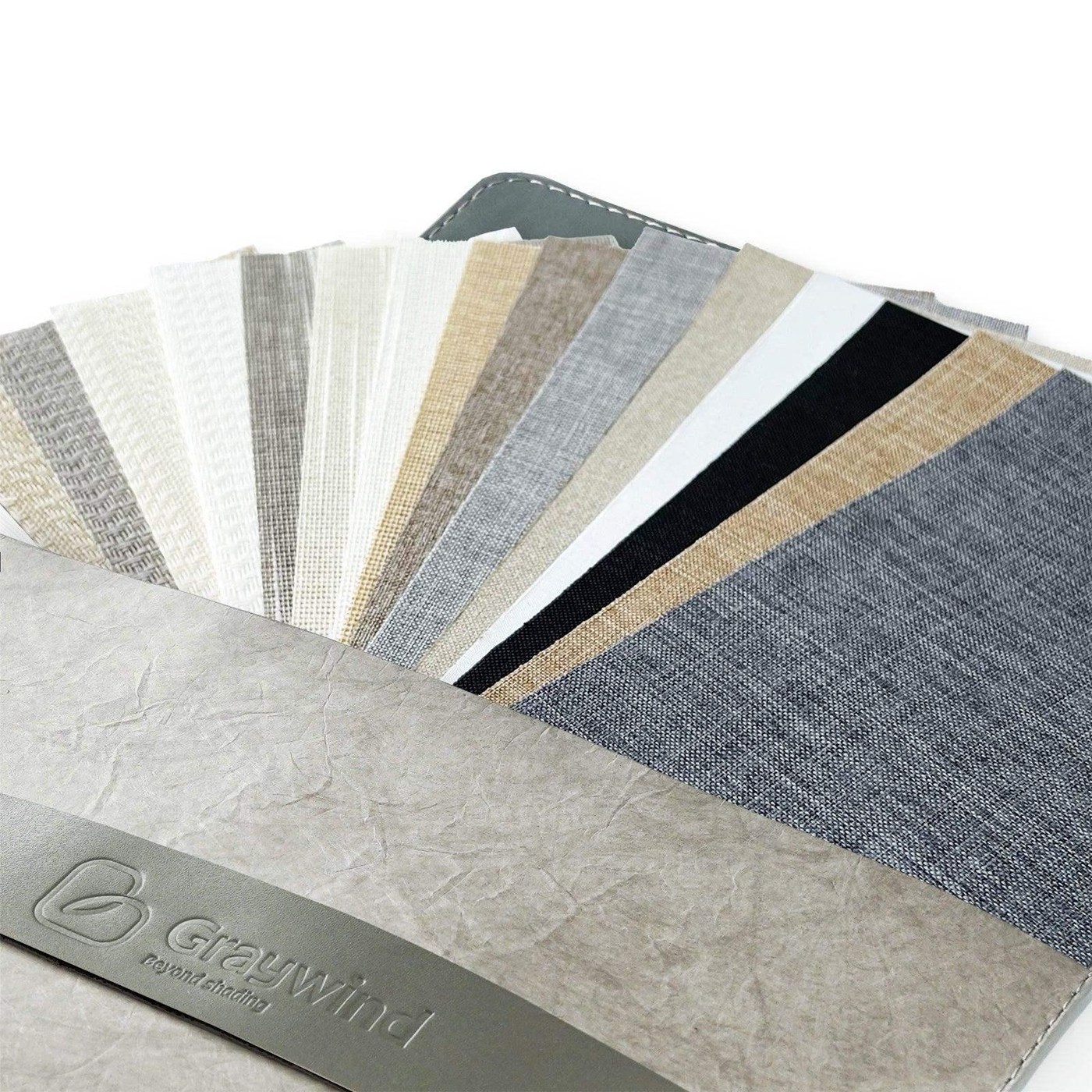
Measuring a tall narrow window accurately matters more than usual, since small percentage errors compound over a long drop. Measure width at three points (top, middle, bottom) and use the narrowest measurement for inside mount; measure drop at both sides and use the longer measurement to ensure full coverage. Enter these measurements directly into the World Wide Shades builder, which will automatically recommend tube diameter and motor torque based on your inputs. If you're uncertain about a specific measurement, request free fabric swatches along with a measurement consultation by calling (844) 674-2716 — our team fields tall narrow window questions daily and can help you avoid the tube-diameter and weight mismatches described above.
Frequently Asked Questions
World Wide Shades can fabricate roller shades as narrow as 8 inches wide, common for sidelights and small transom windows, using the same tight 1/16-inch fabric tolerance described earlier in this guide.
Pricing is based on square footage plus any tube or motor upgrades required for weight and length, so a tall narrow shade often costs less than a similarly-square-footage wide shade because narrow widths use less total fabric. Get an exact price through the World Wide Shades builder.
Yes, though very narrow motorized shades (under 12 inches) sometimes have limited motor options due to housing width. Call World Wide Shades at (844) 674-2716 to confirm motor availability for your exact width before ordering.
A heavier fabric (10 oz per square yard or above) combined with side channels significantly reduces movement from door drafts. This is one of the most common questions World Wide Shades support handles for entryway sidelight installations.
Some light leakage along the side edges is normal for inside-mounted shades on any width, but it is proportionally more visible on narrow shades. Side channel tracks or an outside mount largely eliminate this, as discussed in our blackout curtains vs blackout shades guide.
Generally, drops above 108 inches require the 2.5-inch heavy-duty tube regardless of width, and drops between 84 and 108 inches often need it as well if paired with a heavier blackout or dual-shade fabric.
Get Exact Measurements for Your Tall Narrow Windows
World Wide Shades fabricates every roller shade to your exact width and drop, with tube diameter and motor torque automatically matched to your specifications through the online builder. Request free fabric swatches to test weight and opacity before you order, or call our measurement specialists at (844) 674-2716 if you want a second opinion on a tricky sidelight or stairwell window before finalizing your order. You can also send photos of your windows through our contact page for a faster, more personalized recommendation.