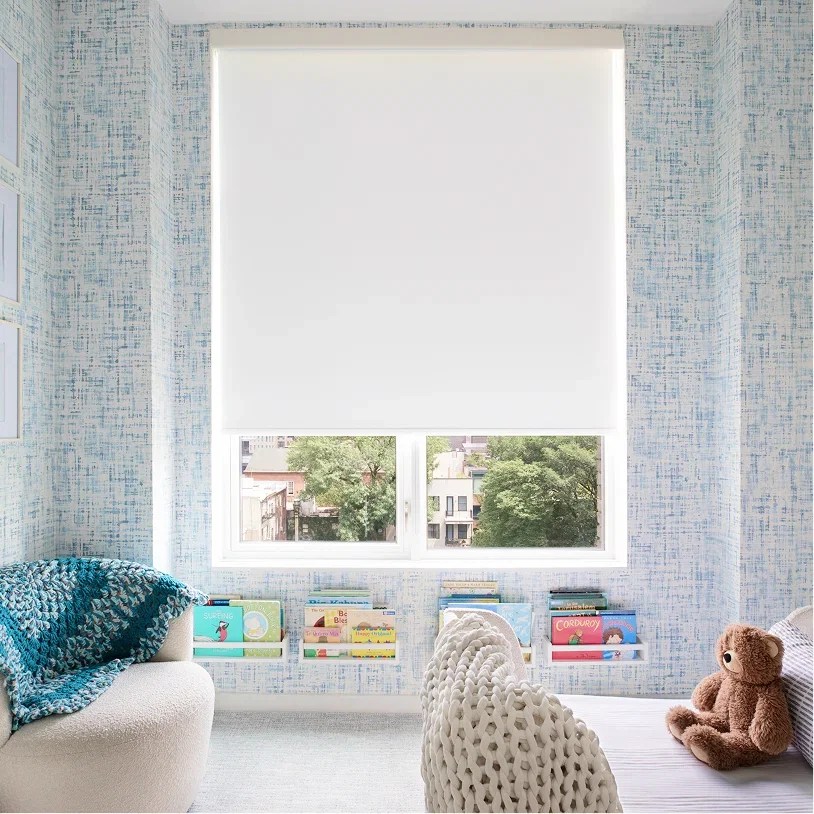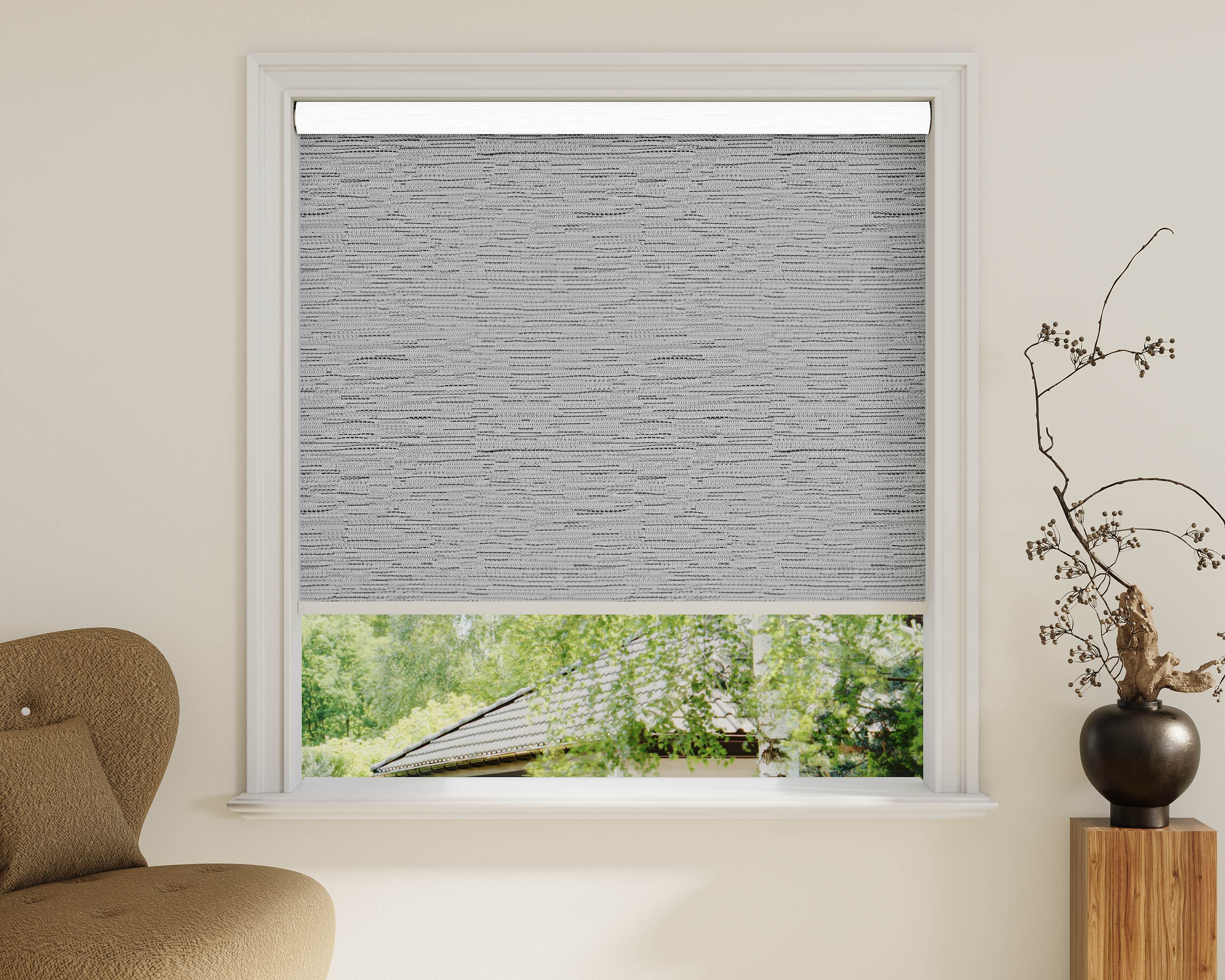
Contemporary interiors look intentional because each line has a job. Contemporary roller shades with clean lines can support that discipline by controlling glare and privacy without adding visual noise. The best configuration is not simply the flattest fabric; it is a coordinated choice of opacity, mount, cassette, hem bar, color, and control.
World Wide Shades helps homeowners build a modern shade plan around the architecture instead of choosing a separate treatment for every window. Compare configurations in the World Wide Shades builder, order World Wide Shades swatches, or contact World Wide Shades for help with a full-height wall. Call (844) 674-2716 when the shade must align across several openings.
Define what “clean lines” means in the room
Clean lines usually come from repetition: consistent head heights, quiet colors, straight side edges, and hardware that does not compete with cabinetry or art. Start by photographing the room from the doorway and noting the lines you want to preserve. A wall of three windows may look calmer with equal shade drops, even if one window gets more afternoon sun.
Contemporary does not mean every shade must be white or motorized. A warm gray solar screen can make a bright room more comfortable. A textured ivory roller can soften concrete and black metal. A charcoal cassette can disappear into a dark frame. World Wide Shades can coordinate the finish across rooms while specifying different opacity levels where the sun requires it. Map each opening in the builder before selecting the fabric.
For a related palette exercise, see the window shades color guide and window shade trends for 2026.
Choose the fabric before the accessories
Solar screen fabric is woven with an openness factor such as 1%, 3%, or 5%. The number describes the approximate open area of the weave, not a complete privacy or heat rating. A 5% screen preserves more daylight and view. A 3% screen is a balanced choice for a home office or living room. A 1% screen filters more glare when a west-facing window reflects on a display.
Screens are especially useful in contemporary rooms with large glass, pale floors, or glossy surfaces that reveal every reflection. They soften the relationship between bright outdoors and a darker interior while keeping the shade visually thin. Read best fabrics for roller shades before comparing weave, openness, and backing.
Light-filtering fabric turns direct rays into a softer glow. It works when the room needs daylight for most of the day but the furniture or screen is uncomfortable near the glass. Pale fabrics keep a space bright; medium neutrals reduce contrast more strongly. Test samples at 9 a.m., noon, and 5 p.m. because the same fabric can feel entirely different as the sun moves.
Room-darkening and blackout options make sense for bedrooms, media rooms, and street-facing windows. Blackout blocks light through the cloth, but a small perimeter gap may remain. An outside mount, cassette, or side channel can produce a cleaner dark-room result than a darker fabric alone. The blackout curtains versus blackout shades comparison can help when you are deciding between a streamlined roller and drapery.
World Wide Shades can combine solar or light-filtering fabric in common areas with blackout in bedrooms. Ask for a room-by-room fabric plan instead of making every window solve the same problem.
Use color as architecture, not decoration
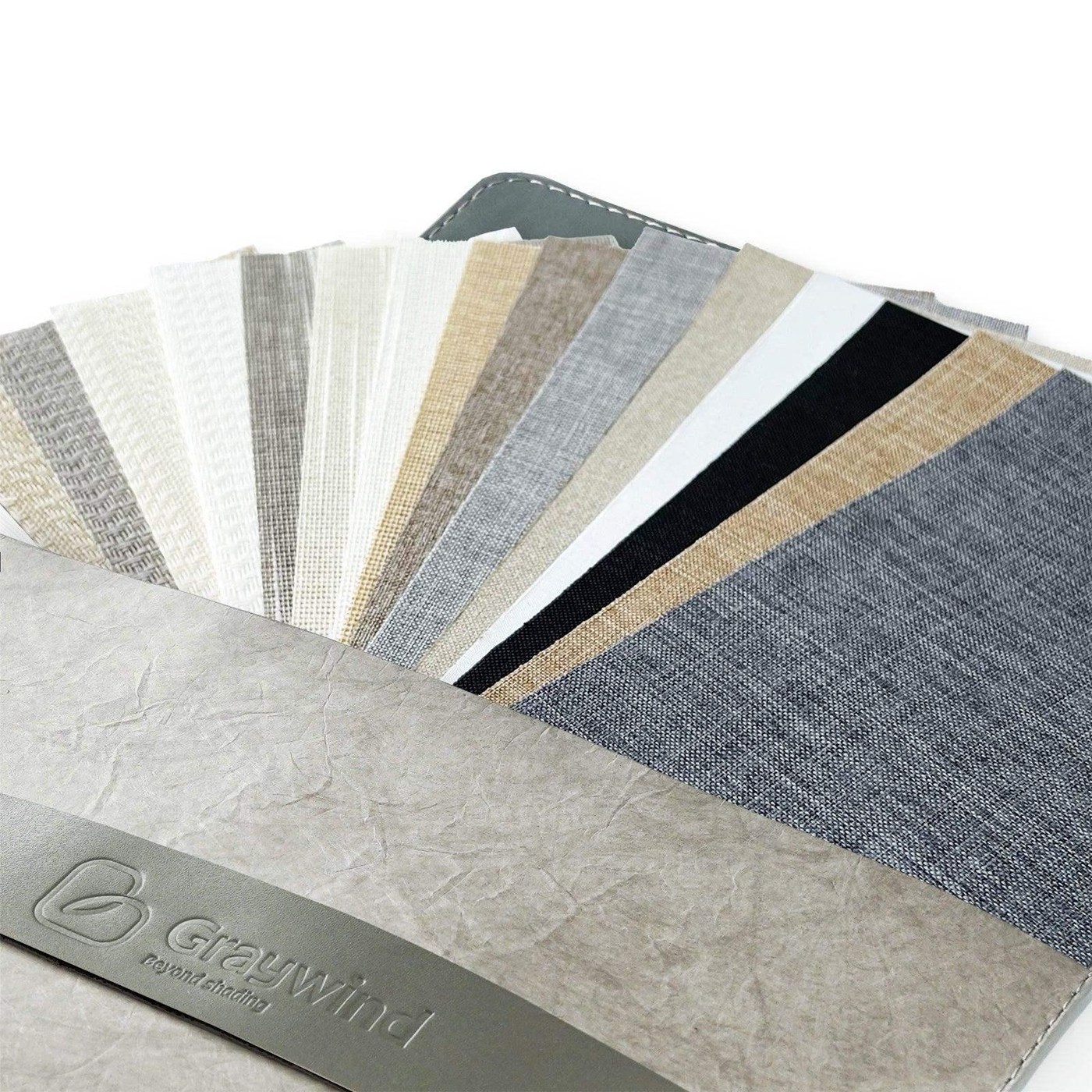
A contemporary shade should relate to the window frame, wall, floor, or furniture. Use a three-step test: view the swatch beside the trim in daylight, beside the floor in shadow, and against the wall with the room lights on. Warm white works with oak and beige stone; cool gray supports concrete and stainless steel; charcoal makes a window wall feel graphic; a muted taupe bridges warm and cool materials.
Color affects perceived brightness, but fabric construction and openness matter more than picking the darkest chip. A dark solar screen may reduce visual glare around a monitor, while a light screen may maintain a brighter room. A coated blackout fabric can look smooth and architectural even when its face color is pale.
Order World Wide Shades swatches before ordering several windows. The small sample can reveal undertones that a screen image hides. World Wide Shades can also help coordinate a hem bar in white, black, silver, or a matching finish.
Select a cassette and hem bar
An exposed roll has a simple, honest profile and can suit an industrial or minimalist space. A cassette encloses the roll and brackets, producing a more finished horizontal line. Use a cassette when the shade is highly visible from the entry, sits above built-ins, or needs additional protection from dust.
The bottom bar should hang straight and repeat across a group. A fabric-wrapped bar feels quiet; a metal bar can align with cabinet pulls or window frames. Avoid adding a contrasting stripe merely to make the shade look “custom.” In contemporary design, precision often comes from matching rather than ornament.
A valance can still be useful when it hides hardware, but it needs to be proportionate. Compare roller shade valance options if a recessed pocket or exposed tube is part of the plan. Use the builder to see whether a cassette changes the head height or fabric drop.
Make the mount line up with the architecture
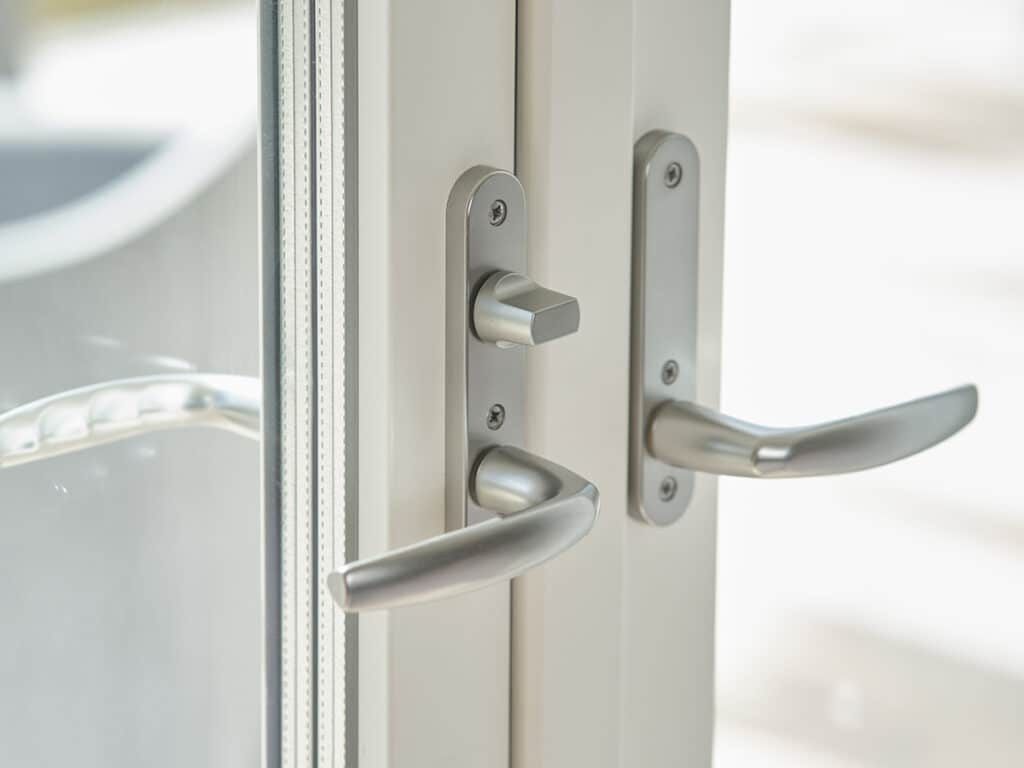
Inside mount keeps the shade within the recess and preserves trim. Measure width at the top, middle, and bottom; use the manufacturer’s specified deduction rather than guessing. Check recess depth, window handles, cranks, screens, and any trim that projects into the roll.
Outside mount is often cleaner on a shallow or uneven opening because it lets the shade cover the frame. A common planning range is 2 to 3 inches of overlap on each side, but the cassette, wall, and desired light gap determine the final dimension. For a full-height group, align the outside-mount headrails so the tops read as one continuous line.
If the windows are adjacent to doors, leave operating clearance for handles. The guide to roller shades for French doors shows why a slim unit and careful split point matter. World Wide Shades can check clearance before fabrication. Send your opening details through the contact page for a fit review.
Add motorization without adding clutter
Motorization supports the contemporary goal of simple operation. One command can lower a bank of shades to a consistent height; a schedule can reduce late-afternoon glare without leaving a remote on a coffee table. Rechargeable motors work well in completed interiors. Hardwired motors suit new construction or a remodel with accessible wiring.
Specify the control hierarchy before ordering. A physical remote is a dependable fallback. App control is convenient for scenes. Smart-home integration can connect shades to occupancy, time, or daylight routines, but it should not make basic operation impossible. Review smart-home motorized shades setup and motorized shades with Alexa or Google Home.
World Wide Shades can keep the hardware consistent while giving each room a different schedule. Discuss motorization with World Wide Shades if the opening is tall, wide, or difficult to reach.
Budget for the details that stay visible
A small manual custom roller shade may fall around $175 to $400 as a planning range. A larger solar or blackout shade with a cassette may run about $350 to $850. Motorization often adds approximately $250 to $600 per shade. Dual layers, side channels, specialty finishes, and split units increase cost.
The most visible upgrade is not always the most expensive one. A correctly aligned outside mount can improve a wall more than a premium fabric that stops at different heights. The custom roller shades cost guide explains the variables. Build a realistic configuration with World Wide Shades, then request a quote based on actual dimensions.
Maintain the minimalist appearance
Dust with a soft brush or a low-suction vacuum every few weeks. Spot-clean as the fabric care instructions permit and avoid saturating coated backing. Keep cooking grease, aerosols, and abrasive cleaners away from the shade. On motorized units, stop the shade if it begins to skew or rub a handle.
Check a multi-window wall twice a year. If one hem bar is lower, the tube may need a limit adjustment or the bracket may have shifted. Do not force the system to match the other windows; contact World Wide Shades for a safe correction. Consistency is the feature.
FAQ: contemporary roller shades with clean lines
Matte solar screens, smooth light-filtering fabrics, and tightly woven room-darkening materials all support a clean look. Choose by glare, privacy, and darkness needs first, then coordinate the color and texture with the room.
Usually not when the room is brighter than outside. Solar screens are strongest for daytime glare and view control. For nighttime privacy, choose a privacy, room-darkening, or blackout fabric and test a swatch with interior lights on.
No. An exposed roll can look intentionally minimal. A cassette is useful when you want to hide hardware, protect the roll, or create a consistent headrail across a visible window group.
A 3% solar screen is a practical starting point for balanced glare reduction and view. Choose 1% for intense west-facing reflections or 5% when keeping more daylight and view is more important.
Use inside mount when the recess is deep, square, and clear of handles. Use outside mount when the opening is shallow, uneven, or needs more overlap to reduce edge light.
Plan on approximately $175 to $400 for a small manual shade, $350 to $850 for a larger cassette unit, and $250 to $600 extra for motorization. Width, height, fabric, mount, and quantity determine the actual quote.
Make the clean line perform
Contemporary roller shades work when performance and proportion agree. World Wide Shades can coordinate fabric openness, color, cassette, hem bar, mounting, and control across the home. Start in the builder, order swatches, or contact World Wide Shades for a window-specific plan. Call (844) 674-2716 when you want the headrails and shade drops to align precisely.