2026 price range overview
Solar shades are designed to cut glare and UV while keeping some visibility, making them popular for living rooms and sunrooms.
Here are realistic 2026 budget ranges you can use to plan a project.
- Typical solar shade per window: $180–$650
- Higher openness fabric upgrade: +$20–$90
- Motorization add-on: +$180–$550
Start designing your custom shades in the World Wide Shades builder to price your exact widths and heights in seconds.
What drives the price up the most
A small bathroom window and a 96-inch-wide slider are not the same product. As widths climb past about 72 inches, manufacturers often increase tube diameter and use heavier brackets.
Even within the same category, fabrics vary by opacity, weave density, and coatings. For solar and light-filtering options, compare fabrics in Light Filtering Shades Guide.
Better clutches, metal chains, and upgraded brackets increase durability. If you’re comparing DIY big-box options, see Custom Roller Shades vs Home Depot.
Odd surfaces, tall ladders, and multi-window alignment add labor. A typical professional install runs $50–$150 per window depending on access. Related: How to Install Roller Shades.
Get a quote from World Wide Shades and confirm your measurements
Room-by-room cost expectations
Bedrooms are where many homeowners justify upgrades: better light control and quieter operation. For sleep-focused guidance, see Best Window Shades for Bedrooms.
Living rooms often have larger glass and higher aesthetic expectations. If your goal is glare control without losing daylight, start with Best Roller Shades for Living Rooms.
Prioritize safe operation and predictable darkness. Child safety basics: Child-Safe Window Treatments.
How to save money without “cheap-looking” results
For example, invest in the street-facing room and use a value fabric in secondary bedrooms.
Matching hardware across rooms reduces decision fatigue and keeps the home cohesive.
Inside mounts look built-in, but outside mounts can cover more glass and reduce light gaps.
Order free swatches from World Wide Shades before you buy
When the upgrade pays off
Shades that reduce summer glare can lower cooling load and improve comfort near windows. See Energy Efficient Window Shades for room-planning ideas.
Coordinated custom shades can make a home feel newer and more intentional. Related: How Window Shades Increase Home Value.
If you raise and lower the same shades every day, smoother operation is not a luxury—it’s quality-of-life.
Talk to the World Wide Shades team at (844) 674-2716
Frequently asked questions
Most quotes are per window because sizes and fabrics can differ. World Wide Shades can also help you standardize specs room-to-room to simplify pricing.
Often yes if the windows are tall, behind furniture, or if you want scheduled open/close routines.
No, but side channels are the most reliable way to get near-total darkness, especially on outside mounts.
Yes—many homeowners use solar shades in living areas and blackout in bedrooms.
Build your roller shades now with World Wide Shades
Solar shade pricing by openness percentage
Solar fabrics are often sold by “openness,” which describes how much light passes through the weave.
- Strongest glare control and UV reduction.
- Often used on west- and south-facing glass.
- Typical budget: $200–$750 per window.
- Most popular balance of glare control and daytime visibility.
- Typical budget: $180–$650 per window.
- Brighter feel with more visibility.
- Better for less intense exposures.
- Typical budget: $170–$600 per window.
Use the World Wide Shades builder to price your exact windows
Cost drivers specific to solar shades
Higher-performing solar fabrics may include coatings that improve UV protection and dimensional stability. If UV protection is your main goal, see UV Protection Window Shades.
Lighter exterior-facing colors usually reflect more heat. Darker interior-facing colors can improve view-through. Your best combo depends on whether comfort or view is the priority.
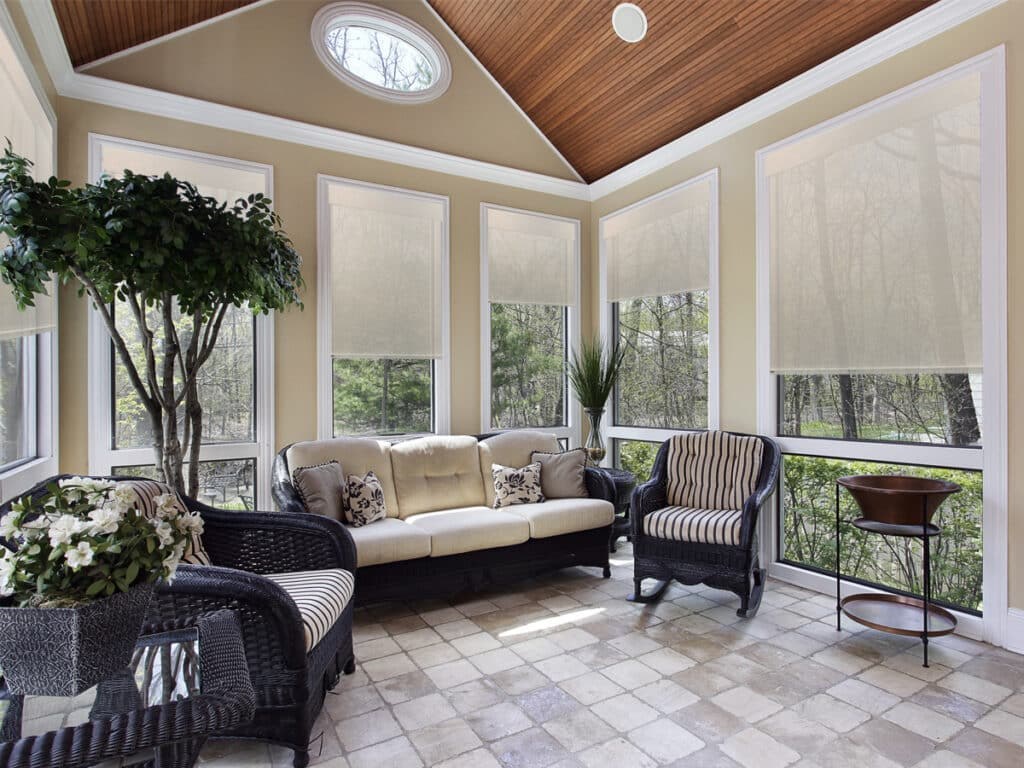
Sunrooms and three-season rooms often have big glass that pushes you into heavier tubes and stronger brackets. That can increase cost. Related: Roller Shades for Sunrooms and Three-Season Rooms.
Request a quote and measurement help from World Wide Shades
Living room vs sunroom: which spec to choose
If you want a comfortable daytime room with TV viewing, 1%–3% openness is common. Pair with a neutral fabric to keep the room bright.
Sunrooms often benefit from lower openness and lighter exterior colors to reduce heat gain. If the space is used for plants, confirm how much light you want to keep.
Call World Wide Shades at (844) 674-2716 for help choosing options
Typical add-ons and what they cost
Budget roughly +$180–$550 per window, depending on width, motor ecosystem, and power source. If you’re integrating smart home controls, see Smart Home Motorized Shades Setup.
A finished headrail can add about $40–$120 per window depending on size. If you’re deciding between headrail styles, see Cassette Headrail vs Exposed Tube Roller Shades.
Some homeowners pair solar shades with a second layer (like drapery) for nighttime privacy. Related: Roller Shades With Drapery: Layering Guide.
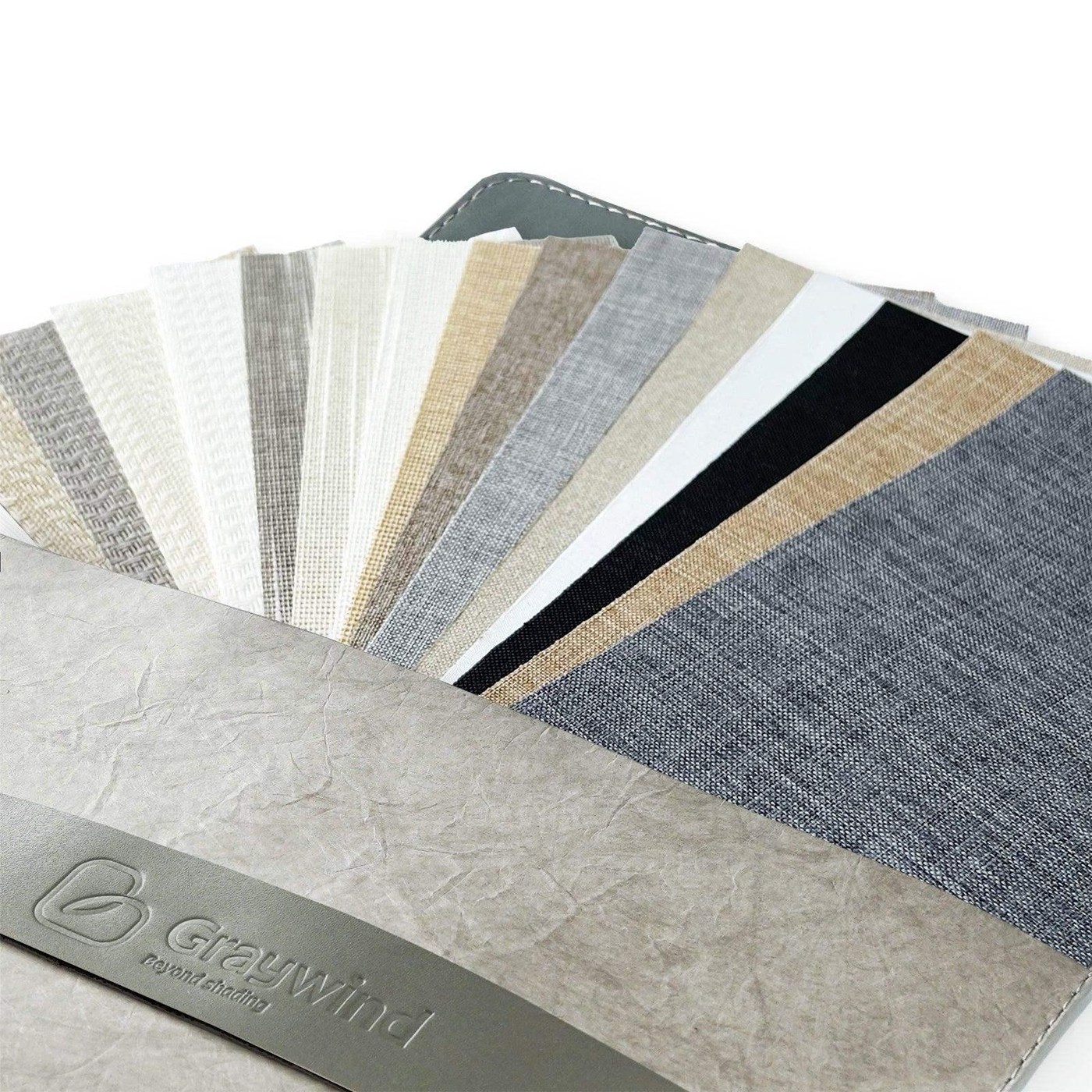
Get free World Wide Shades swatches to compare fabrics in your space
More FAQs
Not reliably. At night, interior lights can make the room visible from outside. If privacy matters, consider light-filtering or add a second layer.
Yes. They’re one of the most effective ways to reduce screen glare while keeping daylight.
Start your order with World Wide Shades
How to choose solar shade color (and why it affects comfort)
Lighter exterior-facing colors typically reflect more sunlight, which can reduce heat gain. That can make a noticeable difference on west-facing glass in late afternoon.
Darker interior-facing colors can improve view-through during the day. If you value the view more than maximum heat reflection, a darker interior may feel better.
Call World Wide Shades at (844) 674-2716 for help choosing options
Solar shades for TV glare: a quick setup
If the TV faces the window, start with 1%–3% openness. If the TV is perpendicular to the window, 3%–5% can be enough. If glare is still an issue, consider layering (solar shade + drapery) for evening control.
Use the World Wide Shades builder to price your exact windows