Extra-wide roller shades solve a real design problem: they cover picture windows, sliding doors, and broad glass walls with a clean horizontal line. They also put more load on the roller tube, brackets, fabric, and mounting surface. If the support points are not level and adequately spaced, the tube can bow, the fabric can telescope toward one side, and the bottom rail can hang unevenly.
The most reliable installation starts before the drill comes out. Confirm the finished width, tube diameter, fabric weight, bracket rating, center support, and mounting surface. World Wide Shades can review an extra-wide configuration through the online builder, send swatches, or answer installation questions through contact.
What counts as extra-wide?
There is no single industry threshold, but a roller around 72 inches wide deserves more planning than a 30-inch window. At 96 inches, many systems need a larger tube, additional center support, heavier brackets, or two shade units. At 120 inches and above, splitting the opening is often the most stable and serviceable approach.
Maximum width depends on fabric weight, openness, tube diameter, motor torque, and whether the shade is inside or outside mount. A lightweight 5% solar fabric may span farther than a dense blackout textile. Ask World Wide Shades for the maximum finished width of the exact fabric and hardware, not a generic number from a different collection.
For a large room, compare the roller shades for wide picture windows topic and use the builder to test a two-shade layout.
Why wide shades sag
Sagging usually comes from one of five causes: an undersized roller tube, brackets attached to weak material, supports that are not in the same plane, excessive fabric weight, or a span that exceeds the system limit. A tube may look straight before fabric is installed and bow after the completed shade is loaded.
Sag can be subtle. A 1/4-inch deflection at the center may be enough to make the bottom rail look uneven or cause the fabric to rub a cassette. A roller that is not level can also make fabric telescope, meaning the roll walks toward the left or right bracket during operation.
World Wide Shades can specify a larger tube, cassette, center support, or split layout before fabrication. Use contact for a wide opening; call (844) 674-2716 if the shade exceeds 8 feet.
Plan the mounting surface
Inspect the wall, header, ceiling, or jamb before unpacking the shade. Use a stud finder and confirm the location with a small pilot hole. For masonry, use anchors rated for the substrate. For drywall without a stud, use a properly rated hollow-wall anchor; do not rely on a small plastic plug for a heavy shade.
A wide motorized or blackout shade can weigh substantially more than a narrow light-filtering shade. If the opening has a structural header, blocking, or millwork, attach to that material. Mark every bracket centerline and verify that the fastener length will not hit electrical cable, plumbing, or glass.
If the mounting surface is questionable, pause and ask World Wide Shades for an installation plan through contact. A strong bracket cannot compensate for a weak wall.
Establish a level reference line
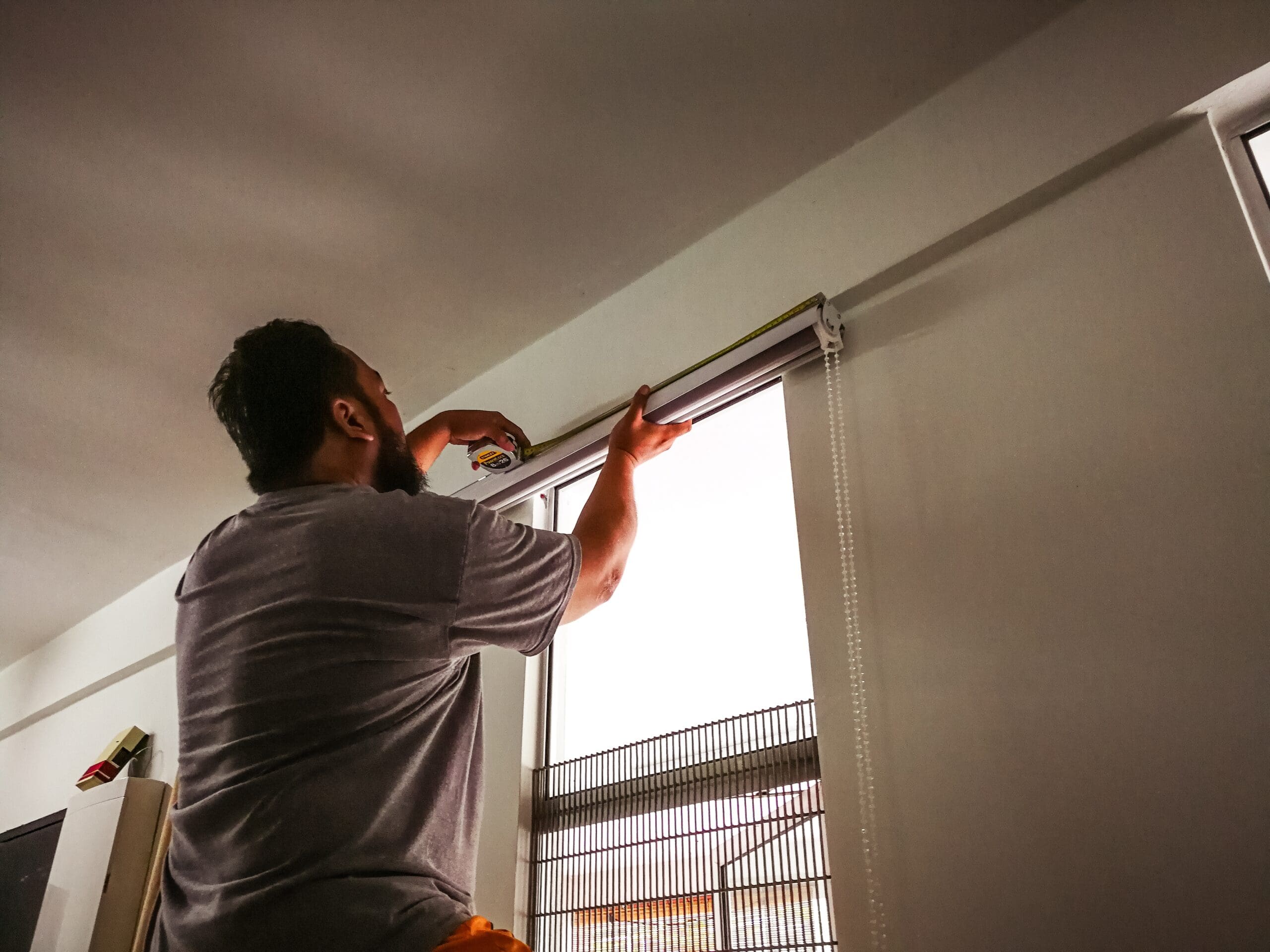
Measure up from the sill or floor at both ends of the opening, then snap or laser a level line across the planned headrail. Check the line again at the center. Do not use the ceiling as your reference unless it is demonstrably level; many ceilings vary by 1/4–1/2 inch across a wide span.
Hold the brackets on the line and mark the holes through the bracket slots. The bracket faces must be parallel and in the same plane. A 1/8-inch depth difference can twist the tube enough to create drag. Use shims behind a bracket when the wall or trim is irregular, then verify the tube is free to rotate.
World Wide Shades recommends documenting the finished bracket height so future service is easier. Start a configuration with the builder or order swatches while you plan the install.
Use the correct support strategy
A center support or intermediate bracket prevents the roller from bowing, but it must be compatible with the tube and fabric path. Place supports where the manufacturer specifies rather than randomly dividing the opening. A support that touches the fabric can create a rub line; one that sits too far out may not carry the tube.
For very wide windows, two shades can share a visual line while operating independently. A small center gap of 1/4–1/2 inch is often preferable to a single overloaded span. The gap can be placed over a mullion or structural post so it reads as intentional.
For large sliding doors, read roller shades for French doors and outdoor roller shades for a patio as relevant. World Wide Shades can help you decide whether a split configuration is cleaner than forcing one shade.
Installation sequence
Lay out the roller, brackets, screws, center support, cassette, chain or motor control, and bottom rail. Confirm that the left and right brackets are not reversed. For motorized shades, verify the charging port or wire path before the headrail is clipped in.
Install the fasteners but leave enough play to align the brackets. Check that every bracket sits on the level reference line and that the support spacing matches the manufacturer’s plan.
Place the tube into the brackets without forcing it. Rotate the roller by hand. It should turn smoothly with no scraping or side pressure. Tighten fasteners gradually, alternating left and right, so the bracket plane does not shift.
Install the intermediate support and confirm that it does not touch the fabric roll. Snap or screw the cassette only after the bare tube has been verified level.
Lower the shade 12–18 inches, stop, and inspect the fabric edges. Raise it halfway, then lower it again. If the fabric walks toward one side, stop before the roll becomes tight and correct the alignment or level condition.
For motorized shades, set upper and lower limits according to the motor instructions. For chain-operated systems, secure the control at the specified height and keep it away from children. The how to install roller shades guide covers general bracket and control practices.
How to prevent telescoping
Telescoping occurs when one edge of the fabric rolls faster or meets more resistance than the other. Confirm that the roller is level, the fabric is centered, and the brackets are parallel. Check for a wall bump, cassette interference, or a bottom rail that is not square.
Do not try to fix a severe telescope by adding tape to the roller without manufacturer guidance. Adhesive can change the roll diameter and make the condition worse. A minor correction may be possible through alignment; a persistent condition may require re-squaring the shade or replacing a component.
World Wide Shades can help diagnose a new shade that rolls crooked. Send photos through contact before operating it repeatedly.
When two shades are better than one
Split the opening when the finished width exceeds the fabric or tube limit, when the shade is heavy enough to be difficult to lift, or when two zones need different light settings. A pair of 60-inch shades is often easier to operate and service than one 120-inch shade. It also reduces the risk that one mechanical issue disables the entire wall.
Use the same fabric, cassette, and mounting height so the pair reads as one composition. A 1/4–1/2-inch center gap can be hidden at a mullion or aligned with the door meeting stile. Order swatches and request a layout from World Wide Shades via the builder.
Fabric weight and light control
Blackout fabrics, lined fabrics, and woven textures can weigh more than open solar fabrics. A 1% solar fabric may be appropriate for afternoon glare while a blackout shade is better for a media room, but the heavier option can change the maximum width. The blackout curtains vs. blackout shades guide compares coverage and side-gap strategies.
For south- and west-facing glazing, evaluate openness factor, color, and mounting depth together. See best shades for south-facing windows and request swatches from World Wide Shades.
Installation cost and professional help
Professional installation for standard shades may run about $50–$150 per opening. Extra-wide or motorized projects can run $150–$350 per opening when they require ladders, center supports, wiring coordination, or multiple installers. Structural blocking and electrical work are separate costs.
A small mistake on a wide shade can damage fabric or make the roller unusable. World Wide Shades can provide a measurement and installation plan before you order. Use contact, call (844) 674-2716, or begin with the builder.
Frequently Asked Questions
The maximum depends on the fabric, tube diameter, motor, and bracket system. Around 72 inches deserves careful planning; at 96 inches or more, ask for a larger tube, center support, or split layout. World Wide Shades confirms the limit for the exact configuration.
Many do, but the correct position and bracket depend on the tube and cassette. A center support must carry the tube without rubbing the fabric. Never add an incompatible support by guesswork.
A crooked roll is commonly caused by brackets that are not level or parallel, a tube that is twisted, fabric that is off-center, or interference inside a cassette. Stop operation and correct the alignment before the fabric telescopes tightly.
Two shades are often more stable and easier to service. They can share fabric and headrail height while allowing independent control. A small center gap is usually preferable to exceeding a single roller’s width or weight limit.
A typical planning range is $150–$350 per opening for extra-wide or motorized work, although access, electrical coordination, and region change the final price. Request an exact project quote from World Wide Shades through contact.