A motorized shade schedule should follow how your household uses daylight, not simply run at the same clock time every day. Sunrise moves by more than 2 hours between seasons in many U.S. locations, while sunset can shift by well over 3 hours. A schedule that feels perfect in June may open a bedroom too early in December or leave a west-facing office exposed to glare in August.
This guide explains how to build sunrise and sunset routines, set offsets, create room-specific scenes, and avoid common failures. World Wide Shades can help match the motor, fabric, and controls to your routine. Start in the online builder, compare fabrics with swatches, or contact the team for a system recommendation.
What a good schedule should accomplish
A useful schedule balances four goals: daylight, privacy, glare control, and energy behavior. It should open shades when daylight is welcome, lower them before privacy is needed, protect screens during the strongest sun, and avoid unnecessary motor cycles that drain batteries.
Begin with one room at a time. Write down wake time, work or school start, peak glare window, sunset privacy need, and bedtime. A simple bedroom plan might open to 60% at sunrise plus 20 minutes, close to 5% at sunset minus 15 minutes, and lower fully at 9:30 p.m. A living room might stay at 30% during afternoon glare rather than close all the way.
World Wide Shades can translate those goals into shade groups and fabric choices. Use the builder or call (844) 674-2716 before you buy a motor that cannot support the control method you need.
Confirm the control ecosystem first
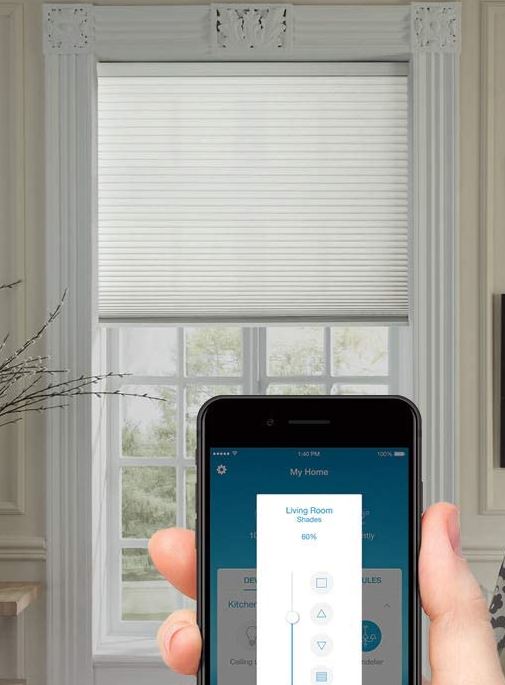
Motorized shades may use a handheld remote, proprietary hub, Wi-Fi, Bluetooth, Zigbee, Z-Wave, Matter, or a bridge that connects to a voice platform. The schedule must be created in the system that actually controls the shade. Some schedules run locally in the motor or hub; others depend on cloud access and a working internet connection.
Before pairing, record the shade name, room, channel, motor type, and control serial number. Rename “Channel 3” to “Bedroom west window” so a future routine is understandable. The smart home motorized shades setup guide covers platform compatibility and pairing basics.
If a shade is new, run it manually through a full open and close cycle before automating. World Wide Shades can help map channels and room groups; request support through contact.
Sunrise routines: open gradually and intentionally
Sunrise automation is not always “open at sunrise.” In a bedroom, opening at the exact sunrise time can wake someone before the alarm, especially when blackout fabric makes the change abrupt. A better starting point is sunrise plus 15–30 minutes, or a partial opening to 30%–60% followed by a second step later.
For a nursery, use a quiet motor, a partial opening, and a schedule that respects sleep. For a kitchen, opening at sunrise can brighten the room before breakfast. For a home office, open the shade after the first work block if glare hits the screen from a low morning sun.
Set separate scenes rather than one whole-home command. World Wide Shades can configure shades by room and orientation; start with the builder and use contact for complex multi-room plans.
Sunset routines: privacy before darkness
Sunset is an excellent anchor for privacy because the changing time adjusts automatically across the year. Closing at the exact sunset minute may be too late if nearby homes can see inside during twilight. Start with sunset minus 15–30 minutes, then adjust after observing the room for a week.
A privacy routine does not need to close every shade fully. A living room may lower to 25% while a street-facing bathroom closes to 100%. A west-facing bedroom can close earlier for glare, while a north-facing room stays open until dusk.
For fabrics that preserve daytime view while improving privacy, compare light-filtering shades. World Wide Shades can help select openness and color; order swatches before writing the final schedule.
Use offsets instead of fixed times
If the platform supports offsets, use sunrise +15 minutes and sunset -20 minutes instead of 7:00 a.m. and 7:30 p.m. Fixed times are simple but become wrong as seasons change. If offsets are unavailable, create seasonal scenes or adjust monthly.
A practical maintenance rhythm is to review schedules on the first day of each quarter. Check whether sunrise or sunset moved enough to affect sleep, privacy, or glare. A 15-minute adjustment is often all that is needed.
World Wide Shades can help you choose a control ecosystem with reliable astronomical timing. Use the builder or contact the team before finalizing motor hardware.
Build schedules around window orientation
East-facing glass receives strong morning light. Lower a shade before sunrise if the room is used for sleeping, or open it after sunrise for daylight. A 1%–3% solar fabric can reduce morning glare while preserving a view.
South-facing glass can receive a long period of light. Use a midday protection scene that lowers shades to 30%–50% during peak sun, then raises them later if glare falls. See best shades for south-facing windows.
West-facing glass often causes the hardest afternoon glare. Create an afternoon scene 60–90 minutes before sunset, then let the sunset privacy scene finish the job. Pair motorization with a solar or room-darkening fabric after testing swatches.
North-facing windows are usually less affected by direct glare, so a partial opening or later privacy close may preserve more daylight. Avoid closing them simply because a whole-home scene says “sunset” if the room still needs useful light.
Create useful room scenes
A scene is a group action that sets several shades to different positions. Name scenes by intent: “Morning,” “Screen Glare,” “Dinner Privacy,” “Movie,” and “Away.” Avoid vague names such as “Scene 1,” which make future edits error-prone.
Example for a four-window living room: east windows open to 80% at sunrise +20 minutes; south windows move to 50% at solar noon; west windows move to 25% at sunset -45 minutes; all windows close to 0% at sunset -10 minutes. Add an override so manual control can pause automation for two hours.
World Wide Shades can plan mixed positions and groups. Use contact or call (844) 674-2716 for a room-by-room shade schedule.
Battery life and cycle planning
Every automated movement is a motor cycle. A shade that moves four times daily can use more battery than one that moves twice, especially with blackout fabric or a wide roller. A typical rechargeable motor may last about 6–12 months at 2–4 complete cycles per day, but conditions vary.
Avoid schedules that open, close, and reopen within minutes. Add a minimum interval between routines and use partial positions when full travel is not needed. Keep charging access clear: a shade above a stairwell may justify hardwired power. Read hardwired motorized shades planning for wiring considerations.
World Wide Shades can recommend battery or hardwired operation based on height, width, and cycle frequency. Start with the builder and request a power review through contact.
Add manual overrides and vacation behavior
Automation should never trap you in a routine. Make sure household members know how to stop or reposition a shade. Many systems support a pause, temporary hold, or manual remote command that overrides the next scheduled event.
For vacation, use a mild occupancy pattern instead of repeating an identical full-home cycle. Open a few rooms at varied times, close street-facing windows at dusk, and avoid dramatic movement in rooms with no daylight. Check that remote access is enabled only when the hub and network are secure.
For a broader smart-home setup, review motorized shades with Alexa and Google Home. World Wide Shades can help make the schedule understandable for everyone in the home.
Troubleshoot a schedule that fails
If a shade does not move, check whether the motor has charge, the hub is online, the device name changed, or a manual override is active. If all shades fail, check power and network status before deleting the routine. If only one shade fails, inspect its battery, channel, and limit settings.
If a shade stops halfway, do not repeatedly command it. Confirm whether the lower limit is set correctly and look for an obstruction. The motorized shade troubleshooting article can help identify limit and power issues. World Wide Shades can review photos and system details through contact.
A 7-day tuning method
Day 1: create sunrise +20 minutes and sunset -20 minutes with conservative positions. Days 2–3: observe glare, privacy, and sleep. Day 4: adjust only one room. Days 5–6: add an orientation-specific scene. Day 7: document final positions and charging access.
Keep changes small. Moving a scene by 15 minutes is easier to evaluate than changing five conditions at once. Save a note with room names, percentages, and offsets so the system can be rebuilt after a hub replacement.
Frequently Asked Questions
Bedrooms usually work better with sunrise plus 15–30 minutes or a gradual partial opening. Kitchens and living rooms may benefit from opening at sunrise. Test the routine for a week and adjust by 10–15 minutes rather than changing everything at once.
Start with sunset minus 15–30 minutes, because twilight can still reveal interiors. Street-facing rooms may need an earlier close, while private rear rooms can remain open longer. Use different groups instead of one whole-home percentage.
They can if they create many full cycles. A schedule with 2–4 complete cycles per day is a reasonable planning range for many rechargeable motors, often yielding roughly 6–12 months of battery life. Wide, heavy, or blackout shades may need more frequent charging.
Yes, if the control system supports groups or scenes. East, south, west, and north windows receive different light, so room-specific positions are more efficient than a single command. World Wide Shades can help map the groups through contact.
Check charge, hub connectivity, manual override status, device naming, and limit settings. Test the shade with its local remote before deleting the routine. If the issue persists, contact World Wide Shades through contact with the motor and room details.