Coastal and Hamptons-style interiors rely on a specific formula: crisp whites, soft blues, natural linen texture, and plenty of daylight streaming through large windows facing the water or a breezy porch. Getting the window treatment right in this style is about restraint as much as it is about material choice—the wrong fabric weight, sheen, or color can tip a room from breezy and coastal into either sterile or dated. Roller shades from World Wide Shades are especially well suited to this look because they sit flat against the glass, let in maximum light when raised, and come in the exact linen-look whites and soft blues that define coastal design. This guide covers fabric selection, color, UV and sun protection, and practical durability considerations for homes near the shore.
What makes coastal and Hamptons style distinct
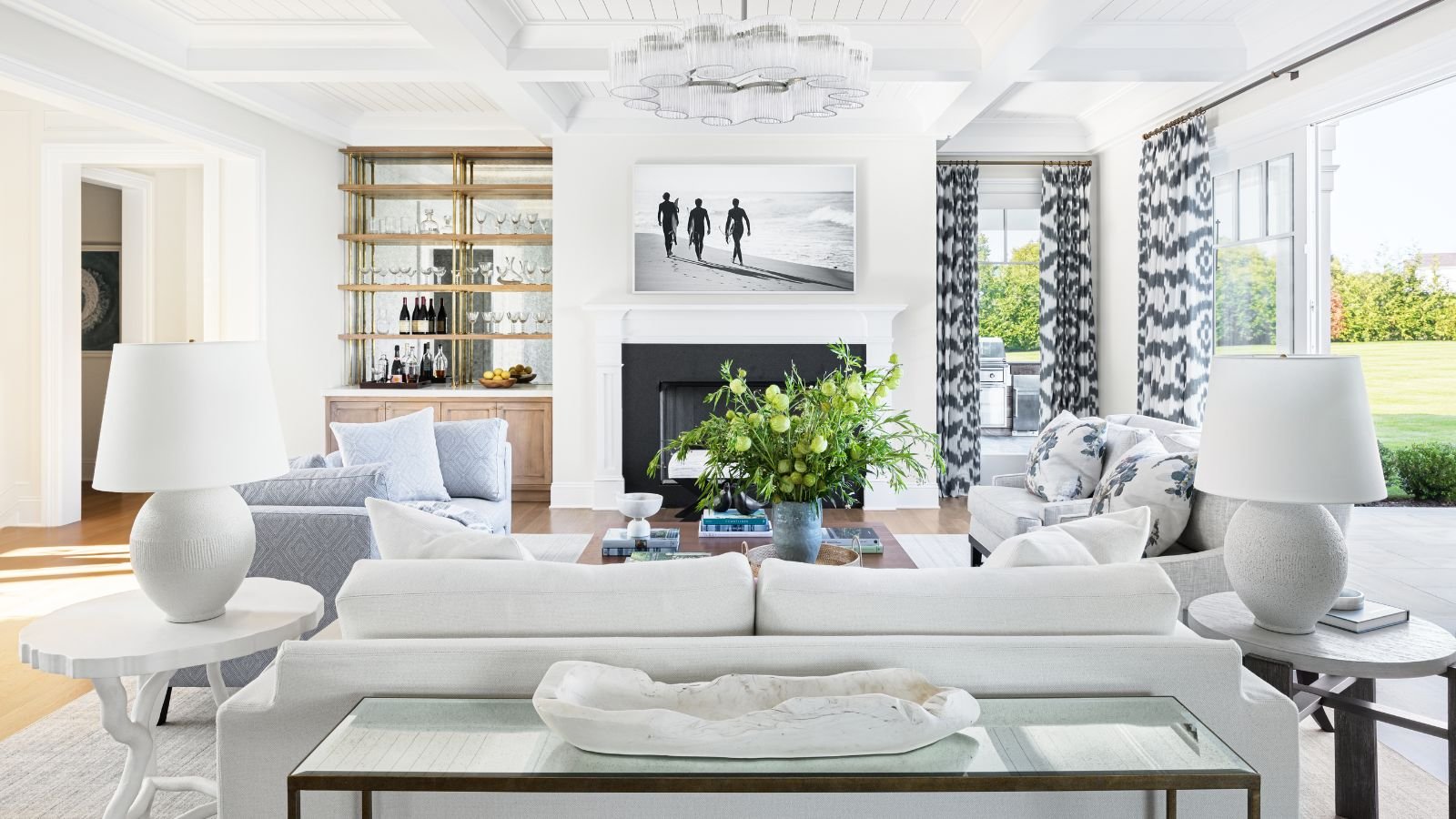
Coastal design is often confused with a generic "beach house" look, but true Hamptons and coastal style is more restrained: crisp white trim, soft blue and sandy neutral accents, natural linen and light woods, and an emphasis on unobstructed views of water, dunes, or greenery. Windows tend to be large, numerous, and often positioned to capture ocean or bay views, which means the window treatment needs to disappear when not needed and look tailored, not bulky, when in use.
Homes in this style are also frequently exposed to intense, prolonged sun and, in true coastal locations, salt air and humidity that can degrade certain fabrics and hardware faster than in an inland home. World Wide Shades builds fabric and hardware options specifically suited to these conditions, which matters more here than in almost any other design style covered in this series.
Choosing white and soft-toned fabrics for a coastal look
White and soft blue fabrics are the backbone of coastal window treatments, but not all whites read the same way in a sun-drenched room. Crisp true white fabrics create the clean, tailored look associated with classic Hamptons interiors and work especially well against white trim and shiplap. Warm off-white or linen-toned fabrics soften the room slightly and pair naturally with natural wood tones, rattan furniture, and sandy neutrals for a softer coastal feel. Soft blue and seafoam tones bring in color without breaking from the palette, and they work particularly well in bedrooms or sunrooms where a hint of color feels calming rather than bold.
Because natural light dramatically changes how white and pale blue fabrics appear—coastal homes often get intense, reflected light off water or sand—ordering swatches from World Wide Shades before finalizing your order is especially important in this style. For a full breakdown of fabric weights, weaves, and finishes, see our guide to the best fabrics for roller shades, and for a broader look at undertone matching, our window shades color guide is a useful companion resource.
Linen texture without sacrificing performance
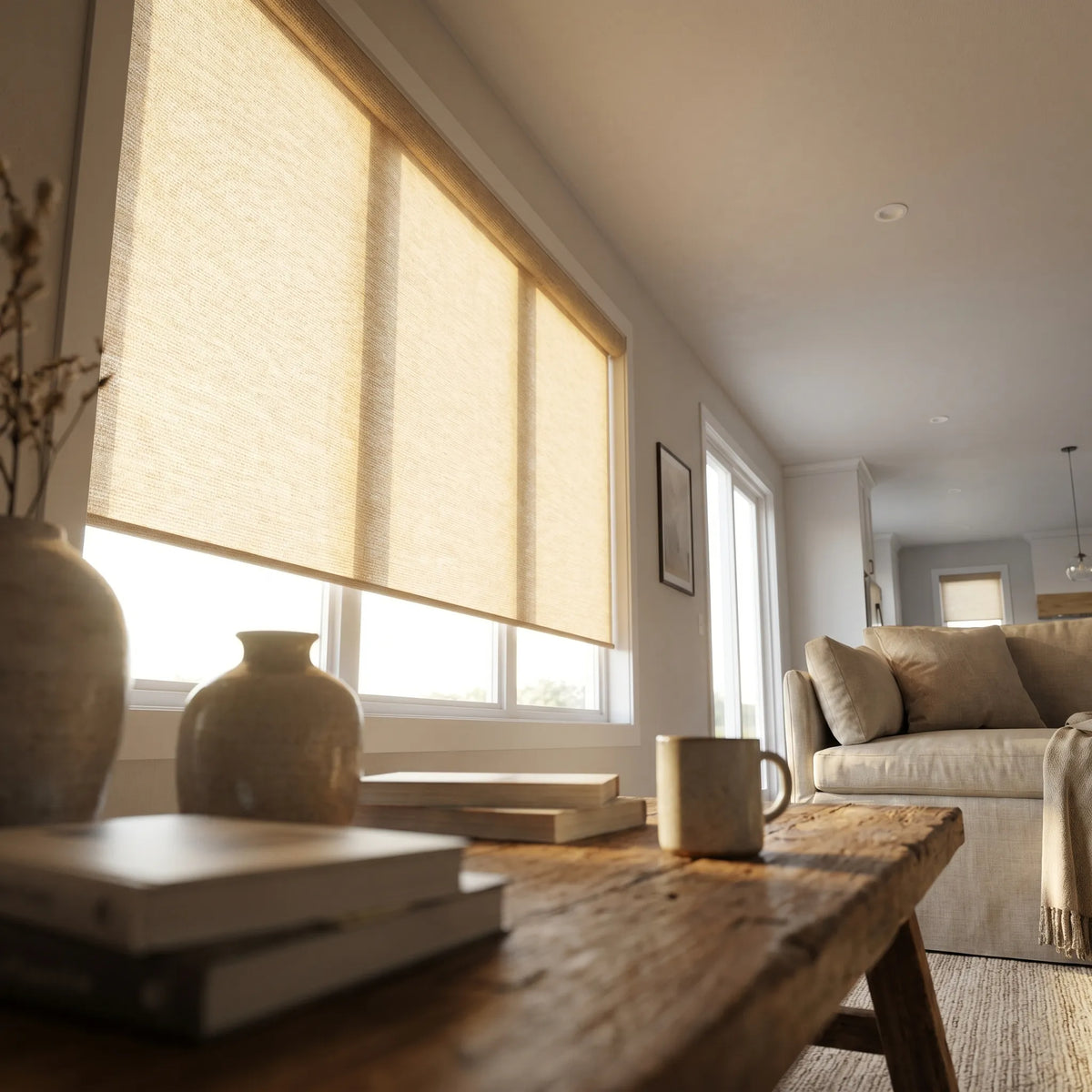
Linen is the signature texture of coastal and Hamptons interiors, and modern roller shade fabrics replicate that soft, woven look while adding real performance—something true linen curtains can't offer on their own. Linen-look light-filtering fabrics diffuse harsh sun into the soft, glowing light associated with coastal photography, while still providing daytime privacy. Textured solar screens in white or sand tones maintain a view to the water or yard while cutting glare and UV exposure, which matters for rooms with large, unobstructed water views. Blackout linen-look fabrics bring the same soft texture to bedrooms that need full light control, without introducing a heavy, dark fabric that clashes with the airy coastal palette.
If your home faces strong, direct sun for much of the day—common on oceanfront and bay-front lots—read our dedicated guide to UV protection window shades, which covers blockage percentages by fabric type and helps protect furniture, floors, and artwork from fading.
Sun exposure and UV protection near the water
Coastal homes often face more direct, prolonged sun exposure than inland homes, both from the sun itself and from light reflecting off water or sand. This makes UV protection a bigger practical concern in coastal design than in most other styles covered in this series. A well-chosen roller shade fabric can block 90% to 99% of UV rays depending on openness percentage and fabric construction, which significantly reduces fading on furniture, hardwood floors, and artwork positioned near large windows.
For rooms with especially intense afternoon sun—often west- or south-facing rooms overlooking water—a solar screen fabric in the 1% to 3% openness range offers strong glare control while still preserving a view. If your home has south-facing exposure specifically, our guide to the best shades for south-facing windows offers additional detail on managing heat gain and glare throughout the day.
Want a fabric recommendation based on your home's exact sun exposure? Contact World Wide Shades or call (844) 674-2716 to talk through your windows with a specialist.
Salt air, humidity, and hardware durability
Homes directly on the coast face a durability challenge that inland homes don't: salt air and humidity can corrode certain metal hardware and degrade some fabric coatings over time. When specifying roller shades for a true oceanfront or bay-front property, ask about corrosion-resistant hardware finishes and fabrics rated for humid environments, since standard components may show wear faster in this environment. World Wide Shades can help identify which fabric and hardware combinations hold up best based on your home's proximity to the water and typical humidity levels—reach out to World Wide Shades or call (844) 674-2716 before finalizing hardware finishes for a true waterfront property.
For homes with covered porches or three-season rooms that see more direct weather exposure, our guide to outdoor roller shades for patios covers weather-resistant fabric options that extend the coastal look beyond the interior.
Light control by room in a coastal home
Coastal homes often prioritize maximum daylight and open views over privacy, but light control still needs to be tailored room by room. Living rooms and sunrooms typically do best with light-filtering fabrics that maximize brightness while softening direct glare off the water. Bedrooms, especially those facing east toward a sunrise view, usually benefit from blackout roller shades to prevent early morning wake-ups, and our guide to the best window shades for bedrooms covers light control levels in more depth. Kitchens and bathrooms, which see frequent humidity and splashing, need shades rated for moisture resistance—see our dedicated guide on roller shades for kitchens and bathrooms for fabric and mount recommendations suited to those conditions.
Ready to plan light control room by room? Start your build in the World Wide Shades builder to compare fabric options across your whole home.
Mounting and hardware for coastal-style windows
Because coastal homes emphasize unobstructed views, mounting decisions should minimize how much the shade interrupts the glass when raised. An inside mount keeps the shade fully recessed within the window frame, preserving crisp millwork and trim lines that are central to the Hamptons look. An outside mount works well for windows with less depth or where you want maximum coverage and light blockage, particularly in bedrooms. If you're new to installation or measuring, our step-by-step guide to installing roller shades walks through both mount types.
For a finished, tailored look that conceals the headrail, many coastal homes pair roller shades with a simple white or linen-toned valance—see our roller shade valance options guide for styles that complement shiplap and painted trim.
Budget planning for coastal and Hamptons-style homes
Coastal homes frequently have a high number of large windows, so budgeting across the whole home—not just one room—helps avoid surprises. Light-filtering linen-look fabrics typically represent a moderate per-window cost, while blackout fabrics for bedrooms run higher due to heavier construction. Motorized shades are a popular upgrade for hard-to-reach windows over window seats or high transoms common in coastal architecture, and they also reduce wear on pull cords in humid environments. For a detailed cost breakdown by fabric and size, see our guide on how much custom roller shades cost.
If you're building or renovating a coastal home from the ground up, our guide to custom shades for new construction covers planning shades alongside window selection and trim details early in the process.
Bringing the coastal look together
The most successful coastal and Hamptons-style window treatments use crisp whites, soft blues, or natural linen tones in a fabric that performs well under intense, prolonged sun exposure. Prioritize UV protection and, for true waterfront properties, humidity-resistant hardware, while keeping the shade's profile minimal so it doesn't compete with the view. World Wide Shades builds every shade to your exact window dimensions and can help match fabric and hardware to your specific coastal exposure.
Whether you're outfitting a single sunroom or an entire oceanfront home, get a walkthrough from World Wide Shades or call (844) 674-2716 to talk through fabric, color, and durability for your coastal windows.
Frequently Asked Questions
Crisp true white is the classic choice for a tailored Hamptons look, while warm off-white or linen tones soften the room slightly. Soft blue and seafoam shades add color without breaking from the coastal palette, especially in bedrooms and sunrooms.
Standard fabrics and hardware can show wear faster in true oceanfront conditions. World Wide Shades offers humidity-resistant fabric options and corrosion-resistant hardware finishes for homes with direct coastal exposure—call (844) 674-2716 to discuss options for your property.
Homes with large, unobstructed water views often face more intense and prolonged sun exposure than inland homes. A well-chosen fabric can block 90% to 99% of UV rays depending on openness percentage, which helps protect floors, furniture, and artwork from fading.
Bedrooms facing sunrise or a bright water view typically benefit from blackout roller shades to prevent early morning wake-ups, while living areas and sunrooms usually do better with light-filtering fabrics that maximize brightness.
Yes—linen-look fabrics used in roller shades are engineered for performance, not just appearance, and are available in light-filtering, solar screen, and blackout constructions, so you don't have to trade texture for function.
An inside mount keeps the shade fully recessed within the frame, preserving trim lines and minimizing how much the shade interrupts the view when raised, which is typically preferred for coastal homes with prominent water-facing windows.
Ready to bring the coastal look to your windows? Design your shade in the World Wide Shades builder, order swatches to check whites and blues in your home's light, or call (844) 674-2716 to speak with a World Wide Shades specialist.