French doors add light and a strong connection between rooms, patios, and gardens, but their glass panels move, swing, and carry handles that can interfere with ordinary window treatments. The best roller shade is sized for each door, mounted so the panel can operate freely, and selected for the privacy and glare conditions on both sides of the glass.
World Wide Shades designs custom roller shades around the door hardware instead of treating a French door like a fixed window. Build a French-door shade project with World Wide Shades, order fabric swatches, or contact World Wide Shades with the door width, handle projection, swing direction, and frame depth. Call (844) 674-2716 when a pair of doors, narrow sidelights, or an active patio opening needs coordinated coverage.
Why French doors need their own shade plan
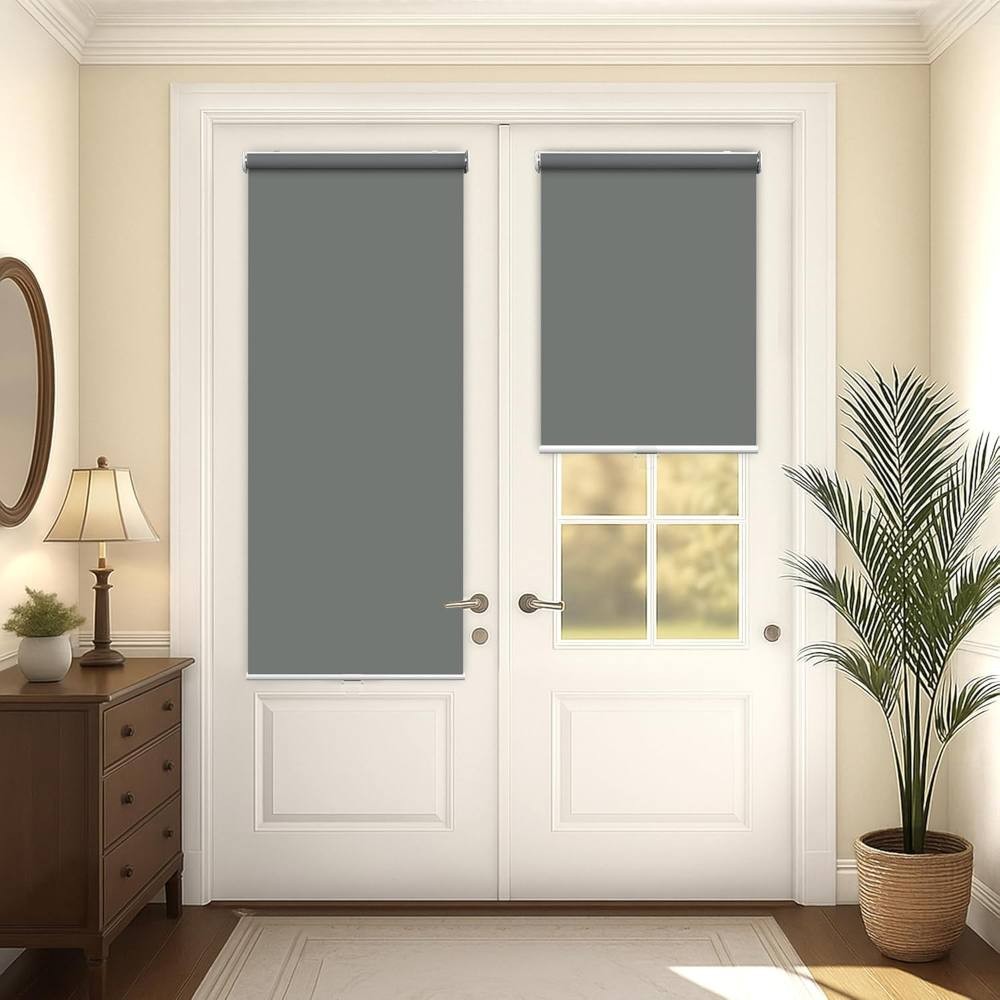
A fixed window stays in one plane. A French door moves toward the room or outdoors, and the shade must either move with the panel or be mounted outside its swing path. A roller shade installed too close to the glass can catch on a lever handle. A shade that hangs several inches away may swing when the door opens, strike the wall, or leave a privacy gap.
French doors also have narrow stiles, divided lites, and unequal panels. One door may be active while the other remains fixed; the handles may sit at different heights; and the meeting stile can create a gap down the center. World Wide Shades can compare individual shades, a shared treatment, or a door-mounted solution based on how the opening is used.
For more door-specific ideas, read roller shades for French doors, roller shades for sliding glass doors, and roller shades for pocket doors. Ask World Wide Shades to review the door assembly before you assume a standard 36-by-80-inch shade will fit.
Measure the door in four dimensions
Measure the visible glass width, the full panel width, and the height from the top of the mounting area to the bottom of the glass. Measure both active and inactive doors even if they look identical. A 1/8-inch difference can matter when two shades meet at the center. For an inside mount, measure the recess width at top, middle, and bottom and record the smallest value.
Measure how far the handle projects from the glass and how far the latch, lock, or escutcheon extends. Measure the clearance from the glass to the nearest wall, trim, furniture, and opposing door. Note whether the panel swings in, swings out, or slides. The shade must clear the handle during movement and the bottom bar should not hit a threshold or floor mat.
A roller shade needs space for brackets, a tube, a cassette, and the rolled fabric. If the door has a transom or low ceiling, an outside mount may not have enough room above the frame. If the header is shallow, a compact headrail may be needed. Send World Wide Shades a photo with dimensions for a clearance review.
Inside mount versus outside mount
An inside mount follows the door frame and keeps the shade close to the glass. It can look clean and reduce projection into the room, but it has little tolerance for a handle or uneven recess. Inside mounting works best when the recess is deep, square, and free of hardware.
An outside mount gives more room for the handle and can cover trim around the glass. It may be attached to the door panel, frame, wall, or ceiling depending on movement and structure. A door-mounted shade moves with the panel, which is helpful when the door opens often, but it adds weight and requires careful fastening. A wall-mounted shade stays in place while the door swings, but the door may collide with it unless the projection is planned.
Do not mount through a hollow door without a fastening strategy. Ask whether the panel has a solid core, reinforcement, or a suitable anchor zone. World Wide Shades can coordinate the shade type with the door construction. Start a custom measurement plan before drilling.
Choose a fabric for privacy and daylight
Privacy needs change from day to night. A screen shade may block some daytime visibility while preserving a view, but interior lights can make silhouettes visible after dark. A light-filtering fabric diffuses daylight and softens the room; a room-darkening or blackout fabric provides stronger privacy and reduces patio or street light.
If the French doors face a west patio, a solar screen can reduce afternoon glare and heat while preserving a garden view. If the doors open to a bedroom, a room-darkening textile may matter more than view-through. Compare light-filtering fabrics, review UV-protection shades, and see the best bedroom shade options before choosing.
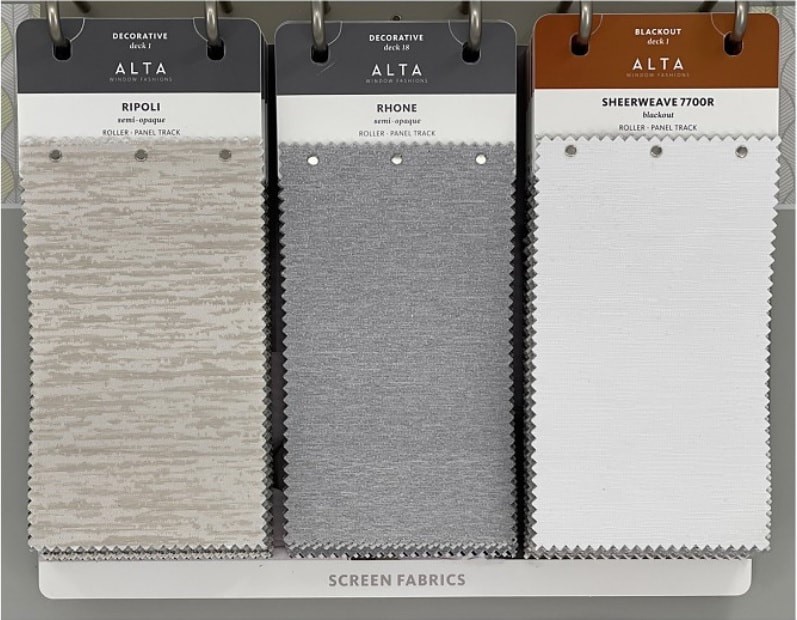
Color changes performance as well as appearance. Darker solar screens usually preserve exterior contrast, while lighter fabrics can reflect more visible light and feel softer in a bright room. Order physical samples and hold them against the door in daylight and at night. Request World Wide Shades swatches before committing to a full pair.
Keep handles, locks, and door movement clear
Leave a deliberate clearance zone around the handle. The exact space depends on projection, shade roll diameter, bracket depth, and whether the shade is on the glass or beyond the frame. A small spacer can solve one collision but can also move the shade far enough away to create side gaps or a swinging bottom bar.
The bottom bar should clear the threshold, sweep, curtain rod, and floor by enough to avoid contact during normal operation. For a frequently used exterior door, consider a hold-down or guide solution if the shade can move in a draft. Do not use a rigid guide that prevents the door from opening or puts stress on the fabric.
Test the complete path with the door fully closed, partially open, and fully open. Check the handle, latch, weatherstrip, and meeting stile at each stage. Have World Wide Shades verify the hardware plan if the opening is narrow or unusually deep.
Manual or motorized French-door shades?
Manual cordless shades can be economical for a guest room or lightly used interior doors. A chain control is practical only if the chain can be reached without crossing the swing path, and it needs careful positioning around children and pets. Review child-safe window treatments when the door is in a family room or nursery.
Motorization is helpful when the doors are tall, multiple panels need to move together, or the shades are opened at predictable times. Battery power often suits a retrofit because it avoids wiring through a moving panel. Hardwired power may be appropriate for a fixed transom or a large opening under renovation, but the power path must be planned before the trim is closed.
A remote or wall control gives visitors a simple option. Smart-home scenes can close the doors' shades at sunset and raise them in the morning, but retain local control in case the network is unavailable. Read the smart-home motorized shades setup and Alexa and Google Home shade guide. Ask World Wide Shades to plan the control zones when the active door and fixed door need independent positions.
Handle the center gap and side gaps
Two door-mounted roller shades rarely create a perfectly light-tight center seam without specialized overlap or a second layer. If privacy is the priority, overlap the meeting edges only if the door hardware and movement permit it. If both doors open frequently, a small center gap may be preferable to a treatment that catches when the panels move.
Side gaps depend on mounting surface and fabric width. A close-fitting cassette can improve the finished look, while side channels may help with light control but can complicate opening and cleaning. Compare roller shade valance options and blackout shade versus blackout curtain performance when darkness is important.
French-door installation checklist
Before installation, confirm these items:
- Each panel's width, height, recess, and swing direction are documented.
- Handle projection and lock clearance are measured, not guessed.
- Brackets are attached to a suitable frame, header, or reinforced panel.
- The shade roll clears trim, weatherstrip, and hardware.
- The bottom bar clears the threshold at every door position.
- The control is reachable without standing in the swing path.
- The fabric sample has been viewed in daylight and after dark.
Send this information to World Wide Shades for a final fit check, or configure the shades in the builder if the opening is ready for selection.
French-door roller shade FAQ
Yes, when the panel, frame, hardware, and shade depth are compatible. Door-mounted shades must be securely fastened and sized to clear handles and latches. A professional review is especially useful for hollow panels or narrow stiles.
Inside mounting is clean when the recess is deep and free of obstructions. Outside mounting provides more room around handles and can cover trim, but it needs a stable mounting surface and careful swing clearance.
Measure handle projection, use appropriate spacers or an outside mount, and test the shade with the door moving. Do not choose a bracket depth from appearance alone; the roll, fabric, and bottom bar all need clearance.
Room-darkening or blackout fabrics provide stronger nighttime privacy than open-weave screens. Even blackout fabric can have edge or center gaps, so mounting overlap and a cassette or side treatment may be necessary.
Yes. Battery motors are common for retrofit door panels, while hardwired options require a planned power path. Use a local remote in addition to app or voice control, and confirm the motor can handle the shade's width, height, and fabric weight.
Finish the door with a measured solution
French-door shades succeed when fabric, mounting, movement, and privacy are considered together. Measure each panel, protect the handle zone, choose the right openness, and test the shade through the complete door swing. Build a French-door project with World Wide Shades, order samples, or contact World Wide Shades. Call (844) 674-2716 for a clearance review before the first bracket is installed.