Pocket doors keep floor space clear and blend a doorway into the wall, but they add a puzzle when the glass panel needs privacy or sun control. A roller shade over a pocket door has to hang close enough to the glass to look intentional, yet leave the door free to slide into the wall pocket without catching the fabric, hem bar, or bracket. The plan starts with clearance and the fabric follows.
World Wide Shades can help design a shade that clears the door track, panel, and any handles or edge pulls. Configure a pocket door shade with World Wide Shades, order fabric swatches, or contact World Wide Shades with the door dimensions and pocket depth. Call (844) 674-2716 if the door is oversized, uses barn-door style hardware, or shares a wall with a light switch.
Understand the pocket door before you measure
Pocket doors come in two main styles: a true pocket door that slides into a framed cavity inside the wall, and a barn-style or bypass slider that runs along a surface-mounted track. Each style creates a different clearance problem for a shade.
- True pocket door: the panel disappears into the wall. A shade mounted to the trim must not extend into the pocket opening. The pocket edge, jamb, and any exposed rollers or bumpers can conflict with the shade.
- Barn or bypass door: the panel rides along the wall on a top track. A shade must clear the door thickness, track, and any decorative hardware.
Measure the door thickness, the wall depth, the finished trim reveal, and the distance from the door face to any switch, plate, or return wall. If the door interacts with a nearby wall receptacle or thermostat, note the clearance you need on the pull side. Photograph the door open, closed, and partially open. World Wide Shades reviews these photos when quoting a shade so the fabric plan matches the actual door behavior. Send door photos to World Wide Shades.
Review the how to install roller shades guide for general clearance principles before applying them to the pocket door case.
Choose the mount type based on where the door lives
An inside mount uses the trim or jamb depth to hide the shade. It looks clean but requires enough depth to seat the bracket without touching the door face. A shallow reveal usually pushes the shade to an outside mount.
An outside mount uses the wall or trim above the opening. The shade projects further from the glass, so the plan must confirm the door slides without contact and the fabric drops on the correct side of any handle or edge pull. A pocket door with a recessed flush pull is easier to work with than a door with a protruding grip.
A ceiling mount, when the space allows, keeps the wall clean and often gives the most reliable clearance. Confirm the ceiling framing supports the bracket and the shade drop reaches the intended stop point. World Wide Shades can compare the three options for a specific door. Ask World Wide Shades for a mount recommendation.
Measure clearance three ways
Do not measure only the closed door position. Plan for the full motion of the panel.
- Fully closed: measure from the shade's future bracket line to the door face; confirm the fabric will not touch the glass or any decorative trim.
- Partially open: as the door slides into the pocket, verify the shade fabric and hem bar remain clear of the panel edge, especially if the door has a beveled edge or exposed roller.
- Fully open: with the door completely inside the pocket (or fully to one side for a bypass), check that the pocket opening edge, any bumper, and the track do not conflict with the shade.
Add a safety margin. A 1/4-inch clearance can disappear if the wall flexes, a bracket loosens, or the fabric bows in humid weather. Aim for at least 1/2 inch to 3/4 inch of clearance between the door face and the shade fabric. For a heavy door that flexes, allow more.
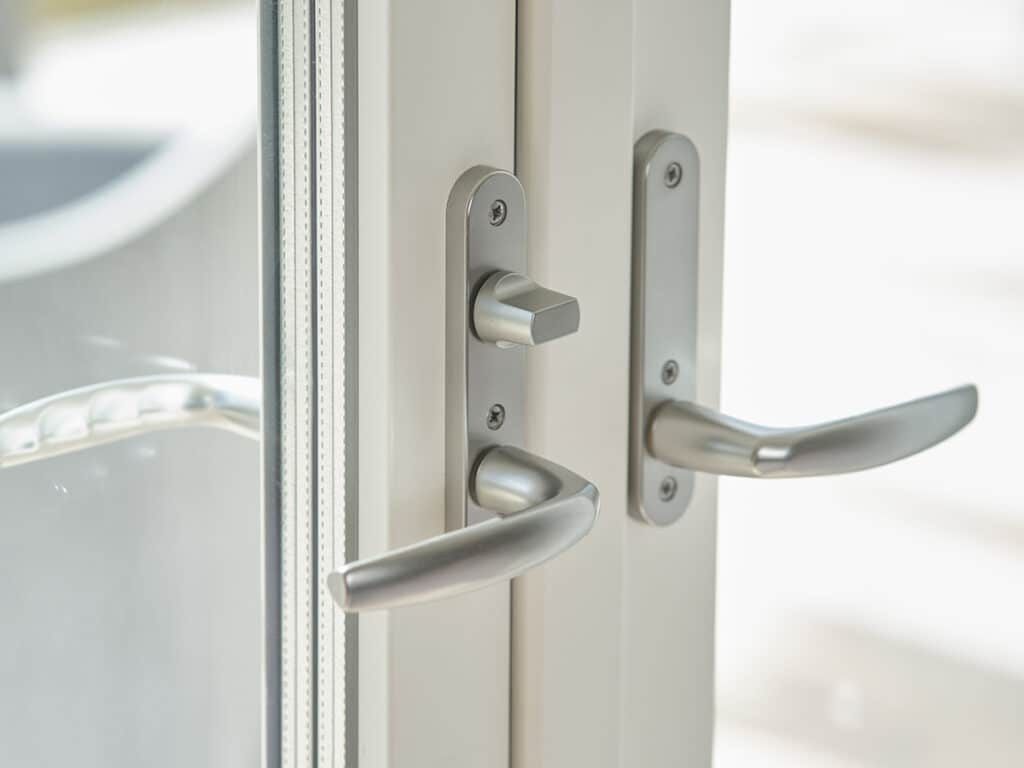
The roller shades for French doors guide explains why door hardware travel affects shade planning; the same principles apply to pocket doors with an exposed pull.
Low-profile brackets and slim cassettes
Standard roller shade brackets can protrude 1.5 to 3 inches from the mounting surface. A pocket door often needs less. Look for:
- Low-profile brackets designed for shallow depth applications.
- Slim cassettes that hide the tube without adding bulk toward the door.
- Reverse roll options that place the fabric closer to the wall, farther from the door.
Reverse roll matters. On a standard roll, the fabric feeds from the back of the tube; on a reverse roll, it feeds from the front. For a shade that must sit close to the wall while keeping the fabric near the glass, reverse roll can shift the drop line by an inch or more in the right direction. Ask World Wide Shades which roll direction fits your door clearance.
A cassette also protects the fabric from door edge contact. If the door is a heavy raised-panel design or a pocket door that flexes when handled, a cassette adds a visual and physical buffer. World Wide Shades can supply a matching cassette color so the enclosure looks intentional. Order cassette-matched swatches from World Wide Shades.
Fabric choices for a pocket door
Fabric selection matters because the door is a moving object. Consider:
- Weight: a lighter light-filtering fabric is more forgiving on a shade that must clear moving hardware than a heavy blackout fabric that hangs stiffly.
- Stiffness: a stiffer fabric holds a straight edge and resists flapping when the door slides quickly.
- Openness: a solar fabric with 3% to 5% openness preserves the view when the door is closed for privacy.
- Blackout coating: for a bedroom, laundry, or bathroom pocket door, a room-darkening or blackout fabric may be preferred.
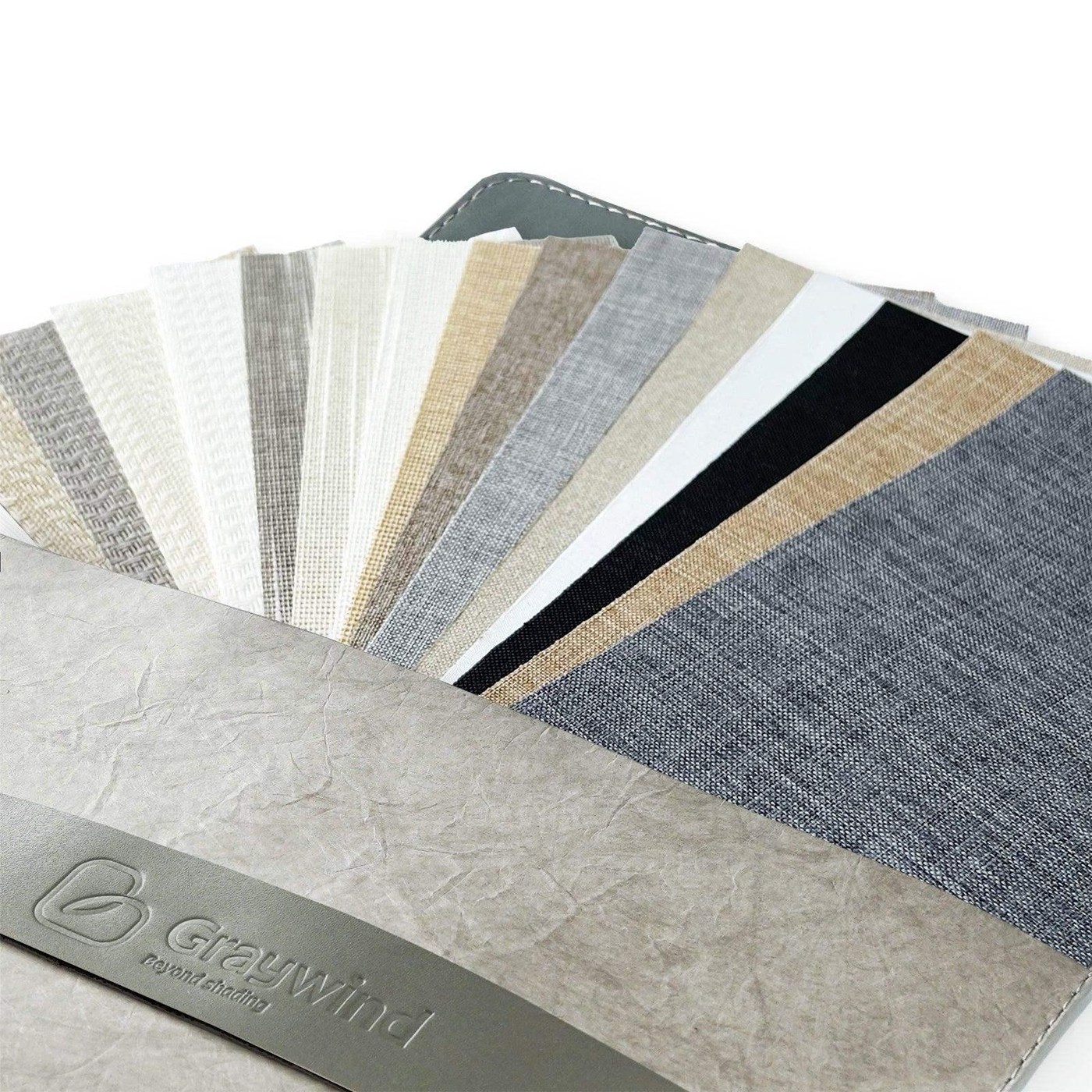
Test fabric weight in the actual opening. A swatch that looks perfect on a countertop may reveal an unexpected shadow pattern when the door is closed and interior light is on. Read the best fabrics for roller shades guide and the light-filtering shades guide before finalizing. World Wide Shades can supply swatches that match a barn-style door's stain or a pocket door's paint.
Control placement without hitting the door
Manual controls need a home that does not conflict with the sliding door. A chain or bead control on the wrong side pulls the fabric toward the door face; on a pocket door, that placement can catch every time the door closes.
- Chain or bead control: mount on the fixed side of the opening, opposite the pocket, so the user can operate the shade without reaching across the moving panel.
- Cordless spring-lift: eliminates the loose chain entirely, ideal for a pocket door serving a bathroom or laundry where cords should not dangle near the moving door.
- Motorized control: removes all cords and lets the shade retract on a schedule when the door is fully open.
For rooms where children can reach the shade, cordless or motorized options are safer. Review the child-safe window treatments guide before ordering.
If motorized, choose a handheld remote plus a wall control on the fixed side. The multi-channel remote programming guide shows how to label channels when several pocket doors share a hallway or a suite. World Wide Shades can coordinate motor selection with fabric weight. Contact World Wide Shades for control planning.
Installation tips specific to pocket doors
Installing a shade above a pocket door is not the same as a standard window installation:
- Confirm the wall framing above the door. Pocket door assemblies use a specific track and header, and the drywall over the pocket may not have solid backing for anchors. Locate the header framing or approved blocking before drilling.
- Test the door through its full motion before mounting. A sticking door or misaligned track should be repaired first; a shade cannot solve a mechanical door problem.
- Mount the brackets tight to the header where possible. This maximizes clearance between the fabric and the door.
- Level the tube along the header, not the door top edge. A pocket door top edge may not be perfectly level even when the door operates well.
- Test the shade at least three full cycles, then slide the door open and closed at each shade position. Confirm the fabric never touches the door.
If the door catches the shade during testing, stop and re-evaluate the bracket depth or roll direction before continuing. World Wide Shades can supply a revised bracket set if the initial configuration does not clear.
The how to install shades in recessed windows guide covers depth-limited installations and applies to pocket door recesses as well.
Sound, privacy, and light control
A pocket door often separates two spaces with different lighting: a hallway with recessed lights and a bedroom that should be dark, or an office with daylight and a media room that needs blackout. A roller shade on the room side of a glazed pocket door contributes to both light and privacy control.
For a bedroom or nursery pocket door, use a room-darkening or blackout fabric and consider side channels or a wrap-around outside mount for maximum light control. Read blackout vs room-darkening shades to choose the right level. For a bathroom, use a light-filtering fabric that resists humidity; the bathroom window shades guide explains the tradeoffs.
For an office pocket door, a solar shade at 5% openness preserves connection to the adjacent room while reducing glare on the monitor. World Wide Shades can help match fabric openness to the actual use of the room.
Maintenance and long-term reliability
A shade over a moving door sees more indirect stress than a standard window shade. The door creates air movement, occasional vibration, and sometimes a light bump on the fabric. Plan for:
- Periodic inspection of bracket screws and mount solidity.
- Cleaning with a soft brush or low-suction attachment, avoiding pulling the fabric while cleaning.
- Watching for any rub mark on the fabric edge or crease near the hem bar that indicates door contact.
- Rebalancing a cordless spring-lift shade if it drifts.
- Recharging a motorized shade before it stalls.
If the shade begins to telescope or the hem bar loses level, stop and inspect. Read roller shade fabric telescoping causes and fixes for diagnostic steps. World Wide Shades can help decide whether to adjust, repair, or replace. Contact World Wide Shades for service or call (844) 674-2716.
Cost planning for pocket door shades
A pocket door shade is often small in width, but the fabrication may include custom brackets, a slim cassette, and reverse roll. Include:
- Fabric and hardware.
- Custom bracket or cassette upgrade.
- Cordless or motorized option pricing.
- Installation labor and any framing evaluation.
Use the custom roller shades cost guide to see how each factor affects the quote. Compare the total installed cost including labor, not just the base fabric price. World Wide Shades can prepare a detailed proposal so a pocket door shade fits the broader project budget.
Final checklist before you order
For a pocket door roller shade, confirm:
- Door type, panel thickness, and pocket depth are documented.
- Mount type (inside, outside, ceiling) is chosen with clearance in mind.
- Bracket profile and roll direction preserve the required clearance.
- Fabric weight, stiffness, and openness suit the door and room.
- Control placement is on the fixed side and safe for household members.
- Installation plan accounts for pocket door framing.
- Testing includes the door in every position, not just closed.
A well-planned pocket door shade looks intentional and lasts. World Wide Shades can supply the shade and coordinate the details. Configure a project with World Wide Shades, order swatches, or contact World Wide Shades for a door-by-door plan. Call (844) 674-2716 for help with an unusual pocket door style.
Frequently asked questions
Most pocket doors can accept a roller shade with the right bracket and clearance plan. Very thick doors, pocket doors with exposed hardware, and doors that flex significantly may require an outside mount or a ceiling mount. World Wide Shades can review a specific door before quoting.
Aim for at least 1/2 inch to 3/4 inch between the door face and the fabric, with more clearance if the door flexes or the wall is soft. Test with the door in every position: closed, partially open, and fully open into the pocket.
A cassette adds a clean visual boundary and protects the fabric from door contact. For a heavy or barn-style door, a cassette is often recommended. For a light interior pocket door, a bracket-only mount may suffice with careful clearance planning.
Yes. A motorized shade eliminates cords near the moving door, and a wall control on the fixed side is easy to reach. Choose a motor with headroom for the fabric weight.
Lighter light-filtering or solar fabrics are more forgiving on a shade near a moving door than heavy blackout fabrics. For a bedroom or bathroom pocket door, a room-darkening fabric with careful clearance planning may still be appropriate. Test swatches in the actual opening.
A qualified installer familiar with pocket door framing and shade clearance.