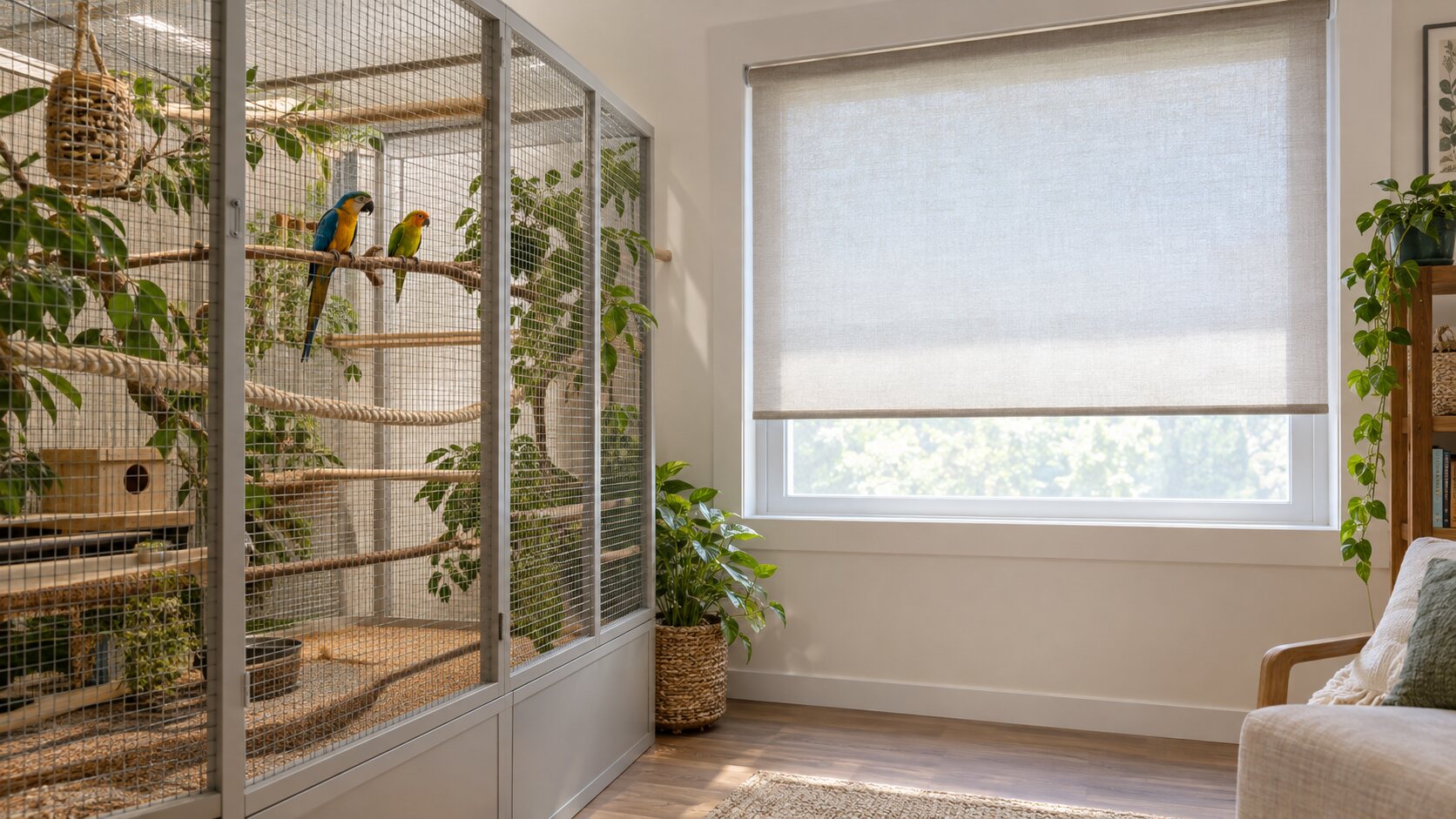
Roller shades for indoor bird aviaries should address the window without becoming part of the birds’ living equipment. Start with a clear purpose: managing glare, brightness, solar heat, or household privacy while keeping fabric and moving components outside the birds’ reach.
World Wide Shades approaches this as a window-treatment project, not an avian-care prescription. A shade cannot replace a safe enclosure, escape-proof barriers, appropriate lighting or UVB supplementation when prescribed, or guidance from an avian veterinarian.
Begin your window plan with World Wide Shades: explore roller shade configurations in the builder, then discuss the birds’ care requirements separately with their veterinarian. Keep those two conversations connected without treating a fabric choice as a health intervention.
Define the Window Problem Before Choosing Fabric
Identify what actually needs changing during the day. For example, a west-facing window may create an afternoon patch of intense brightness, while a street-facing aviary room may primarily need evening privacy.
Give your avian veterinarian the room’s context, including species, individual health, enclosure location, and existing lamps. Bird housing and lighting involve more than window brightness, as outlined in Lafeber’s guide to a bird’s home.
For the window-treatment brief, record when glare appears, which panes cause it, and whether you still want a view outdoors. This lets you compare options without assuming every window needs the same fabric or operating position.
World Wide Shades recommends separating daytime light management from nighttime privacy in your design brief. Use our light-filtering shades guide to organize that comparison, then decide which questions require fabric samples rather than a screen image.
Plan Daylight Without Making UV Assumptions
Do not judge an avian lighting plan by how sunny the room looks. Ask your avian veterinarian whether the particular birds need dedicated lighting or UVB supplementation, and request guidance on suitable equipment and use rather than choosing by a “full-spectrum” label alone.
A roller shade’s UV-protection description is not evidence that it supplies, preserves, or balances the radiation your birds require. Likewise, do not assume ordinary window glass and a partly raised shade create appropriate UVB exposure; treat that as a separate veterinary question.
Keep the product conversation specific to documented window performance. If you are comparing fabrics, ask what a manufacturer’s UV rating actually measures and avoid turning it into an animal-health claim; our UV-protection window shades overview can help frame those product questions.
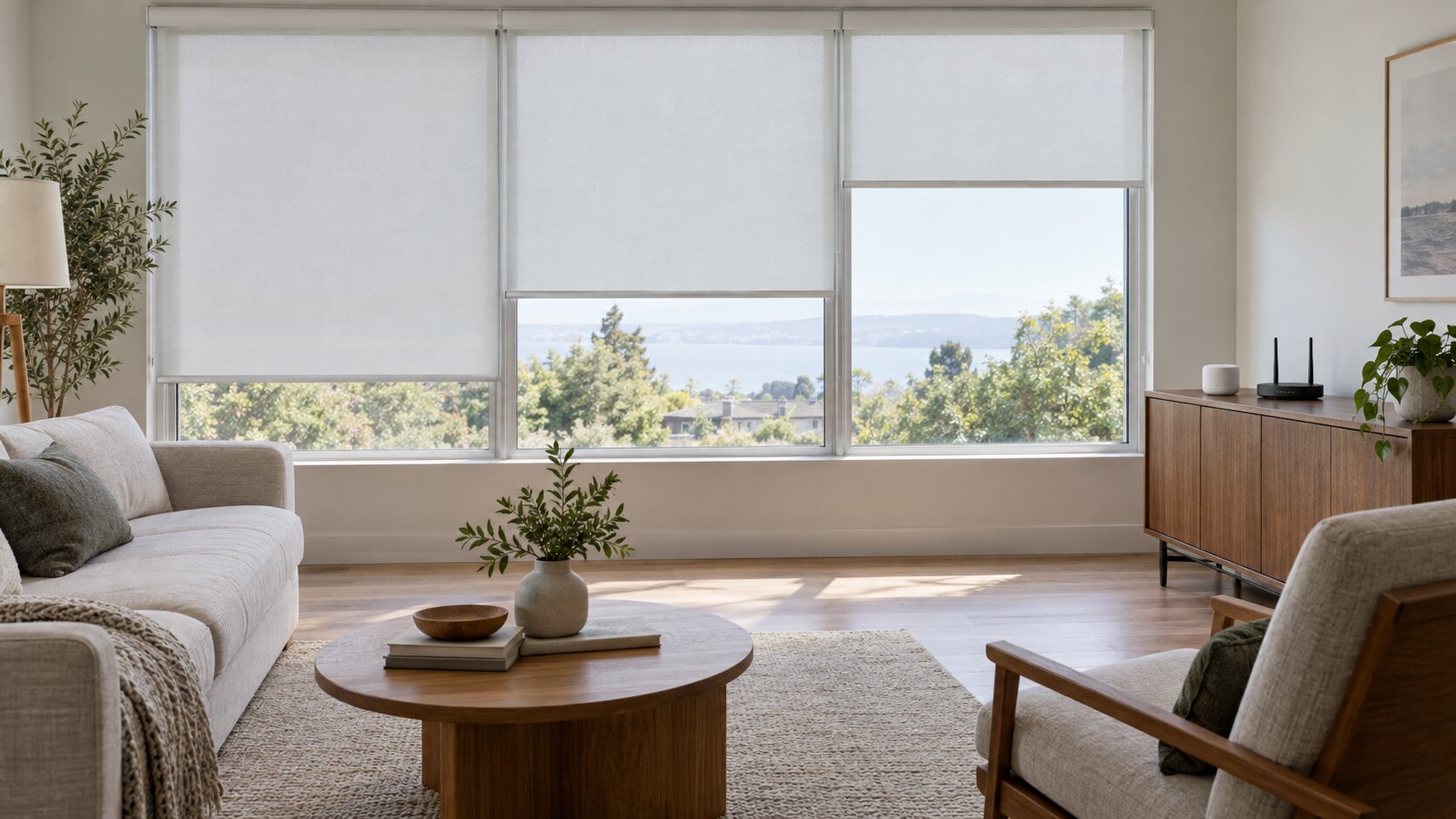
Plan positions that let you reduce a bright window area without automatically darkening the entire aviary room. For example, independently operated shades on adjacent windows may allow one pane to be covered while another remains partly open.
Discuss perch placement and access to shaded areas with the birds’ care team rather than placing the enclosure where the shade must compensate for constant direct sun. Lafeber’s housing guidance emphasizes aviary siting that avoids direct sunlight throughout the entire day (Lafeber).
Bring your daylight goals to World Wide Shades and request swatches for an in-room comparison. Evaluate samples at the times that matter, with the birds safely unable to reach them.
Compare Privacy, View, and Heat-Control Priorities
Build the comparison around a few practical scenarios rather than fabric names alone. Ask how each candidate would serve an afternoon glare problem, a visitor-facing window, and a nighttime room with interior lights on.
- Daytime brightness: Compare samples against the same window and note whether the resulting light suits your room-use goals.
- Evening privacy: Check the proposed material from outside after dark, with normal interior lighting, before relying on it for privacy.
- Room darkening: Review edge coverage, installation details, and the care routine instead of assuming a blackout fabric creates a completely dark room.
Our comparison of blackout curtains and blackout shades can help you organize a room-darkening discussion. For this application, keep the final choice tied to both privacy needs and the birds’ veterinarian-informed routine.
Treat heat reduction as a performance question, not a guarantee of safe room temperature. Ask for information relevant to the selected fabric and window, and maintain a separate plan for temperature monitoring, ventilation, and appropriate cooling.
World Wide Shades can help clarify the window-treatment options before you order. Contact the team about privacy and light-control priorities or call (844) 674-2716 with your room description.
Keep Controls and Fabric Outside Bird Access
Plan the installation so birds cannot reach operating loops, loose cords, bottom bars, exposed edges, or moving hardware. Consider access from the enclosure, nearby furniture, play stands, and supervised flight routes, not just from the nearest perch.
Cordless operation may remove a hanging operating loop, but it does not turn the whole shade into bird-safe equipment. Motorized operation also needs a design that prevents access to the fabric, roller, battery components, and any electrical wiring.
Birds can chew electrical cords, creating serious hazards, so powered components require their own inaccessible routing (VCA Animal Hospitals). Do not leave a charging lead dangling near the aviary simply because the motor usually runs on a battery.
Loose fabric strands deserve attention too: Lafeber describes entanglement and ingestion concerns associated with damaged fabric and fibers in bird environments (Lafeber). Keep the shade inaccessible from the start rather than waiting to see whether a bird chews it.
Use our child-safe window treatment guide and pet-friendly window treatment guide as starting points for control questions, not as bird-specific safety certifications. Ask World Wide Shades to review operating choices through the contact page or call (844) 674-2716.
Address Glass Collisions and Escape Separately
A lowered shade is not an escape-proof barrier, and partial shading does not necessarily make uncovered glass visible to a flying bird. Windows and mirrors can present collision hazards for companion birds (VCA Animal Hospitals).
Review every flight-accessible window, glass door, and mirror as part of a separate hazard plan. Lafeber discusses making glass apparent to birds and warns against leaving apparent flight-through spaces between visual treatments (Lafeber’s home-hazard guidance).
For example, lowering a shade halfway may solve eye-level glare while leaving the lower pane exposed. That opening still needs consideration in your flight-safety plan, regardless of whether the room looks calmer to a person.
Keep windows and exterior doors secured according to the enclosure’s escape-prevention design. Do not use fabric, a cassette, or side gaps as a substitute for physical containment, and arrange any necessary installation work while the birds are securely elsewhere.
Choose a Maintainable Fabric and Installation Plan
Ask for written material and care information before buying. Compare the actual fabric construction, permitted cleaning methods, and any coatings rather than assuming “natural,” “washable,” or “easy-clean” means suitable for every bird environment.
Include fabric attachment and hardware condition in that inspection; if you find a shade with fabric separating from its roller, see our guide to roller shade fabric detaching from its tube before returning birds to the room.
Cleaning-product fumes, paints, and other airborne pollutants are important bird-health concerns (VCA Animal Hospitals). Plan installation and cleaning with your avian veterinarian when there are questions about materials, odors, or the birds’ safe return to the space.
Do not spray fragrance or cleaning products onto an installed shade near the aviary. Follow the fabric manufacturer’s care instructions, avoid improvised chemical treatments, and do not assume a product is harmless merely because its odor has faded; VCA notes that harmful chemicals can remain after odors diminish (VCA Animal Hospitals).
World Wide Shades suggests comparing care requirements alongside appearance using the roller shade fabric guide. Order fabric swatches to review color and texture, while keeping samples away from beaks and treating them as design tools rather than safety tests.
Establish a Predictable Operating Routine
Write down a few intended shade positions, such as morning partial opening, afternoon glare reduction, and evening privacy. Test these settings while someone is present, and revise them if they interfere with enclosure access or the established care routine.
If you choose motorization, keep an accessible human control and learn what happens when power, connectivity, or a schedule fails. Our local versus cloud shade-control guide offers a framework for those reliability questions.
Introduce movement deliberately rather than immediately scheduling unattended cycles beside the enclosure. Keep birds clear of the operating area, and ask their veterinarian about persistent distress or changes in behavior instead of assuming a different shade position will resolve them.
Related window-treatment guides
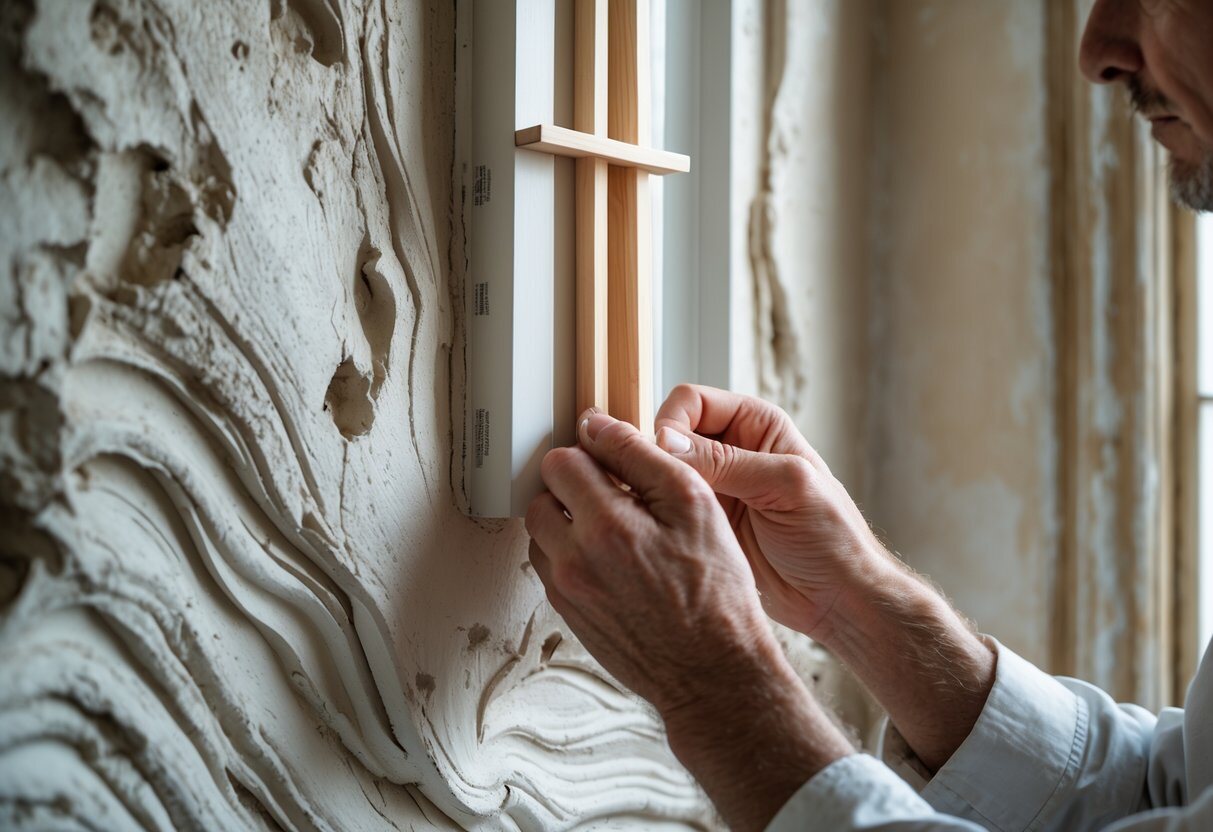
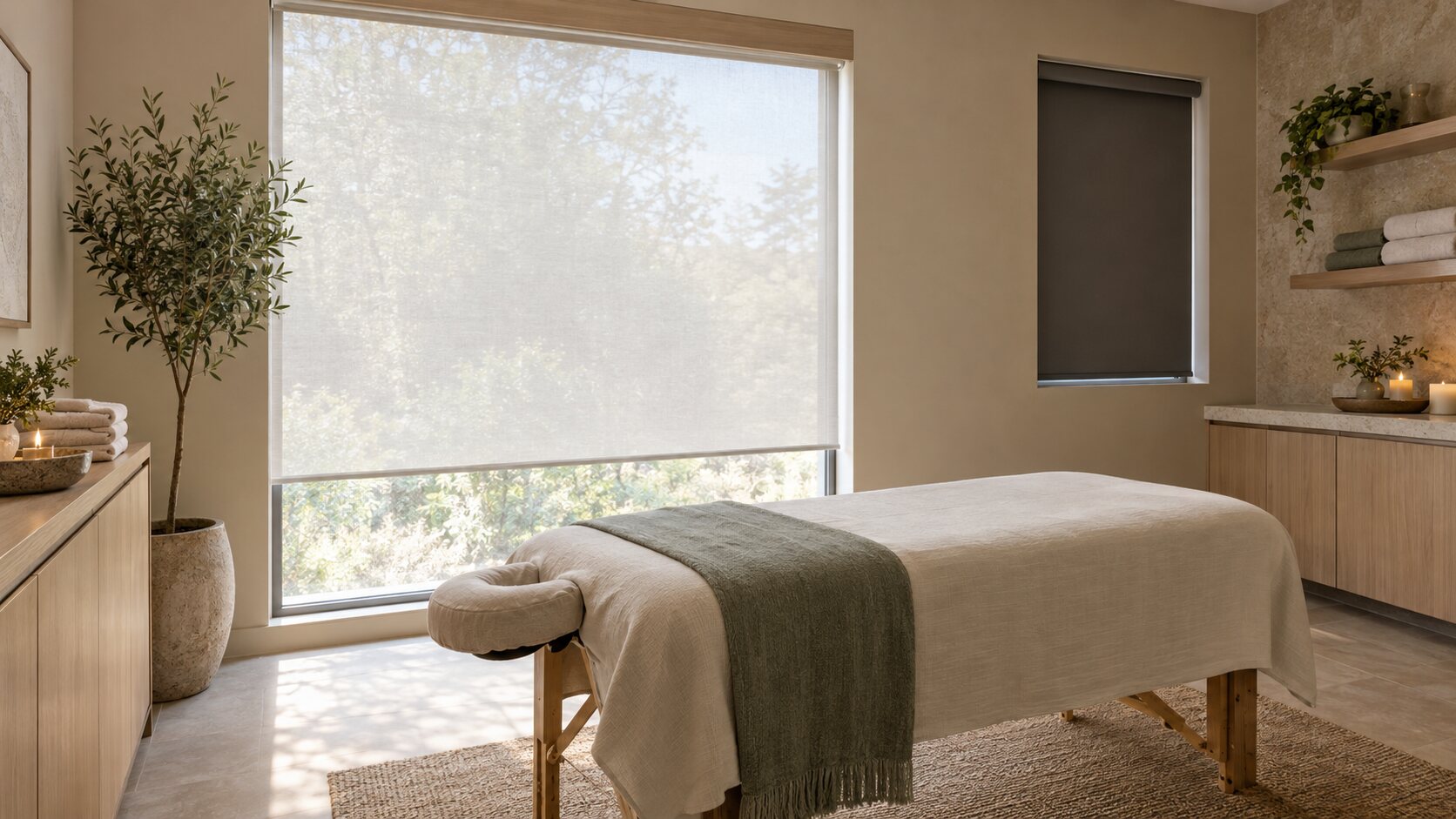
For more planning perspectives, read about roller-shade bracket gaps on uneven walls, local-versus-cloud motor control, daylight and reflection control in yoga studios, and privacy and cleanability in spa treatment rooms.
Frequently Asked Questions
They can be considered for the room’s windows when the installation keeps fabric and hardware inaccessible to birds. Suitability depends on the enclosure layout, individual birds, materials, controls, and care routine, so do not treat any general-purpose shade as certified avian equipment.
Do not use the open position as a substitute for a veterinary lighting plan. Ask an avian veterinarian about the birds’ species-specific and individual needs, including whether UVB supplementation is appropriate and how prescribed equipment should be used.
Treat these as different decisions rather than interchangeable products. Discuss sleep conditions and any covering routine with the birds’ veterinarian, then select window coverage that supports that plan without promising complete darkness.
Motorization can avoid a hanging operating chain, but the remaining equipment still needs inaccessible placement. Review power leads, charging access, moving parts, and manual controls before choosing the system.
Do not rely on it as a complete collision solution. Birds may collide with windows or mirrors, so maintain a separate flight-hazard plan that addresses exposed glass and reflective surfaces (VCA Animal Hospitals).
Build Around the Birds’ Care Plan
The strongest shade plan has a limited, useful job: make window brightness and household privacy easier to manage. Keep containment, flight safety, air quality, and veterinary lighting decisions firmly in their own plans.
World Wide Shades can help you turn those boundaries into a practical window configuration. Start your roller shade design or contact World Wide Shades to discuss fabric and operating options before ordering.