What “Japandi” style means for window treatments
Japandi is the blend of Japanese and Scandinavian design: minimal silhouettes, warm natural materials, and a strong preference for uncluttered surfaces.
For windows, that translates into three non-negotiables:
- Simple geometry (straight hems, clean headrails, no extra bulk)
- Soft, natural-looking texture (even when you choose performance materials)
- Controlled light that feels calm, not harsh
Roller shades fit Japandi better than most window coverings because they’re essentially a single, quiet plane of fabric that disappears when raised.
If you want to build a Japandi-ready shade quickly, start with World Wide Shades and design a clean roller shade in minutes using the online Shade Builder.
Why roller shades work especially well in Japandi interiors
Japandi rooms usually feature light woods, muted textiles, and negative space. Roller shades match that visual language.
Key reasons roller shades “read” as Japandi:
A roller shade occupies a small profile at the top of the window. That preserves the airy look that Scandinavian design is known for.
Roman shades and layered drapery can look beautiful, but their folds and stacks add visual weight. Japandi typically favors fewer shapes and fewer lines.
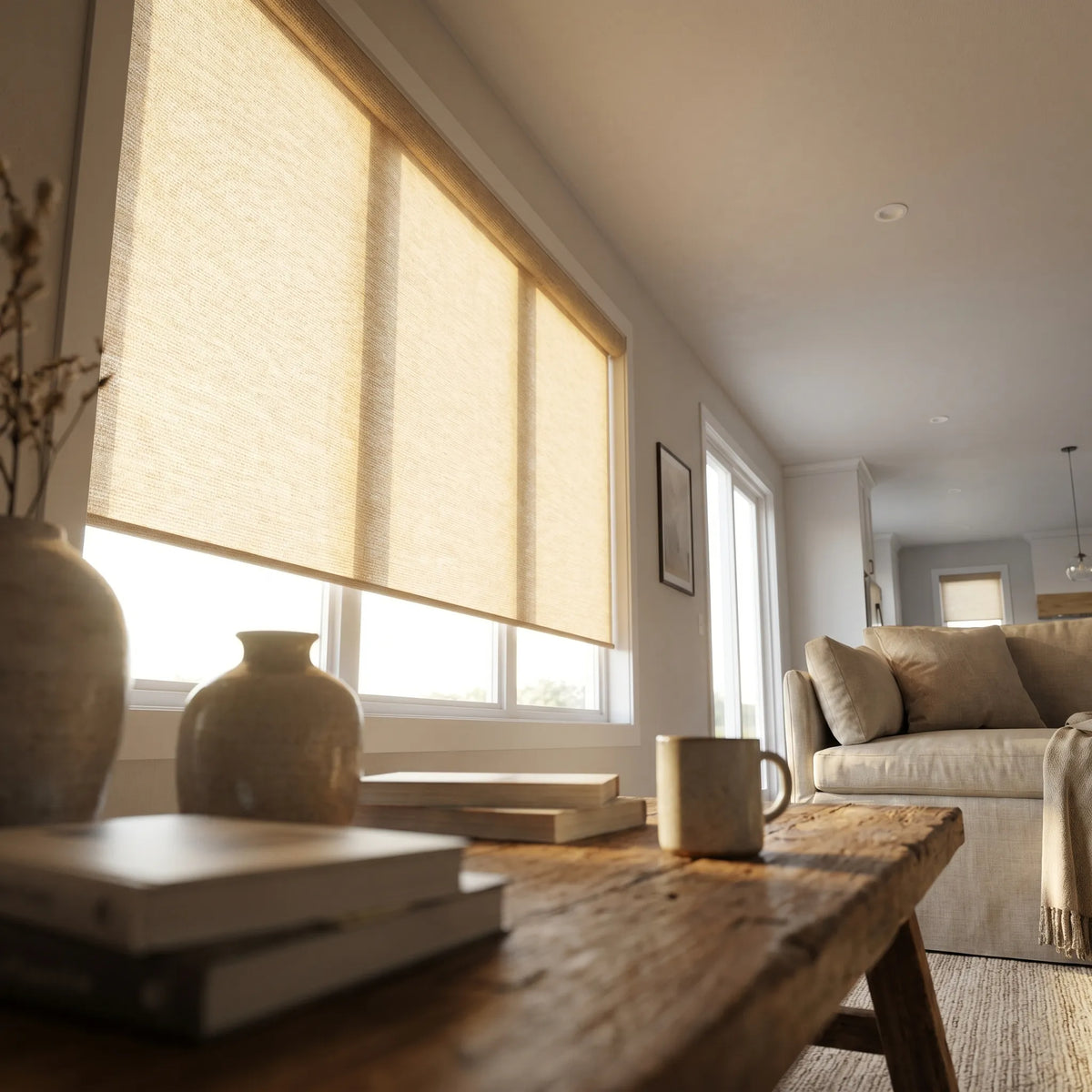
Because a roller shade is one continuous fabric surface, subtle weaves (linen-look, basketweave, natural slubs) become the star without feeling busy.
To compare silhouettes, see our breakdown of roller shades vs roman shades and how the stack/volume changes the room.
The Japandi color palette for shades (with specific “safe” ranges)
Japandi color is rarely pure white and almost never a saturated hue. Aim for low-chroma, warm-leaning neutrals.
Use these practical ranges to stay on-style:
- Soft whites: warm white, ivory, “chalk” (avoid bright blue-white)
- Greige and oat: warm gray-beige that matches light oak floors
- Sand and flax: beige with a hint of yellow/brown (reads natural)
- Mushroom and taupe: mid-tone neutrals that ground a room
A rule that works well: keep the shade fabric within one to two steps of your wall color (lighter or darker), not five steps darker.
If you’re choosing between multiple neutrals, order samples first. World Wide Shades makes it easy to compare tones side-by-side with swatches.
Texture choices: linen-look vs woven wood vs smooth sunscreen
Texture is one of the biggest style levers in Japandi. Here’s how to pick without sacrificing function.
Linen-look fabrics give you the organic feel Japandi is known for, but with better stability than real linen.
Best for:
- Living rooms, bedrooms, dining rooms
- Homes that want “soft” light
What to watch:
- Highly slubby textures can look rustic. Choose a subtle weave for a more modern Japandi look.
For more on texture strategy, read our guide to woven wood shades and when they’re the right call.
Woven woods can be perfect for Japandi—but they’re more visually active than a clean roller.
Best for:
- Accent spaces (reading nooks, breakfast areas)
- Rooms with simple furniture and few patterns
Tradeoffs:
- Natural materials can have color variance.
- Light gaps can be larger unless you layer with a liner.
If your Japandi space has a strong modern edge, a smooth solar fabric can look beautifully minimal.
Best for:
- South- and west-facing rooms
- Office areas where glare control matters
Solar shades are excellent for UV and heat management; compare them to standard rollers in energy efficient window shades.
Light control for Japandi: pick the openness and opacity intentionally
Japandi is all about balanced light. The goal is rarely “as dark as possible” and rarely “wide open sun.”
Light-filtering fabrics soften daylight and reduce glare while keeping the room bright.
Good fit for:
- Living rooms
- Kitchens and dining rooms
For a detailed walkthrough, see the light filtering shades guide.
Blackout can still be Japandi if the fabric remains neutral and the hardware is minimal.
If you’re doing blackout in a Japandi bedroom, prioritize controlling edge light. Side gaps often account for 20–40% of perceived “light leak” even with true blackout fabric.
For sleep-first spaces, also read best window shades for bedroom and our cost benchmarks in how much do custom roller shades cost.
Solar fabrics are popular in Scandinavian-style spaces because they preserve an outdoor connection.
If fading protection is the priority (books, art, textiles), pair solar shades with our UV strategy in UV protection window shades.
Hardware and details that keep the look “quiet”
Japandi is unforgiving when it comes to hardware. Keep it subtle.
A cassette or clean fascia can hide brackets and create a single calm line at the top.
If you’re deciding how to finish the top of the shade (especially in a minimalist room), review roller shade valance options.
A slim hem bar feels more modern and disappears visually.
- Cordless keeps the look clean and is ideal for family spaces.
- Motorized is the most minimal visually (no chain), and it’s excellent for tall windows.
If you’re planning smart control, start with motorized shades Alexa and Google Home or our broader setup guide: smart home motorized shades setup.
If you want a clean Japandi room with zero dangling cords, World Wide Shades can help you configure a cordless or motorized option in the Shade Builder.
Measuring and mount style: inside mount is usually the Japandi winner
Most Japandi interiors look best with an inside mount because it keeps the shade aligned with the window architecture.
Practical measurement targets:
- Measure width in three places (top, middle, bottom) and use the smallest.
- Measure height in three places and use the largest.
- For inside mount, confirm you have at least 2" of depth for many roller shade setups (some need less, but 2" is a safe planning number).
If you’re new to measuring, follow our step-by-step: how to install roller shades (installation and measuring are closely related).
Want someone to sanity-check your measurements before you order? Contact World Wide Shades at (844) 674-2716 and we’ll help you get it right.
Room-by-room Japandi shade recommendations
Goal: soft daylight, glare control, calm texture.
Best match:
- Light-filtering linen-look roller shade
- Optional solar fabric if there’s strong afternoon sun
Start your design in the World Wide Shades Shade Builder and order a few neutrals from swatches to confirm undertones.
Goal: sleep and serenity.
Best match:
- Neutral blackout fabric
- Consider side-channel or overlap strategies if you’re sensitive to morning light
If you’re building a dark, peaceful room, use our planning ideas in best fabrics for roller shades.
Goal: easy cleaning + warm light.
Best match:
- Light-filtering performance fabric (wipeable)
For moisture and food-splash zones, see our guide to roller shades for kitchen and bathroom.
Goal: reduce screen glare.
Best match:
- Solar fabric (often 3%–10% openness) depending on glare levels
If you want a view but less squinting, design a solar shade with World Wide Shades and ask us for recommendations at (844) 674-2716.
If you’re deciding between true solar fabric and a softer light-filtering look, compare performance in energy efficient window shades.
Cost expectations for Japandi-style custom roller shades
Prices vary by fabric, size, and lift type, but these ranges help you plan:
- Manual light-filtering roller shades: often fall roughly in the $150–$450 range per typical window when custom made.
- Blackout or upgraded textures: often add $25–$100 depending on the fabric tier.
- Motorization: commonly adds $200–$600+ per shade depending on motor type and power option.
For a detailed pricing breakdown, read how much do custom roller shades cost and then price your exact window instantly in the World Wide Shades Shade Builder.
Common Japandi mistakes (and how to avoid them)
Bright whites can look stark next to warm wood. Choose a warm white or oatmeal tone and confirm with swatches.
Japandi is about balance. If you use woven woods in every room, the house can feel busy. Keep woven wood as an accent and use quiet rollers elsewhere.
Even great blackout fabric won’t feel blackout if light pours through side gaps. Plan your mount and hardware accordingly.
If you have kids or pets, prioritize cordless or motorization. See our safety guidance in child safe window treatments.
FAQ: Japandi roller shades
Roller shades are usually the safer baseline because they’re visually quieter and can mimic natural texture with linen-look fabrics, while woven woods add more pattern and variation.
Light-filtering is the most common Japandi choice because it keeps spaces bright but soft; blackout is perfect for bedrooms as long as the color stays neutral and the hardware is minimal.
Inside mount typically looks more Japandi because it aligns with the window opening and keeps the wall plane clean; outside mount is useful when you need more coverage or have shallow depth.
Warm whites, oatmeal, sand, and light greige tones tend to match light oak best; avoid blue-white fabrics that can look cold against warm wood.
Cordless is simple and clean for most standard windows; motorized is the most minimal visually (no chain) and is ideal for tall or hard-to-reach windows.
Yes—light-filtering fabrics reduce glare and heat gain, and blackout fabrics can reduce winter drafts when mounted well; for a deeper dive, see energy efficient window shades.
Build a calm Japandi look with World Wide Shades
If you want Japandi style that still performs in real life—glare control, privacy, and easy daily use—start with World Wide Shades.
- Design your shade in the Shade Builder
- Compare undertones with swatches
- Ask for help at (844) 674-2716