Tall windows bring daylight and architectural drama into a room, but they also expose the limits of an ordinary shade. A 96-inch opening can be difficult to reach, a 120-inch opening can demand a carefully engineered tube and bracket system, and a two-story window may be impossible to operate manually from the floor. The right roller shade plan starts with accurate measurements, a mounting surface that can carry the load, and a control method that works every day.
World Wide Shades helps homeowners turn tall glass into a practical daylight and privacy system. Start a custom shade plan with World Wide Shades, order fabric swatches, or contact World Wide Shades with the opening width, height, and approximate sill location. For a high or oversized opening, call (844) 674-2716 before ordering so the motor, tube, and mounting approach are reviewed together.
What counts as a tall window?
There is no single industry cutoff, but a roller shade deserves tall-window planning when its top is above comfortable reach or its finished height creates unusual fabric weight. A typical adult can reach about 84 to 96 inches from the floor without a ladder, depending on the person and the room. A shade mounted above a 9-foot ceiling, a 10-foot transom, or a two-story foyer should be treated as inaccessible even if the glass itself is only 72 inches tall.
Height changes three design variables. First, a longer drop creates more rolled fabric and may increase the tube diameter as the shade rises. Second, a heavy blackout textile or decorative hem adds torque. Third, a manual chain or cordless handle may be inconvenient or unsafe when the shade is opened and closed frequently. World Wide Shades can help classify the opening as a standard, oversized, coupled, or motorized application rather than forcing a tall opening into a small-window template.
For a room with several tall openings, compare the planning principles in shades for floor-to-ceiling windows and shades for double-height foyers. Ask World Wide Shades for a sizing review if the opening is wider than 96 inches, taller than 108 inches, or divided into multiple glass panels.
Measure tall windows in a repeatable order
Measure width in three places—top, middle, and bottom—and record the smallest dimension for an inside mount. Measure height at the left, center, and right, then note the smallest height. A difference of 1/8 inch may be normal; a difference of 1/2 inch or more can indicate an out-of-square frame that needs an outside mount, shims, or a split treatment. Measure the depth of the recess at the top, middle, and bottom as well.
For an outside mount, measure the visible opening and decide how much overlap is needed to reduce light gaps. Many projects begin with 2 to 3 inches of overlap on each side and above the opening, but the final amount depends on the cassette, bracket, trim, and wall conditions. A blackout shade typically needs more attention to side gaps than a 5% solar screen. Do not subtract deductions yourself unless the product instructions specify them; custom manufacturers often make those deductions during fabrication.
A tall shade needs room for its headrail or cassette, bracket arms, motor, and the rolled fabric. Look for crown molding, sprinkler heads, recessed lights, cabinet doors, door swings, HVAC grilles, and a nearby ceiling transition. Leave a safe service path for battery access or a removable cassette. If the mounting point is drywall, locate framing or plan appropriate anchors; a large shade should not depend on two small anchors in unsupported gypsum.
Write down the ceiling height, top-of-glass height, sill depth, trim width, and nearest obstruction. Photograph the opening with a tape measure visible. Send the measurements to World Wide Shades through the contact page for a second look before you finalize a tall-window order.
Choose inside mount or outside mount
An inside mount gives the cleanest frame-to-fabric relationship and can preserve trim, but the recess must be deep and square enough for the brackets. Tall openings with shallow jambs often work better as outside mounts. An outside mount can cover uneven trim and reduce edge light, yet it needs a strong header and enough wall or ceiling area above the glass.
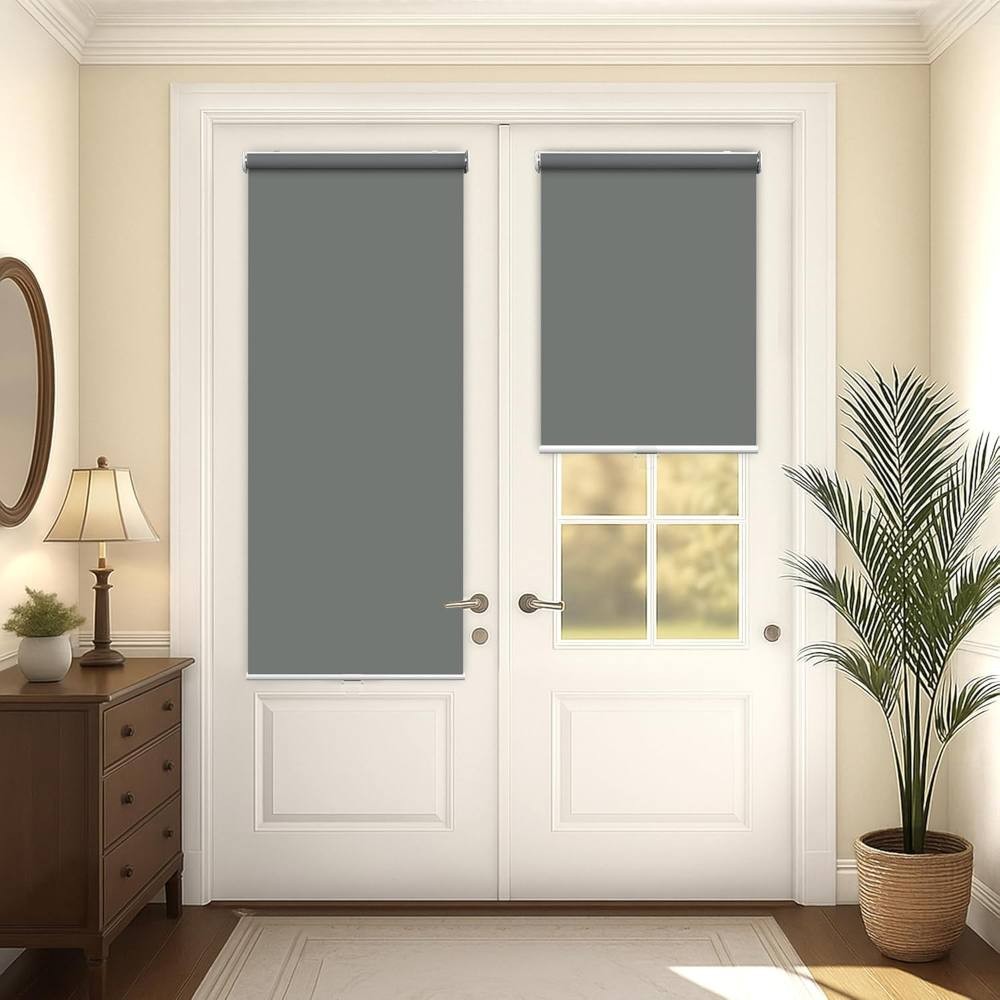
For a 1-inch recess, an inside mount may be impossible for a cassette or motor housing even if a slim manual roller would fit. A 3-inch recess may accept more hardware, but the fabric still has to clear a handle, mullion, or window crank. Tilt-turn windows, French doors, and operable panels require extra clearance; see roller shades for French doors for handle and swing considerations.
A split shade can be more useful than one enormous unit. Two 48-inch-wide shades may weigh less, align with mullions, and allow one side to open while the other controls glare. The tradeoff is a center gap and two motors or controls. World Wide Shades can compare a single tube with coupled shades when a picture window or a tall bank has unusual width.
Fabric choice affects motor load
Tall-window fabric is not merely a color decision. A 1% or 3% openness solar screen can preserve a view and cut direct glare, while a room-darkening textile improves privacy but adds weight and may require a larger tube. Blackout fabric can also create more visible edge light if the installation lacks side channels or a close-fitting cassette. Review the light-filtering shades guide and compare solar and roller shades before choosing a material for a high opening.
Use the window's exposure to set priorities. A west-facing tall window may need glare control from 3:00 to 6:00 p.m.; a south-facing window may need year-round UV protection and heat management. A north-facing opening may need privacy more than solar screening. Read about UV-protection window shades and ask World Wide Shades for a fabric recommendation based on exposure, not a small swatch alone.
Light-colored backings can change the street view and exterior appearance, while darker solar screens often preserve contrast. Test the fabric at the actual opening if possible. Order World Wide Shades samples and view them at morning, noon, and late afternoon before committing to a 120-inch drop.
Manual versus motorized operation
A manual chain can work for a tall shade when the chain is reachable, the shade is light enough, and daily operation is infrequent. A cordless lift is less useful when the handle is above shoulder height. A motor is usually the better fit when the opening is above 8 feet, the shade is wide or heavy, the room has multiple windows, or a resident needs operation without a ladder.
Battery motorization avoids opening walls but requires a charging plan. Depending on motor, shade size, fabric weight, temperature, and daily cycles, a rechargeable system may need attention anywhere from several months to more than a year. Hardwired power can be preferable for a two-story foyer or a shade that moves on a schedule every day, but electrical work should be planned and completed by a qualified professional.
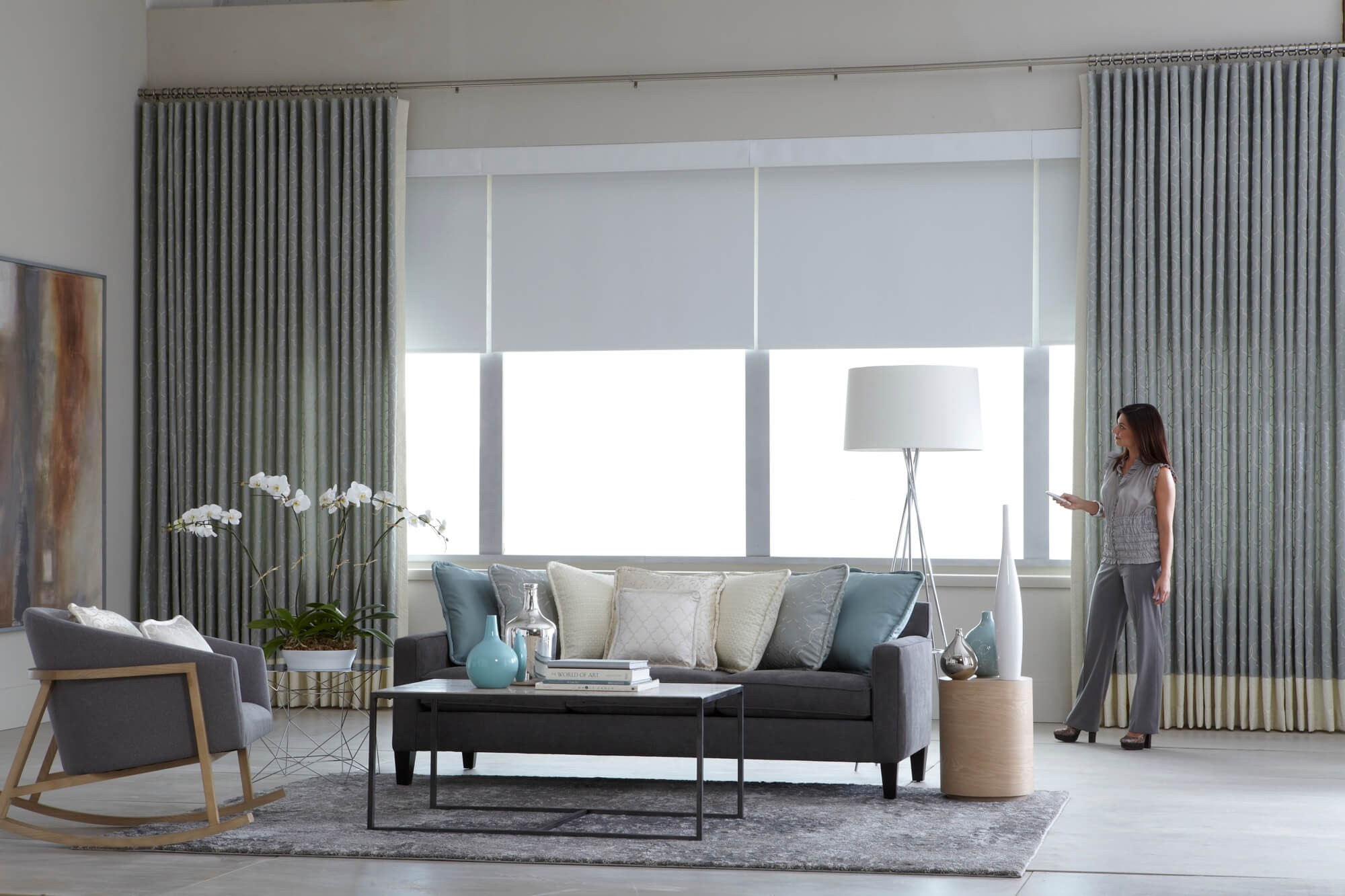
Control can be a handheld remote, wall switch, app, voice assistant, or automation. Keep a local control even if smart-home scenes are important. Use the smart-home motorized shades setup guide to plan scenes, and compare Alexa and Google Home motorized shades when the household uses voice control. Have World Wide Shades map the motorization before drywall, millwork, or electrical work is closed.
Mounting and alignment details matter
Mount the brackets at the same elevation and keep them square to the tube. A small angular error is amplified over a tall drop: the fabric may telescope toward one side, rub the bracket, or develop edge curl. Use a level on the mounting line, predrill into a header or framing where possible, and verify that the tube spins freely before attaching the fabric.
For very tall shades, ask whether a center support, coupled assembly, or side channel is required. A center support can prevent tube deflection but may interfere with a continuous roll. Side channels can improve blackout performance but require vertical, parallel mounting surfaces. If the opening is near a stair, do not position a service point where a ladder would need to rest on a tread.
After installation, run the shade through at least three complete cycles. Watch the first 12 inches of travel, the bottom bar, and the final 12 inches near the upper limit. Stop if the fabric begins to telescope or the motor strains. Contact World Wide Shades for a configuration check rather than repeatedly forcing a misaligned shade.
Tall-window cost planning
Custom tall-window shades vary widely, but the cost drivers are measurable. A 36-by-72-inch manual light-filtering shade may be a relatively simple product; a 72-by-120-inch blackout shade with a cassette, side channels, rechargeable motor, and remote is a substantially different project. Plan for the shade, hardware, control, delivery, installation conditions, electrical work if applicable, and any lift or access equipment.
A useful budgeting method is to price one opening in three configurations: manual light filtering, motorized light filtering, and motorized room darkening. Then multiply by the number of openings while checking whether grouped control or coupled shades changes the price. See how much custom roller shades cost for a broader budget framework. World Wide Shades can help separate necessary performance upgrades from decorative extras.
Tall-window FAQ
The maximum depends on fabric, tube, bracket, motor, and manufacturer limits rather than height alone. Many residential systems are designed around drops near 96 to 120 inches, while specialized products can go farther. Ask World Wide Shades to verify the allowable width, drop, fabric roll, and motor load for the exact opening.
Battery power is practical when wiring is difficult and the shade is accessible for occasional charging. Hardwired power is often better for high or frequently scheduled shades because it reduces service visits. A site-specific review should consider access, power path, cycles per day, and future maintenance.
A common starting point is 2 to 3 inches past the opening on each side and above, but blackout goals, trim, cassette size, and wall conditions can change that number. Measure the usable mounting surface and confirm the final overlap with the shade provider.
Coupled shades can share a drive when the system and total width support it, but two independent motors may give better alignment and room-by-room control. World Wide Shades can compare a single wide shade, coupled units, and separate shades for the opening.
Choose motorization, retain a handheld or wall control, and plan battery access or a hardwired service path before installation. Do not rely on a ladder placed on stairs or furniture. Contact World Wide Shades for a high-window access plan.
Plan the opening before you order
The best tall-window shade is measured as a system: opening, trim, hardware, fabric, motor, control, and future access. A careful plan can reduce edge gaps, prevent tube strain, and make a dramatic window easy to use. Build your tall-window shade with World Wide Shades, review fabrics in the swatch library, or call (844) 674-2716 for a project review. World Wide Shades can help you move from a difficult-to-reach glass wall to reliable, comfortable control.