Coastal living is the dream—until your home takes a beating from salt air, relentless UV, and the kind of wind-driven rain that seems to find every tiny gap around a window. If you live near the ocean, on a barrier island, or anywhere storms regularly roll through, window shades are not just décor. They’re part of your home’s comfort system.
This guide breaks down what actually matters for window shades in coastal and hurricane-prone regions: materials that hold up to humidity and salt, designs that reduce heat and glare, mounting choices that stay secure, and practical habits that help your shades last longer. Along the way, you’ll see where different shade types make sense—and how World Wide Shades can help you choose a solution that looks clean year-round and performs when weather turns rough.
If you want help narrowing down fabrics and hardware for your exact zip code, start with the World Wide Shades online builder and see options that fit your windows and your lifestyle.
What makes coastal and hurricane-prone homes harder on window shades
Coastal environments combine multiple stressors that don’t show up as strongly inland. A shade that looks perfect in a dry, mild climate can warp, discolor, or corrode faster when it lives near the sea.
Salt carried in the air speeds up corrosion on certain metals and can leave a fine film on surfaces. Over time, that can affect brackets, chains, bottom rails, and any exposed fasteners.
A coastal-ready plan usually includes:
- Hardware finishes that resist corrosion
- Materials that won’t swell or warp from humid air
- Simple cleaning routines that remove salt residue before it builds up
If you’re comparing different hardware styles, the World Wide Shades team can help you choose a finish and control type designed for durability.
In humid climates, moisture hangs in the air and can settle on window coverings, especially if a room has limited airflow. Basement-like conditions can happen even above ground in beach homes with closed-up rooms or seasonal use.
If humidity is a daily reality, you’ll want fabrics and constructions that are easier to wipe down and less likely to trap moisture.
Coastal light is bright—often bouncing off water, sand, and light-colored surfaces. That means more glare, more heat gain, and faster fading if you choose the wrong fabric.
For sun management basics (and how openness factors into visibility), see uv-protection-window-shades and energy-efficient-window-shades.
Shades aren’t hurricane shutters, but they do affect how your home feels before and after storms. A better shade choice can:
- Reduce solar heat when the power is out
- Improve privacy when you’re using generators or temporary lighting
- Help keep interior finishes from fading over time
When storm season approaches, it’s a good time to evaluate not just the fabric, but also the mounting method and hardware strength.
Best shade types for coastal regions (and what to avoid)
There’s no single “best” window shade for every coastal home. The right pick depends on whether your top priority is glare reduction, thermal performance, easy cleaning, or a clean modern look.
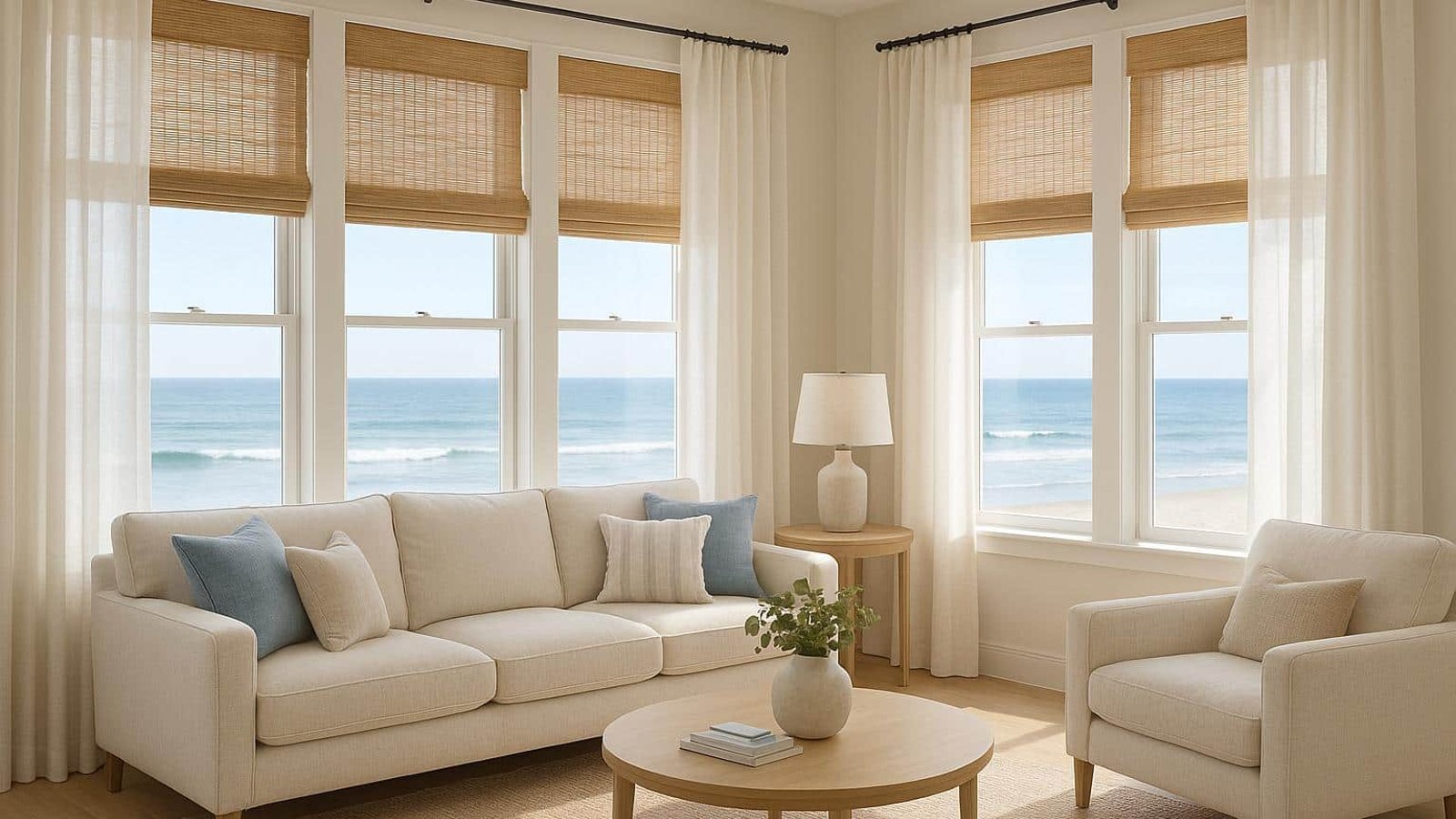
Solar shades are a favorite in coastal homes because they cut glare while keeping a view. They’re especially useful on west- and south-facing windows that get punishing afternoon sun.
What to look for:
- Openness factor that fits your privacy needs
- UV-blocking performance suitable for bright exposures
- A bottom rail and hembar that hangs clean and doesn’t curl
If you’re deciding between solar and standard roller fabrics, compare notes in solar-shades-vs-roller-shades.
If you want a solar shade recommendation based on your exact room and exposure, browse options in the World Wide Shades swatch library and then price it in the World Wide Shades builder.
Roller shades are popular in modern coastal interiors because they’re simple, minimal, and available in fabrics that handle humidity well. They’re also a great match for large panes and sliding doors common in beach homes.
Helpful reads:
- Installation best practices: how-to-install-roller-shades
- Large openings: roller-shades-for-large-windows
- Sliding doors: roller-shades-for-sliding-glass-doors
World Wide Shades can help you choose a roller fabric that balances coastal privacy with daylight—start with the online builder when you’re ready.
Cellular shades can improve comfort by slowing heat transfer, which matters when ocean-facing rooms bake in the afternoon sun. The key is choosing a construction that stays crisp in humidity and doesn’t trap moisture in a closed-up seasonal home.
If energy savings are a big goal, read energy-efficient-window-shades and consider pairing insulating shades with good ventilation habits.
Textured shades can look incredible in coastal décor, but they often require more maintenance. Some fabrics can hold onto moisture, trap salt residue, or show spotting if condensation forms.
If you love natural texture, check the pros and cons in woven-wood-shades-guide and think about which rooms are best for that style (often bedrooms and low-humidity spaces).
Fabric and material choices that hold up near the ocean
When people say “coastal-ready shades,” they often mean two things: the fabric stays stable in humidity, and it won’t fade fast in sun.
If you have kids, pets, frequent guests, or simply don’t want to baby your shades, prioritize fabrics that are easy to clean.
For cleaning do’s and don’ts, read how-to-clean-roller-shades. It’ll help you avoid common mistakes like over-wetting fabric or using harsh cleaners that leave marks.
In coastal light, color choice matters. Bright whites can stay fresh-looking, but some lower-quality materials may yellow over time, especially in rooms with heat and sun.
If you’re picking a color palette, use window-shades-color-guide to match undertones and avoid “almost-white” mismatches.
Even if the fabric is perfect, hardware that corrodes or binds will make your shades feel cheap. In coastal regions, you want brackets and mechanisms that keep operating smoothly over years.
If you’re not sure what to choose, call World Wide Shades at (844) 674-2716 or reach out via the contact page and we’ll help you select a coastal-appropriate control and finish.
Light control strategy for beach homes (privacy without losing the view)
One of the biggest coastal challenges is balancing view with privacy. Beach houses often have large windows facing open space—great for scenery, not always great for nighttime privacy.
Many homeowners find that one fabric can’t do everything. The practical solution is layering two light-control modes:
- A daytime fabric that cuts glare but preserves view
- A nighttime option that boosts privacy and softens interior lighting
Dual shades are a streamlined way to do this. Learn how they work in dual-roller-shades-day-night.
If you want to build a day/night setup that fits your windows, the World Wide Shades builder makes it easy to compare light-filtering and privacy levels.
Coastal bedrooms can be bright at dawn and warm at night. If you’re optimizing for rest, you may want light-blocking fabrics or better side coverage.
For bedroom-specific guidance, see best-window-shades-bedroom and the performance comparison in blackout-curtains-vs-blackout-shades.
Mounting and hardware tips for windy regions
Storm winds create pressure changes around windows, and daily coastal breezes can rattle loose hardware over time. A secure install matters.
- Inside mount looks cleaner and keeps the shade tucked into the window opening.
- Outside mount can reduce light gaps and add privacy coverage, especially if your window trim is shallow.
For a practical comparison (and when outside mount is the better choice), read inside-mount-vs-outside-mount-shades.
If you’re unsure which mount will work with your window depth, World Wide Shades can guide you—start with the contact page or call (844) 674-2716.
Coastal homes often have older frames, settling, or slight out-of-square openings. Accurate measurement reduces the chance of uneven gaps.
Use how-to-measure-windows-for-roller-shades to measure confidently, then price your custom fit in the World Wide Shades builder.
Motorized shades: a smart upgrade for storm season and rentals
Motorized shades are not just about convenience. In coastal homes, they can help you:
- Quickly reduce glare and heat during peak sun hours
- Control hard-to-reach windows in vaulted great rooms
- Manage privacy in rental properties with consistent settings
If you’re building a smart home setup, see smart-home-motorized-shades-setup and motorized-shades-alexa-google-home.
Want to check motorized options for your windows? Start in the World Wide Shades builder and compare control styles.
Coastal-room recommendations (what works where)
Different rooms face different coastal stressors. Here’s a quick way to match shade choices to common beach-house spaces.
These spaces often have the largest glass and the most glare.
Best bets:
- Solar shades for view + glare control
- Light-filtering rollers for a softer look
- Dual rollers if you need nighttime privacy
If you want to explore living-room-friendly fabrics, see best-roller-shades-living-room.
Humidity spikes are common here, so easy-clean fabrics matter. If you’re choosing shades for these rooms, start with roller-shades-kitchen-bathroom.
If your coastal home is a family home, safety is non-negotiable. Favor cordless options and designs made for child-safe operation.
Start with child-safe-window-treatments.
Care and maintenance: how to make shades last in salt air
Good maintenance doesn’t have to be complicated. In coastal climates, small habits go a long way.
A gentle wipe-down helps remove salt film that can build up and attract moisture.
If you leave a beach home closed for stretches of time:
- Use a dehumidifier or HVAC “dry” mode
- Encourage airflow where possible
- Avoid fabrics that hold moisture in high-humidity rooms
Even the best coastal materials see more wear than inland shades. The goal is to pick a product that looks good longer and keeps operating smoothly.
If you’re curious how long different products last, see how-long-do-roller-shades-last.
FAQ: coastal and hurricane-region shade questions
Interior shades are not a replacement for impact-rated glass or shutters. However, they can improve comfort, reduce glare, and protect furnishings from UV during the long months between storms.
Most homeowners do best with a day/night strategy—solar or light-filtering during the day, and privacy-focused fabric at night. Dual roller shades make this easy.
Cordless and motorized options reduce dangling components and can feel cleaner in breezy homes. They’re also a strong safety choice for families.
Lower openness generally increases privacy and reduces glare more, while higher openness preserves view. Your best choice depends on window direction and how close neighbors are.
If you want to see fabrics in person before you choose, order samples from the World Wide Shades swatches page.
Get coastal-ready shades that look great year-round
Coastal and hurricane-prone homes need window shades that do more than “look nice.” The right shade improves comfort, protects your interiors from intense sun, stands up to humidity, and keeps operating smoothly in salty air.
If you’re ready to choose a coastal-ready solution, start with the World Wide Shades builder to configure your shades online, or contact World Wide Shades at (844) 674-2716 through our contact page for help selecting the best fabric and hardware for your home.