A projector cannot create deep blacks if daylight is still washing the screen. Blackout roller shades for a home theater are the first line of defense against window glow, projector contrast loss, and distracting reflections. World Wide Shades can build the coverage around your screen wall, window trim, and seating layout instead of forcing a one-size-fits-all shade into a light-controlled room. Plan your theater shades with the World Wide Shades builder before you select a projector or screen.
What “blackout” should mean in a theater
In casual retail language, blackout may describe a dark-looking cloth. In a theater, evaluate the whole opening: fabric opacity, side channels or overlap, bottom gap, cassette, and how the shade meets the frame. A fully opaque fabric can still leak a bright outline if the shade is narrower than the opening. Outside mounting with generous overlap often performs better than a tight inside mount when the priority is darkness.
The practical target is not a laboratory percentage; it is a room where the image looks consistent across a daytime showing. Turn off every fixture, close the shade, and look for pinpoints around the perimeter. Ask World Wide Shades about edge-gap options when the window sits beside the screen or faces west.
Control the projector’s biggest enemy: stray light
Projectors need a dark environment because ambient light raises the apparent black level. Even a narrow strip of sun can make dark scenes look gray and reduce perceived contrast. Windows behind the audience can also throw light toward the screen and create a low-level veil across the image. A blackout roller shade with an opaque backing removes that source at the window instead of asking the projector to overpower it.
Treat each window as a separate light source. A small transom above the main opening may need its own shade, and a glass door may require a split shade so the handle remains usable. The skylight shades guide is useful when overhead glass is part of the theater envelope. World Wide Shades can map every opening before hardware is ordered.
Pick fabric and backing for darkness, not just color
Dark fabric is not automatically more opaque than light fabric. Look for a blackout or room-darkening construction with a backing designed to stop light transmission. A white or neutral street-facing face can maintain curb appeal while the room-facing side stays close to the theater palette. If the shade is visible beside a dark screen, matte charcoal or deep taupe can reduce visual distraction without turning the room into a black box.
Ask for a sample and hold it against a bright window. Compare the front and back, then inspect pinholes, seam lines, and the opacity of the edge. World Wide Shades can show options in custom swatches, where you can compare the shade to acoustic panels, carpet, and the screen border.
Design around screen reflections
Glossy surfaces near a window can bounce light onto the screen even after the main beam is blocked. Use a matte shade, keep the fabric flat, and avoid shiny metal finishes directly opposite the projector. If the window is on the screen wall, mount the shade high enough to keep the roll and cassette out of the viewing cone. A side channel or overlap can be worth more than a decorative valance in a dedicated theater.
If the room also hosts sports or gaming during the day, consider a dual shade: blackout for movie mode and a dimmable solar or light-filtering layer for daytime use. The blackout curtains versus blackout shades comparison explains where roller shades save wall space and where curtains add acoustic softness.
Motorization makes the theater repeatable
A motorized shade lets you create a “movie” scene that lowers every window to the same position. That consistency matters when one forgotten blind leaves a bright stripe across the screen. A schedule can close west-facing windows before sunset, while a handheld remote remains available for a spontaneous matinee. Battery motors simplify existing rooms; hardwired motors make sense during a remodel when access is open.
Plan an override so guests do not need an app. Confirm radio range through walls and whether the control system remembers shade positions. World Wide Shades can coordinate motorized blackout coverage with a smart-home shade setup and motorized shade scenes. Request a theater-control plan before drywall closes.
Measure for overlap and clearances
Record opening width at the top, middle, and bottom, plus the height at both sides. Note trim, crown molding, baseboards, speaker mounts, screen frames, and nearby door swings. An outside mount often needs at least 2 to 4 inches of extra width beyond the glass on each side, depending on the chosen system. More overlap reduces glow but must not collide with a speaker or screen frame.
For a wide window, split the shade into coordinated panels rather than creating a heavy, difficult-to-operate roll. Keep the meeting point away from the projector’s image path when possible. Send World Wide Shades your opening dimensions for a fit review; a small planning decision can prevent a visible center gap.
Account for heat and room comfort
Closed blackout shades reduce solar gain, but the glass may still heat the cavity between the shade and the window. Leave manufacturer-recommended clearance, especially for insulated glass, and avoid trapping heat against a sensitive frame. A light-colored street side can reflect more solar energy than a dark exterior face. If the theater is in a hot west-facing room, combine shade control with HVAC scheduling rather than relying on the fabric alone.
The energy-efficient window shades guide and south-facing windows guide provide useful orientation strategies. World Wide Shades can help balance thermal performance with the theater’s darkness target.
Budget for a real theater installation
A custom blackout roller shade may fall in a broad planning range of $300 to $1,200 per opening, depending on size, cassette, side channels, motorization, and installation access. A 30-by-60-inch window is not comparable to a 96-by-72-inch opening beside a projector screen. Add potential electrical work for hardwired motors and consider whether a split system reduces structural load.
The right quote should list fabric, opacity, mount, control method, dimensions, and installation assumptions. Get a World Wide Shades theater estimate, or call (844) 674-2716 with the number and size of windows.
A reliable theater specification
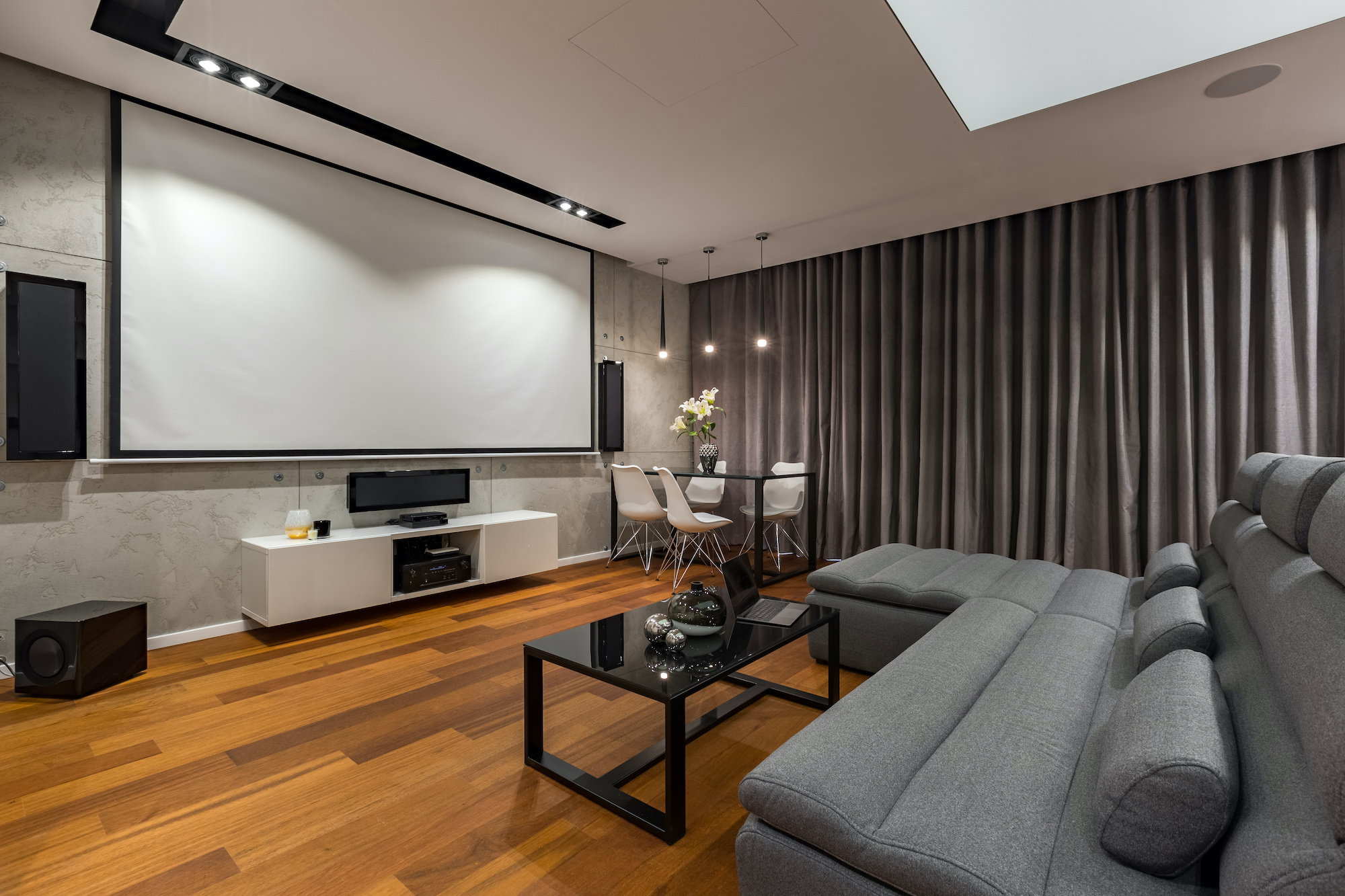
For a dedicated movie room, specify opaque blackout fabric, outside mount where practical, enough side overlap to cover the frame, and motorization grouped into a movie scene. Use matte finishes and keep the cassette out of the projector’s viewing cone. If the room has daytime sports or gaming, add a solar layer instead of opening blackout shades repeatedly. Test the room with all fixtures off before finalizing the screen position.
World Wide Shades is most helpful when you share the complete use case: projector type, screen width, window orientation, seating distance, and whether the room needs a bright daytime mode. That information turns “blackout shade” into a measurable performance plan.
FAQ: blackout shades for home theaters
Roller shades use less wall depth and can cover windows cleanly, while curtains can add acoustic absorption and extra overlap. Many theaters use blackout shades for light control and curtains as a secondary acoustic or decorative layer.
Use an outside mount with sufficient overlap, a cassette, side channels, or a shade system designed for blackout coverage. Measure the trim and nearby hardware before choosing the width.
Motorization is strongly useful when there are multiple windows or any opening is hard to reach. It allows a single movie scene to close every shade and avoids one forgotten blind ruining contrast.
Opacity and edge coverage matter more than the room-facing color. Blocking the light source lowers the room’s ambient level, which helps dark scenes look darker and colors appear more saturated.
Yes. World Wide Shades can review split layouts, cassettes, overlap, and motorization for large openings. Call (844) 674-2716 or contact the design team.
List every glass opening, its orientation and dimensions, then compare blackout fabrics through World Wide Shades swatches. Build a room-specific plan before ordering a screen.