The safest cleaning rule
Most roller shades need gentle maintenance, not a soaking wash. Dust first with a soft brush or vacuum attachment, spot-test any damp method in an hidden area, and never saturate a fabric unless the manufacturer specifically says it is washable. Water can create rings, shrinkage, delamination, or a wavy edge.
A practical schedule is dusting every 1–2 weeks in high-traffic rooms and a deeper spot clean every 3–6 months. Kitchens, homes with pets, and windows near open doors may need more frequent care. World Wide Shades can help identify fabric type before you clean; use contact or order current samples through swatches.
What you need
Gather a clean microfiber cloth, a soft vacuum brush, a feather duster or synthetic blind duster, distilled water, mild clear dish soap, two bowls, cotton swabs, and a dry white towel. Avoid ammonia, bleach, abrasive sponges, alcohol, essential oils, and furniture polish unless the manufacturer specifically approves them.
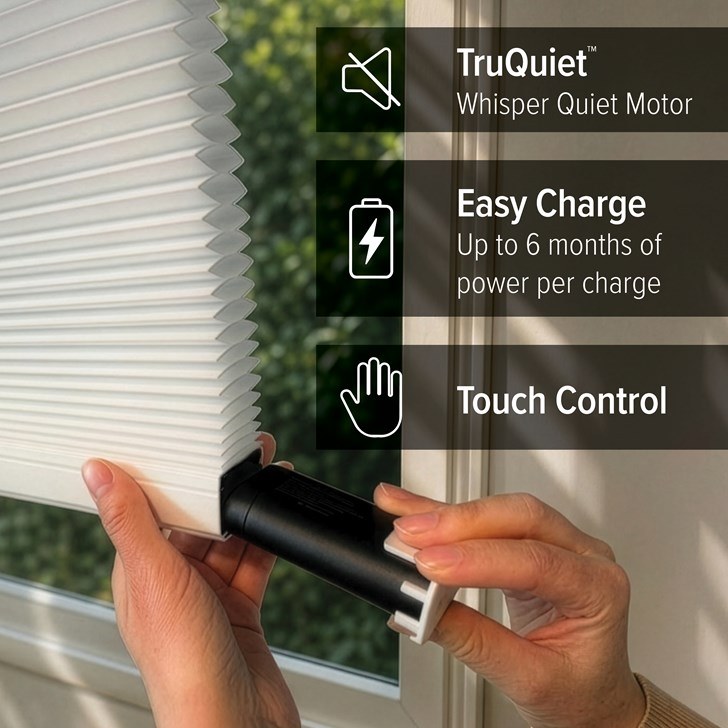
Use a stable step stool for tall windows. Do not pull the shade down farther than the operating system allows, and do not spray cleaner toward a motor, cassette, clutch, or headrail. If the shade is motorized, keep all moisture away from charging ports and electronics. See motorized-vs-manual-roller-shades-cost for hardware considerations.
Step 1: Identify the fabric and hardware
Look at the order record, care label, or invoice. Common categories include solar screen, light-filtering polyester, blackout-coated fabric, vinyl or PVC, woven texture, and moisture-tolerant material. A smooth vinyl shade tolerates a different approach than a blackout fabric with a coated reverse side.
Check whether the shade is cordless, chain-operated, clutch-operated, or motorized. Inspect the bottom rail and side channels for dust. World Wide Shades can recommend replacement or repair when a fabric is delaminating; cleaning cannot reverse a failing coating. For fabric choices, see best-fabrics-roller-shades.
Step 2: Dust from top to bottom
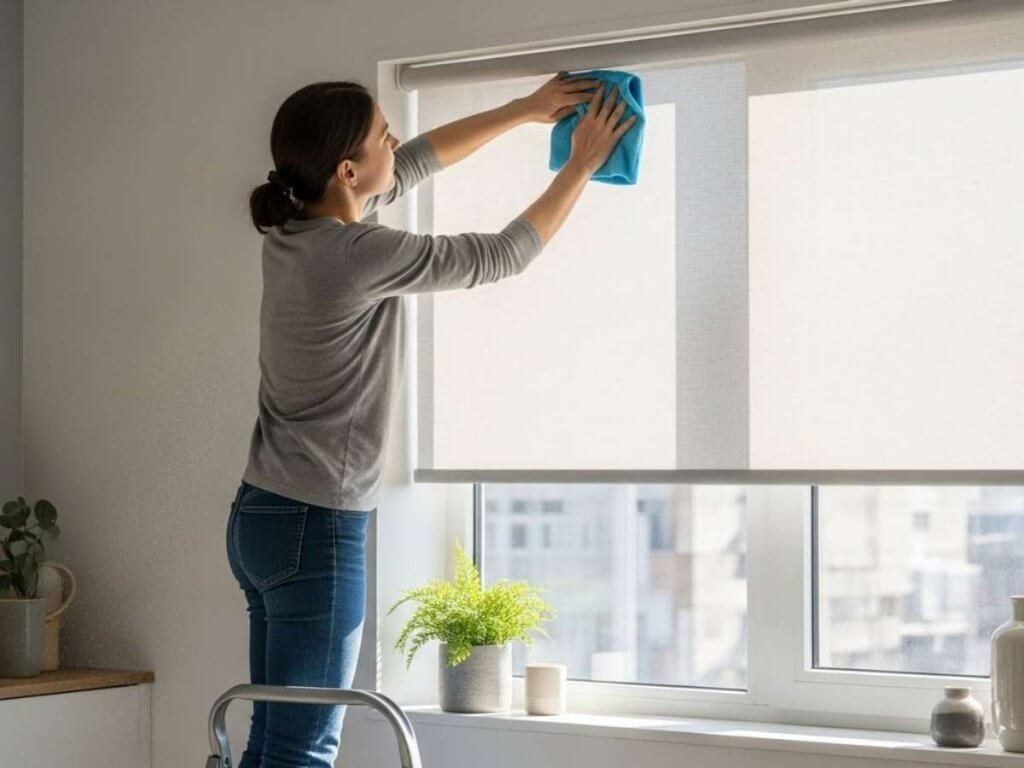
Lower the shade to a comfortable working height and support the bottom rail. Run a soft brush from the top edge down in overlapping strokes. If using a vacuum, use the lowest suction and a brush attachment; keep the nozzle from touching or pulling the fabric.
Dust both sides when accessible, but do not twist the tube or bottom rail. For a wide shade, clean in 12-inch sections so you do not skip a strip. Dusting often removes 70%–90% of visible loose particles without water, making it the lowest-risk first step.
Pay attention to the headrail, cassette, chain, and sill. Dirt at the bottom rail can transfer back to the fabric each time the shade rolls. Wipe hardware separately with a barely damp cloth and dry it immediately.
Step 3: Spot-test before damp cleaning
Mix one drop of mild clear dish soap into about 2 cups of distilled water. Dip a microfiber corner, wring it until nearly dry, and test a hidden lower corner. Wait at least 15 minutes for color transfer, ring formation, or coating change.
If the sample looks unchanged, blot the mark rather than rubbing. Work from the outer edge toward the center so you do not spread a ring. Use a second cloth dampened with plain distilled water to remove soap, then blot dry with a white towel.
Do not use a hair dryer or direct heat. Let the shade dry fully while lowered and level. Rolling a damp shade can trap moisture and create a permanent crease or odor. World Wide Shades recommends professional advice when a stain is large, oily, or on a coated blackout fabric.
Fabric-by-fabric care
Solar fabrics collect dust in the weave. Brush or vacuum gently, then spot-clean with a nearly dry cloth. Do not scrub across the openness pattern; pressure can distort the weave. A 1% fabric can show dirt more strongly than a 5% fabric because its tighter structure has less visual transparency.
For glare and UV-performance context, read uv-protection-window-shades and solar-shades-vs-roller-shades.
Polyester often tolerates gentle blotting, but finishes vary. Avoid soaking and do not fold the fabric while wet. If the shade is textured, clean along the texture rather than against it. Use a physical sample or care label to confirm the approved method.
Blackout material may have a white, foam, or reflective backing. Clean the room-facing surface only unless instructions allow otherwise. Never scrape a dried mark with a blade or rough sponge; a small coating break can create a visible light spot.
If edge light is the actual problem, cleaning will not fix it. Review roller-shades-with-side-channels-light-blockers and blackout-curtains-vs-blackout-shades.
Smooth vinyl can usually be wiped with a diluted mild-soap solution and dried. Keep water away from seams, magnets, and hardware. Do not use glass cleaner unless the product instructions explicitly approve it; some formulas leave a film or attack the finish.
Use a dry brush or low-suction vacuum. Natural fibers and open weaves can stain or distort with water. If a woven shade needs more than light spot care, contact World Wide Shades before trying a home remedy. Compare materials in woven-wood-shades-guide.
Cleaning chains, bottom rails, and side channels
Wipe a chain with a dry cloth first, then a barely damp cloth if approved. Do not lubricate a chain with household oil; it can attract grit and transfer onto the fabric. A bottom rail can be wiped with a soft cloth and dried before the shade is raised.
Side channels often hold dust and pet hair. Use a cotton swab or soft brush in the channel, then wipe the sill. Do not bend the channel or press it toward the fabric. If the shade rubs after cleaning, stop operating it and check whether the rail is level.
For pet-related buildup and fabric selection, read pet-friendly-window-treatments. World Wide Shades can help if a rail drags or a shade develops uneven tracking.
What not to do
- Do not put a roller shade in a washing machine or dryer.
- Do not soak a rolled tube or spray cleaner overhead.
- Do not scrub a blackout coating with a brush.
- Do not use bleach, acetone, or abrasive powder.
- Do not roll the shade while it is damp.
- Do not force a chain, clutch, motor, or bottom rail around a blockage.
These shortcuts can turn a removable stain into a fabric replacement. If a shade is already warped, frayed, or delaminated, cleaning may make the damage more visible. World Wide Shades can discuss repair or replacement through contact.
A 10-minute maintenance routine
Once a month, lower the shade, brush the front, vacuum the sill, wipe the bottom rail, and inspect the chain or motor. Twice a year, check that the fabric rolls evenly and that brackets remain tight. In a kitchen, inspect for grease before it hardens; in a bedroom, check for pet hair and dust at the bottom rail.
A small routine protects the investment more effectively than an aggressive annual wash. World Wide Shades can recommend durable, easy-care fabric for a high-use room; start with the builder and request swatches.
When to call for help
Ask for guidance if the stain covers more than one square foot, the fabric has a coating, the shade is motorized, or the care label is missing. Also ask before cleaning mold, ink, oil, or adhesive. Do not dismantle a shade to wash it unless the manufacturer provides a specific procedure.
World Wide Shades can help determine whether the issue is dirt, fabric failure, uneven tracking, or hardware. Call (844) 674-2716 or send details through contact. For a replacement fabric discussion, see how-to-replace-roller-shade-fabric-only.
Frequently asked questions
Usually not in a washing machine or bathtub. Most roller shades should be dusted and spot-cleaned with a nearly dry cloth after a hidden-area test. Follow the product-specific care instructions.
Start with plain distilled water and a soft microfiber cloth. If approved, use one drop of mild clear dish soap in about 2 cups of water. Avoid bleach, ammonia, alcohol, abrasive products, and household sprays.
Dust every 1–2 weeks in dusty or high-use rooms and spot-clean every 3–6 months as needed. Kitchens, pets, and open windows may require more frequent light maintenance.
Dust gently and blot the room-facing surface with a nearly dry cloth after testing. Keep water away from the coated backing, seams, and hardware. Do not scrub or roll the shade while damp.
Yes, use a soft brush attachment on low suction and move from top to bottom. Do not press the nozzle into the weave or pull the fabric away from the tube.
Stop adding moisture, blot with a clean dry towel, and allow the shade to dry fully while lowered and level. A ring may need professional treatment or fabric replacement; repeated wetting can enlarge it.
Keep your shades looking new
World Wide Shades can help you choose fabrics that fit your room’s cleaning demands and light goals. Use the World Wide Shades builder, order swatches, or contact World Wide Shades. Call (844) 674-2716 if you need care guidance before you clean.