The honest answer on cost
Manual roller shades usually cost less up front. Motorized roller shades cost more, but the premium can be rational for tall, hard-to-reach, high-window-count, or schedule-driven rooms. A common custom manual shade costs about $250–$700 installed; adding a motor often raises the opening to $550–$1,300. The exact gap depends on width, fabric weight, rechargeable hardware, and whether several shades share a control system.
A 10-year comparison is more useful than a product-page price. World Wide Shades recommends listing the shade, installation, power method, controls, hub, batteries, and likely service. Build that list in the World Wide Shades builder, compare fabric samples through swatches, and ask for help at contact.
Up-front price: what changes the number
A basic cordless or clutch-operated custom shade may cost $150–$500 for the product, with installation adding $75–$200 per opening. Wide shades, blackout cassettes, side channels, and specialty fabrics can push the product above $700. A ten-window project might therefore land near $2,500–$7,000 installed.
Manual is not synonymous with low quality. A well-sized cordless shade can be quiet, safe, and reliable for years. World Wide Shades can help choose a clutch, cordless spring, or chain system based on width and lift weight. For control options, see roller-shade-clutch-slipping-fix.
Expect roughly $250–$600 for the motor and control hardware on top of the shade, with larger or premium systems reaching $800 or more. A rechargeable motor may avoid an electrician, while hardwired power can add $300–$1,000 depending on access. A hub or bridge may cost $50–$250 for app, voice, or group control.
World Wide Shades can price the complete window rather than treating the motor as an afterthought. Request a line-by-line quote through contact or call (844) 674-2716 before you decide on a control ecosystem.
A 10-year cost example
Consider eight 36-by-60-inch windows using a midrange light-filtering fabric.
- Manual: $400 shade plus $100 installation equals $500 each, or $4,000 for eight.
- Motorized: $400 shade, $350 motor, $100 installation, and $25 allocated hub cost equals $875 each, or $7,000.
- Initial premium: $3,000, or $375 per opening.
- Ongoing allowance: assume $20 per shade for occasional battery or charger replacement over 10 years, adding $160.
The 10-year totals become about $4,000 manual versus $7,160 motorized, before repairs or electricity. That is $33 per month for manual and $60 per month for motorized across the whole project. If automated control prevents overheating, protects furnishings, or makes inaccessible windows usable, the premium may be worthwhile. If every window is easy to reach, it may not be.
For a broader budget benchmark, read how-much-do-custom-roller-shades-cost. World Wide Shades can model your actual count and window sizes with the builder.
Hidden costs people miss
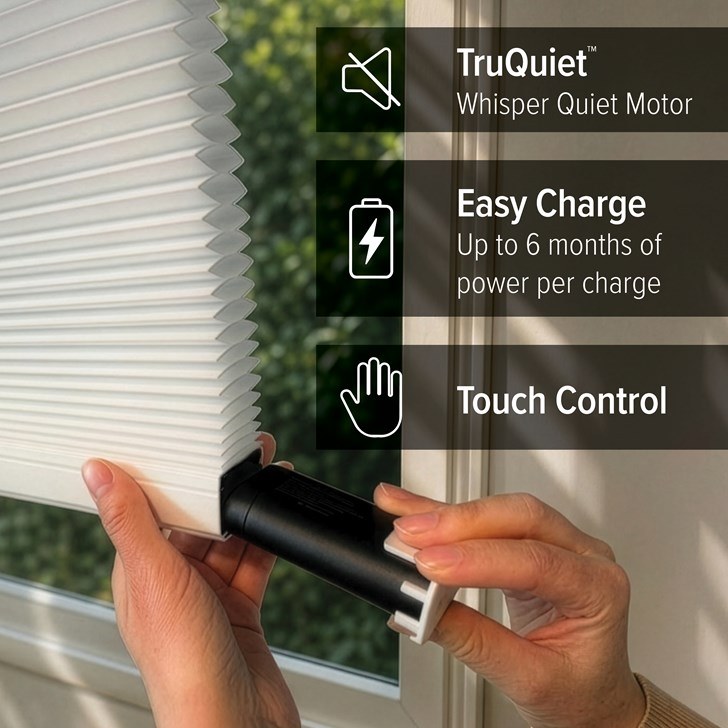
Battery motors can run for several months to more than a year depending on shade width, fabric weight, and cycles per day. Charging frequency is not a promise; a wide blackout shade used four times daily draws more energy than a small solar shade lowered once. Place charging access on the plan before installation.
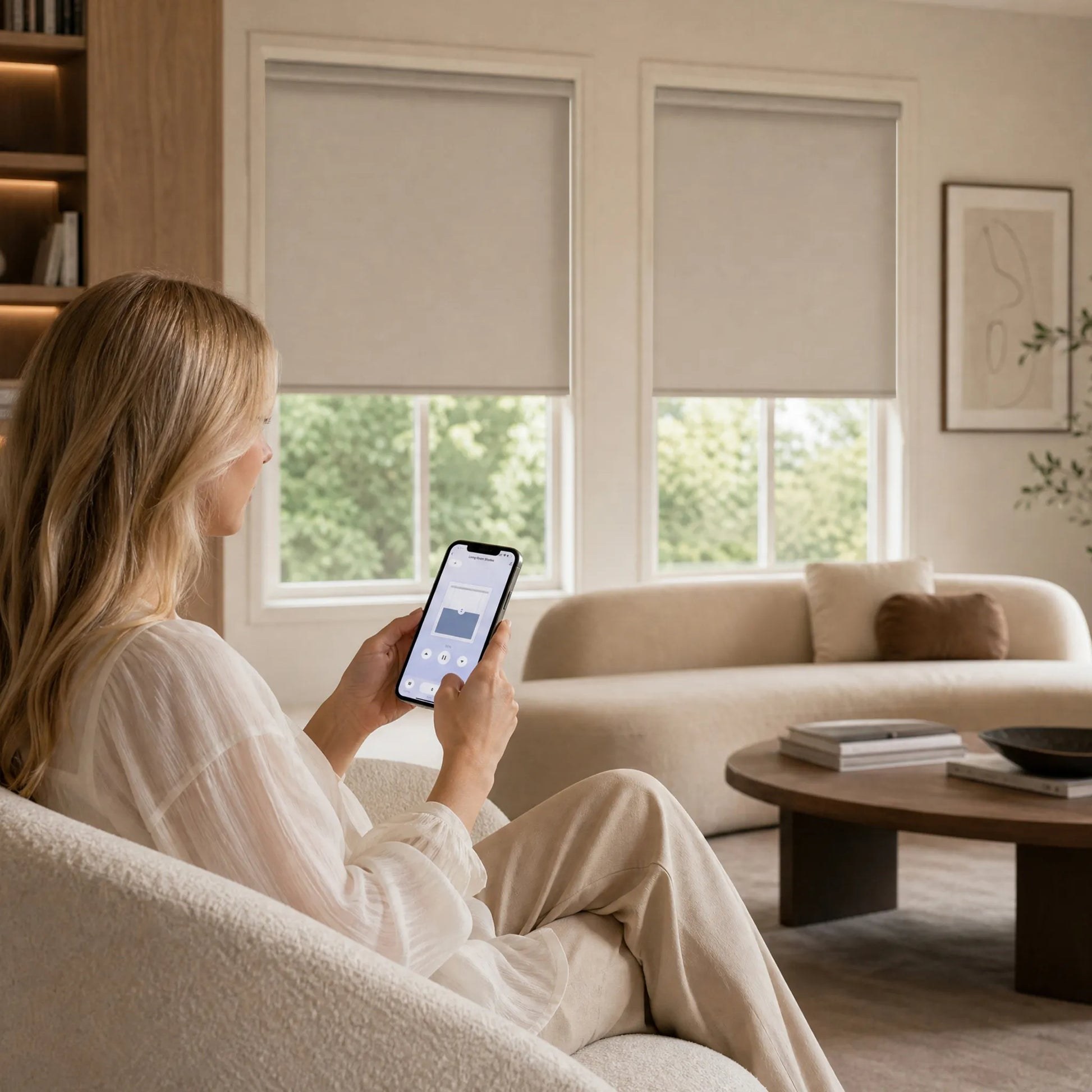
A shade may operate from a remote without a hub but need a bridge for app scenes or voice commands. Confirm whether the system works with Alexa, Google Home, Apple Home, or a specific protocol. Compare smart-home-motorized-shades-setup and roller-shades-with-homekit-apple.
Allow $100–$300 for a service visit if a motor, charger, or bracket fails after warranty. A manual clutch replacement may be cheaper, but a wide shade can still require removal and re-leveling. Keep the original model number and remote instructions.
World Wide Shades can help diagnose whether a problem is fabric, tube, bracket, or motor. Send a photo via contact or call (844) 674-2716 for project guidance.
When motorization pays for itself in convenience
If a window is 12 feet above the floor, manual operation may require a ladder. Motorization replaces a risky task with one button or schedule. The value is access and safety, not just luxury.
Eight manual shades can require eight separate adjustments. A group command can close them in about 10 seconds, and a scene can repeat the action every day. World Wide Shades can group shades by room, elevation, or sun exposure.
Scheduled opening can support a consistent wake time, while cordless operation removes dangling cords. Review child-safe-window-treatments and choose a control plan that adults can override.
A schedule can lower solar shades before afternoon glare peaks. It may reduce discomfort and protect floors, art, and furniture, although energy savings vary by glass, climate, and behavior. See best-shades-south-facing-windows before selecting openness.
When manual is the better value
Manual shades make sense when every opening is reachable, there are fewer than six windows, the project is budget-sensitive, or you prefer simple hardware. A manual shade does not need a charger, app, wireless network, or firmware update. For a rental, a cordless manual option may be easier to approve; read roller-shades-rental-apartment.
Choose manual because it fits your use case, not because it is the default. World Wide Shades can specify matching manual hardware for a whole room and reserve motors for the windows that benefit most. Start with swatches and compare a mixed plan in the builder.
Fabric and motor pairing
A motor does not turn a poor fabric choice into a good shade. For a bright office, a 1%–3% solar fabric can reduce screen glare while preserving some view. For a bedroom, a blackout roller with a cassette or side channels may be more important than the motor. For a living room, light-filtering fabric can keep daylight comfortable.
Read best-fabrics-roller-shades, roller-shades-with-side-channels-light-blockers, and the sibling comparison roller-shades-vs-honeycomb-shades. World Wide Shades can send samples before you finalize automation.
Installation and measuring considerations
Motorized hardware can require extra headrail space, a deeper cassette, or a charging port. Measure width at the top, middle, and bottom and record the narrowest inside-mount measurement. Check that the shade clears handles and that an outside mount has 2–3 inches of overlap per side when possible.
Large shades may need two-on-one configurations or stronger brackets. A split system can cost more but reduce fabric weight per tube. World Wide Shades can review unusually wide openings through contact. Use how-to-install-roller-shades for the basic mounting sequence.
A simple decision rule
Choose manual when access is easy and simplicity is worth more than automation. Choose motorized when access is difficult, the project has many windows, regular schedules matter, or safety and group control are priorities. Consider a hybrid: motorize the high or sun-exposed openings and use cordless manual shades elsewhere.
World Wide Shades can price all three plans and show the 10-year difference. Build a room-by-room estimate with builder, request swatches, or call (844) 674-2716 for direct help.
Frequently asked questions
A motor commonly adds about $250–$600 per opening, with premium or hardwired systems costing more. A hub may add $50–$250 for app, group, or voice control. Installation and shade size can change the total substantially.
They can be worth it for tall windows, large rooms, schedules, and households that will use group control. For accessible windows, manual shades may deliver similar light control at a lower total cost. Compare usage, not only the feature list.
Many rechargeable systems run for several months or longer, but runtime depends on width, fabric weight, and daily cycles. Plan a convenient charging location and follow the manufacturer’s battery guidance.
Not always. A remote can operate many systems locally; Wi-Fi or a bridge is generally needed for app access, scenes, and voice control. Confirm the exact system before purchasing.
Yes. A hybrid plan is often the most cost-effective choice: motorize high or hard-to-reach windows and use manual cordless shades on accessible openings. Matching fabric and hardware can keep the room cohesive.
Ask for shade, fabric, motor, power method, remote, hub or bridge, installation, tax, warranty, charging accessories, and any unusual-width surcharge. World Wide Shades can provide a complete project view instead of a motor-only price.
Price the right level of convenience
World Wide Shades designs manual, motorized, and hybrid roller-shade plans around how each window is used. Start the World Wide Shades builder, order swatches, or contact World Wide Shades. Call (844) 674-2716 if you want to compare the full 10-year cost before ordering.