Choosing between motorized and cordless shades is less about choosing the newest gadget and more about matching the operating system to your windows, routines, and household. Both options remove dangling lift cords, but they solve different problems. Cordless shades are simple, quiet, and economical for ordinary windows. Motorized shades add remote control, scheduling, and effortless operation when windows are high, wide, numerous, or difficult to reach.
This guide compares the two options using practical numbers: typical price ranges, battery expectations, shade widths, installation considerations, privacy timing, and safety tradeoffs. World Wide Shades can help you specify either approach; start with the online shade builder, compare fabrics with swatches, or ask for a recommendation through contact.
The short answer
For a reachable bedroom or living-room window, cordless is usually the best value. A quality cordless roller shade often costs about $90–$250 per standard window, depending on width and fabric. It needs no wiring, app, hub, or charging cable, and its handle or bottom rail is easy for an adult to operate.
Motorized is the better fit when a window is above a staircase, behind a sofa, more than 72 inches wide, part of a multi-window wall, or included in a daily light-control routine. Battery-operated motorized shades commonly run about $180–$450 per window before unusual sizes, premium fabrics, installation, or smart-home accessories. Hardwired systems can add roughly $100–$300 per opening for electrical planning, but they avoid routine charging.
World Wide Shades recommends choosing function before finish. A beautiful fabric that is hard to operate will frustrate you; a precisely specified motor or cordless lift will make the room work better every day. Use the builder to compare configurations or call (844) 674-2716 for project guidance.
How cordless shades work
A cordless roller shade uses a spring-assisted mechanism, clutch, or tensioned lift so the user raises and lowers the shade by pulling the bottom rail. The operating force is usually modest, but the feel varies with shade width, fabric weight, and hardware quality. A 24-inch light-filtering shade can feel almost weightless; a 60-inch blackout shade has more fabric mass and needs a better-balanced mechanism.
Cordless is not the same as corded. It removes the looped lift cord that can create a strangulation hazard, but the bottom rail still needs to remain out of a child’s reach when the shade is partly open. Follow the manufacturer’s installation directions, secure any chain or control supplied with a special configuration, and keep cribs, beds, and play furniture away from the window.
For more family-focused decisions, read the child-safe window treatments guide. World Wide Shades can help select a cordless configuration for nurseries, playrooms, and rental apartments where adding wiring is not practical.
How motorized shades work
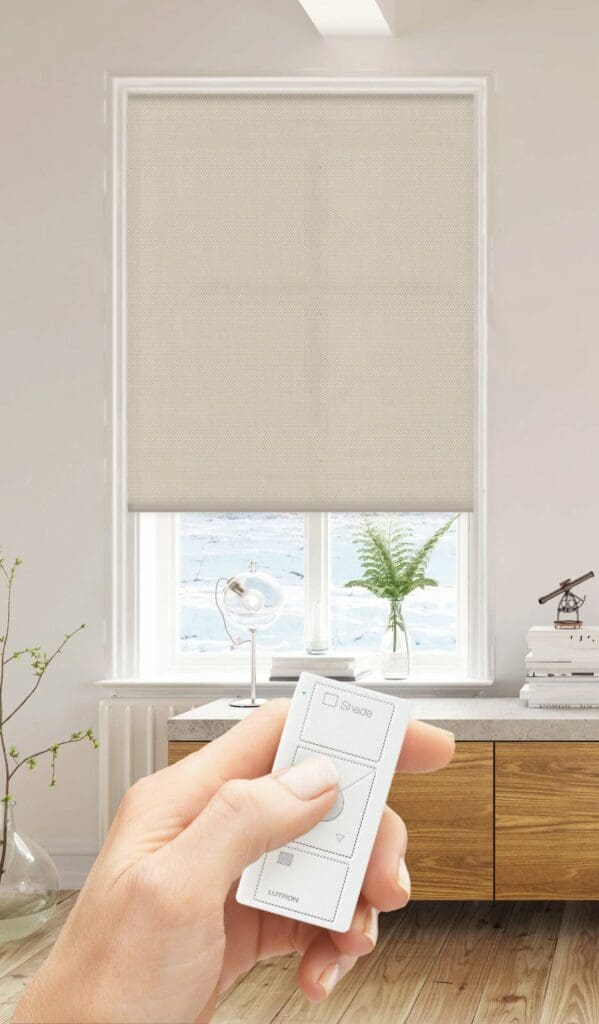
A motorized shade replaces manual lifting with a tubular motor inside the roller. A wall switch, handheld remote, app, hub, or voice platform sends the command. Most residential systems use a rechargeable battery motor or low-voltage hardwired motor; a motor should not be connected directly to household line voltage unless the approved power system is designed for that purpose.
Battery life varies with shade size, fabric weight, temperature, and cycles per day. A reasonable planning range is 6–12 months for a frequently used rechargeable shade at roughly 2–4 complete open-and-close cycles daily. Large blackout shades or windows used 8–10 times per day may need charging sooner. Schedule a recurring charging window instead of waiting until a shade stops at mid-travel.
Hardwired motors are useful for tall windows, wide shades, and new construction. The related hardwired motorized shades guide explains why transformer access, low-voltage cable routes, and service locations matter. World Wide Shades can create a window-by-window power plan before walls close; request it through contact.
Safety: which option is safer?
Both cordless and motorized shades can support a safer room than corded shades because neither requires a freely hanging lift cord. Motorized shades have an additional advantage in rooms where children or pets could reach the operating area: the control can be placed on a wall above reach, and some systems support timed operation without a person standing at the window.
Cordless shades have fewer electronic components and no battery access to manage. Motorized shades should be specified with a secure remote, protected charging connection, and an operating limit that prevents the roller from forcing against an obstruction. Keep remotes away from very young children, and keep rechargeable batteries and cables out of chewing or pulling range.
Safety also depends on installation. A shade that pulls out of weak drywall anchors is not safe, whether it is cordless or motorized. Use the correct fasteners for studs, masonry, or rated hollow-wall anchors. World Wide Shades can coordinate custom dimensions and installation questions; contact the team before ordering unusual or extra-wide units.
Convenience in everyday rooms
Cordless wins on simplicity. Raise the shade when you enter, lower it when you leave, and never troubleshoot pairing. For three to six reachable windows in one room, that simplicity can be more valuable than automation. Cordless also works during a power outage without any special behavior.
Motorized wins when repetition and reach are the problem. A single command can close 12 shades, a sunrise scene can open a bedroom gradually, and a west-facing room can lower shades before glare peaks. Motorization also makes consistent privacy easier: you can close all street-facing windows at 8:00 p.m. instead of discovering one open shade after dark.
For platform planning, compare the smart home motorized shades setup guide. World Wide Shades can help map rooms, channels, and schedules before you select a motor; use the builder to begin.
Light control, privacy, and energy behavior
Neither operating method automatically makes a shade blackout. Opacity comes from the fabric and construction: a 1% solar fabric preserves more view than a room-darkening roller, while a blackout fabric can reduce visible light dramatically when side gaps are controlled. Read the light-filtering shades guide before treating motorization as a substitute for the right textile.
Automation can make performance more consistent. Lowering a south- or west-facing shade during the hottest afternoon hours reduces glare and solar load; opening it in winter can admit useful daylight. For a deeper comparison of fabric performance, see energy-efficient window shades and best shades for south-facing windows.
World Wide Shades can pair a cordless lift with a glare-control fabric or pair a motor with timed solar protection. Order swatches first so the openness factor, color, and privacy level are evaluated in your actual room.
Cost comparison by project size
A realistic budget is easier to understand by looking at a small project. Six standard cordless shades at $125–$250 each may total $750–$1,500 before installation. Six battery motorized shades at $225–$450 each may total $1,350–$2,700. A hub or bridge could add $75–$250, and professional installation may add $50–$150 per opening depending on access and region.
For 12 windows, the difference compounds: cordless may land near $1,500–$3,000, while battery motorization may run $2,700–$5,400 plus controls. Hardwired motorization can be cost-effective in new construction because the electrician is already opening walls. Retrofitting finished walls may make battery motors the more economical choice.
Prices vary with size, fabric, cassette, side channels, remotes, and installation conditions. World Wide Shades can turn your exact opening count into a more useful quote; use contact or call (844) 674-2716.
Which option fits common rooms?
Cordless is sufficient for a reachable standard window, but motorization is excellent for blackout routines, children’s rooms, and windows behind furniture. Set a quiet opening time 30–60 minutes after sunrise if sleep quality matters. For more fabric guidance, see best window shades for bedrooms.
Choose cordless for one or two reachable windows and motorization for a wall of matching openings. Solar fabrics in 3%–5% openness can reduce daytime glare while preserving a view; use swatches to see how openness changes in your light.
Motorized is usually the practical answer because safe manual access is difficult. Include a local control or remote, and plan a service method for the battery or power supply.
Cordless avoids wiring and can move with you. Battery motorization can still work, but confirm mounting permissions and keep the installation reversible. The rental apartment shades guide covers low-impact choices.
A simple decision rule
Choose cordless if all of these are true: the window is reachable, the shade is used fewer than five times daily, you do not need group control, and the lowest total cost matters most. Choose motorized if any of these are true: the window is hard to reach, the shade is extra-wide or heavy, you want sunrise or sunset routines, you need coordinated privacy, or you are planning a smart-home installation.
A mixed plan is often best. Use motorization on six difficult openings and cordless shades on eight accessible windows, matching fabric and color across the home. World Wide Shades can coordinate a mixed order so the rooms still look intentional. Start with the builder or contact the team for a room-by-room recommendation.
Frequently Asked Questions
Both can eliminate dangling lift cords, which is a meaningful safety improvement over traditional corded shades. Motorized shades can add remote or scheduled control, while cordless shades have fewer components and no battery or remote to manage. Safe mounting, clearances, and keeping cribs and furniture away from windows are essential for either type.
Battery motorized shades commonly cost about $180–$450 per standard window, while cordless custom shades often cost about $90–$250. The final difference depends on width, fabric, cassette, installation, and controls. World Wide Shades can price both versions through the builder or by phone at (844) 674-2716.
Many rechargeable shades last approximately 6–12 months at 2–4 full cycles per day. Larger, heavier shades and frequent automation can shorten that interval. Plan an accessible charging location and use the motor manufacturer’s approved charger.
Battery motorized shades usually retain their local control until the battery is depleted, although app or hub features may be unavailable if the network is down. Hardwired shades generally need powered control equipment. Cordless shades operate manually during an outage.
Yes. A mixed installation is often the most cost-effective plan: motorize hard-to-reach or heavily used windows and use cordless shades on reachable openings. Matching fabric, color, and cassette style keeps the design cohesive. Order swatches from World Wide Shades before specifying the mix.