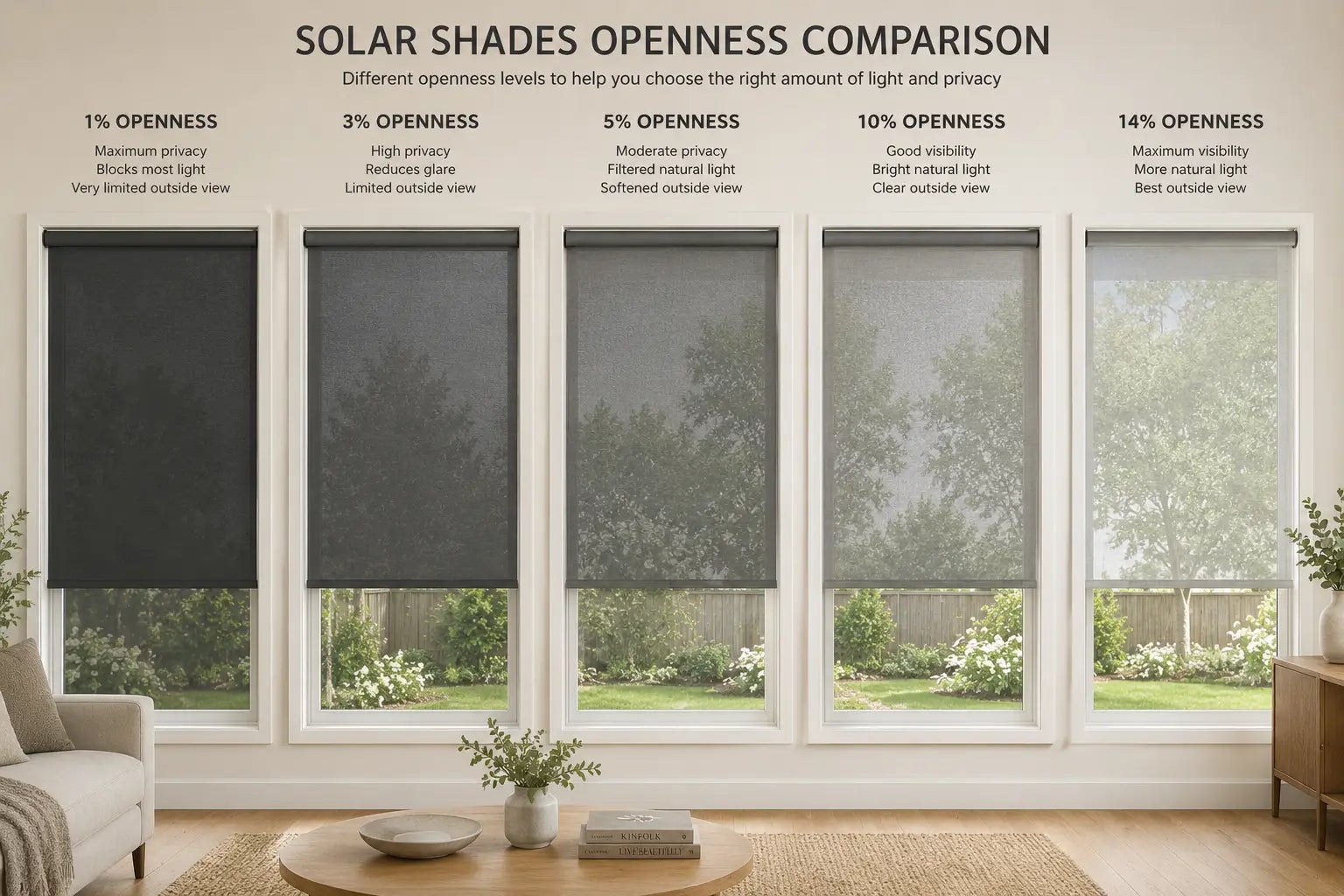
Openness factor is one of the most useful numbers in a solar roller shade specification. It describes the approximate percentage of the fabric area that allows light and view through the weave. A 1% fabric is tighter and more private in daylight than a 10% fabric; a 10% or 14% fabric gives a brighter, more open view but lets in more glare.
The number is not a complete performance rating. Color, coating, window orientation, interior lighting, and the gap at the sides all change what you experience. World Wide Shades can match openness to the room’s actual goal instead of treating 5% as a universal answer. Start with the World Wide Shades builder, then request swatches and compare them at home.
Openness factor in plain language
Imagine a square inch of solar fabric enlarged under a microscope. The percentage estimates how much of that area is open space between yarns. It does not mean that exactly 1%, 3%, 5%, 10%, or 14% of the sun’s total energy enters the room. A dark 5% fabric and a white 5% fabric can feel very different because color affects absorption, reflection, contrast, and view clarity.
The common categories are useful starting points:
- 1%: strongest glare and daytime privacy control; a darker, more enclosed view.
- 3%: high glare control with a limited but recognizable exterior view.
- 5%: balanced privacy, daylight, and view for many living spaces.
- 10%: brighter daylight and clearer view with less privacy.
- 14%: very open view and light, but comparatively limited glare and privacy control.
At night, solar shades do not provide full privacy when lights are on inside. A person outside may see silhouettes or more depending on distance, contrast, and the fabric color. Ask World Wide Shades about a dual-shade or privacy layer if the room needs daytime view and nighttime privacy.
Comparing 1%, 3%, 5%, 10%, and 14%
One-percent fabric is a strong choice for a west-facing office, media room, or room where direct sunlight is damaging finishes. It can make a bright screen more comfortable and reduce the sense of exposure during the day. The outside view is usually muted, especially with a dark fabric, and the room can feel more shaded.
It is not blackout. Light still enters through the weave and around the edges. If sleep darkness matters, compare a blackout roller with side channels instead of expecting 1% solar fabric to behave like an opaque shade. The blackout curtains versus blackout shades guide explains the difference.
Three-percent fabric is a practical middle-high privacy option. It filters strong daylight, softens glare, and preserves enough view for many bedrooms, offices, and street-facing living rooms. It often works well when you want to see trees or sky without making the interior feel exposed.
Use it for south- or west-facing rooms that need more control than 5% provides. The best shades for south-facing windows guide gives orientation-specific ideas, while the UV protection window shades guide covers protection for flooring and furnishings.
Five-percent fabric is the common compromise. It provides filtered daylight, a readable exterior view, and meaningful glare reduction without making a room feel closed. It is often a good starting point for living rooms, dining rooms, and home offices with average privacy needs.
Do not choose it by number alone. A white 5% fabric can feel brighter and more reflective than a charcoal 5% fabric. Request two or three colors and look at them with the lights on and off. Use World Wide Shades swatches before committing to a whole-home order.
Ten-percent fabric keeps a room bright and offers a clearer daytime view. It is useful for a private backyard, a north-facing room, or a space where preserving outdoor connection matters more than maximum glare control. Privacy is weaker, especially at night, and sunlight can still create reflections on a screen.
Layer 10% shades with drapery or a second shade if you need occasional darkness. Compare options in the light-filtering shades guide and woven wood shades guide if texture and layering are part of the design.
Fourteen-percent fabric is highly open. It preserves a bright view and can reduce the visual weight of a large window, but it provides limited privacy and glare control. Use it when the view is the priority, the room faces a private landscape, and screens or artwork are not directly in the sun path.
A 14% fabric is rarely the right choice for a street-facing bedroom or a home office with a west window. World Wide Shades can show the difference by placing multiple samples in the same opening. Ask for a room-specific recommendation rather than copying the openness factor from another room.
How orientation changes the choice
East-facing windows can create intense morning glare, so 1%–5% openness may be appropriate in a bedroom or breakfast room. South-facing windows receive broad daytime exposure; 1%–5% can help manage heat and glare, with a lighter color reflecting more light. West-facing windows usually need the strongest glare strategy because low afternoon sun enters at a difficult angle.
North-facing windows often need less solar control, so 5%–14% can preserve a brighter view. A tree-lined backyard may justify 10% even when a neighbor-facing window needs 3%. Use the energy-efficient window shades guide for a broader discussion of heat, glass, and fabric.
Privacy: day versus night
Solar shade privacy is directional. During a bright day, a darker interior and brighter exterior can make it harder for people outside to see in. At night, interior lights reverse the contrast, making silhouettes easier to see. A lower openness factor helps but does not guarantee privacy after dark.
For bathrooms, bedrooms, and street-facing rooms, pair a solar shade with a privacy liner, room-darkening roller, drapery, or a second shade. The roller shades for kitchen and bathroom guide explains how moisture, ventilation, and privacy interact. Contact World Wide Shades if one window needs two different modes during the day.
Color and openness work together
Dark fabrics typically preserve outside view contrast better because they reduce reflections from the room side. Light fabrics can reflect more solar energy and may make the room feel brighter, but the exterior view can appear hazier through a light weave. A dark 5% and light 5% sample may therefore look more different than the number suggests.
Frame color also matters. A black window with a charcoal screen may look intentional, while a bright white room may benefit from a warm gray or ivory. Read the window shades color guide and compare samples next to flooring, paint, and furniture.
Edge gaps and mounting affect performance
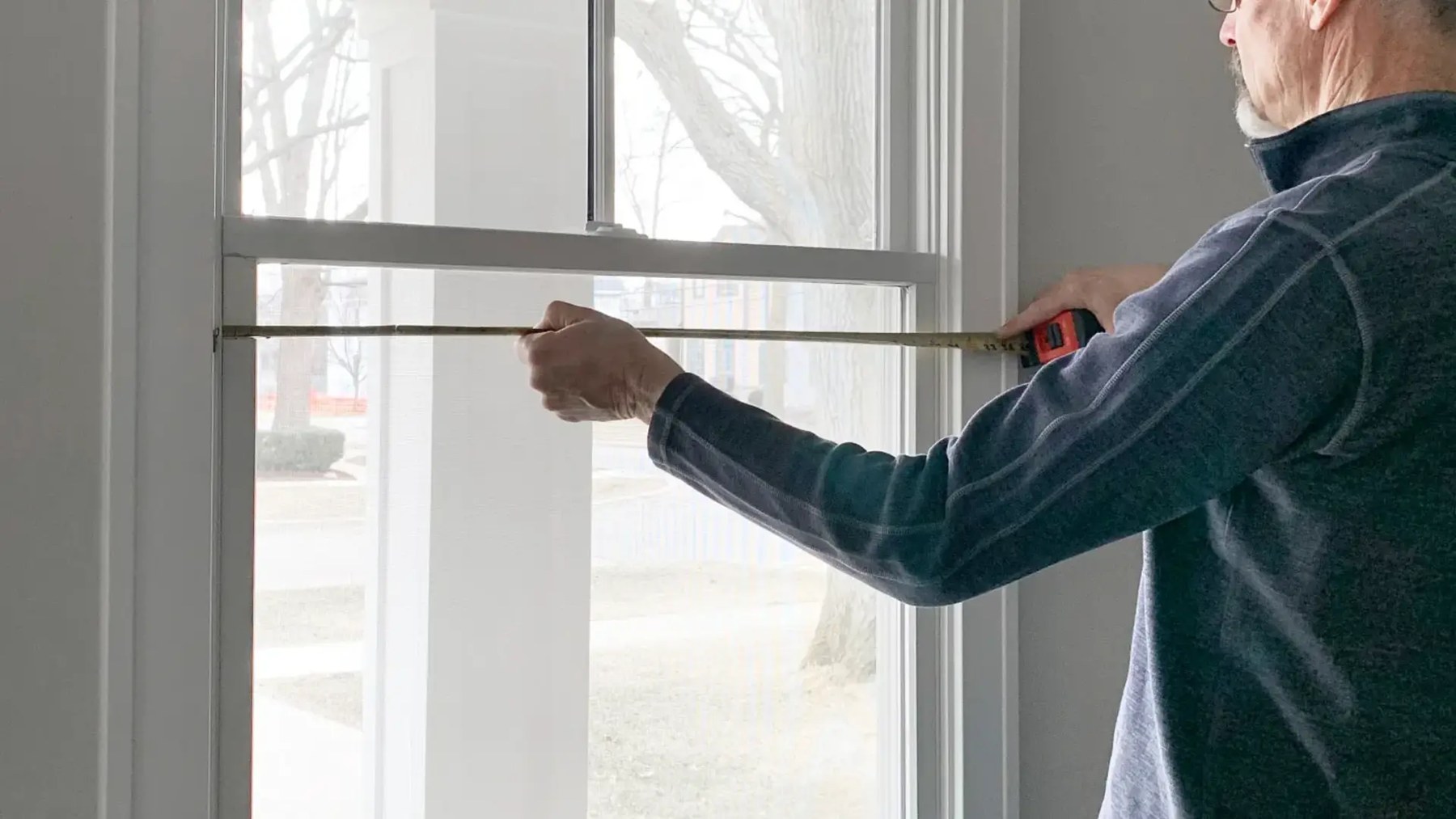
A solar shade can meet its openness specification and still leave too much light at the sides. Inside mounts follow the recess and typically leave a small manufacturing clearance. Outside mounts can overlap the frame by 2–3 inches or more, depending on the window and hardware, and usually improve glare and privacy at the edges.
Check handle clearance, sill depth, trim, and cassette projection before choosing outside mount. Read the custom shade measuring service guide and ask World Wide Shades to verify the finished shade size. A correctly chosen fabric cannot fix a mounting conflict.
Cost and motorization considerations
Solar roller shade pricing depends on width, height, fabric collection, cassette, controls, and installation. A planning range might be $250–$800 for a manual custom shade and $500–$1,500 for a motorized unit, with very wide or premium systems costing more. Openness factor itself is only one part of the price.
Motorization is useful when several shades must close together at peak glare or when the windows are high. A scene can lower west-facing shades at 3:30 p.m. and reopen them later, but automation should be tuned to the season and room use. Read the smart home motorized shades setup guide before connecting a hub. Call World Wide Shades at (844) 674-2716 for a room-by-room motorization comparison. Ask World Wide Shades at (844) 674-2716 about charging access for high windows.
A practical selection method
- Write the room’s primary goal: view, glare reduction, privacy, UV protection, or darkness.
- Mark the window orientation and whether nearby buildings or streets are visible.
- Start with 3%, 5%, and 10% samples; add 1% or 14% if the room clearly needs more control or view.
- Test samples during the brightest part of the day and after interior lights are on.
- Decide whether the shade is inside or outside mounted and check side gaps.
- Add a liner, second shade, or drapery if the room has both daytime and nighttime requirements.
Send your sample questions to World Wide Shades and include photos from the view side and the room side. The team can turn the openness number into a complete shade specification.
FAQ: roller shade openness factors
Five-percent openness describes the approximate open area in the woven fabric. It is commonly used as a balance of filtered daylight, view, privacy, and glare control. It does not mean that exactly 5% of solar heat or visible light enters the room.
No. A 1% solar screen blocks and diffuses much more light than 5%, 10%, or 14%, but light still passes through the weave and around the edges. Choose blackout fabric or side channels when near-darkness is required.
Lower values generally provide more daytime privacy, with 1% and 3% offering more coverage than 10% or 14%. No solar shade guarantees nighttime privacy when interior lights are on. Bedrooms and bathrooms may need an opaque or layered treatment.
A 1%–5% fabric is a common starting range because west windows receive low afternoon sun and glare. The best choice depends on screen use, view, color, edge gaps, and whether a second shade is planned. Ask World Wide Shades for samples.
Yes. Dark colors often provide a higher-contrast exterior view and reduce interior reflections, while light colors may reflect more solar energy and feel brighter. Compare colors at the actual window rather than relying on the openness percentage alone.
Choose room by room. Use 1%–5% for strong glare or privacy needs, 5% for a flexible general starting point, and 10%–14% where a bright view is the priority. Use the World Wide Shades builder and contact World Wide Shades for a coordinated plan.