Multi-unit projects live and die on repeatability: the same fit, the same finish, and the same performance window after window. This guide explains how to choose allergy roller shades with fewer change orders, faster turns, and happier residents.
Design yours in minutes with our online builder to price out your first unit, then replicate it across the property.
Why roller shades are often better than curtains for allergies
Soft textiles can hold dust, pollen, and pet dander. Roller shades use smoother surfaces and fewer folds, which can make routine cleaning easier. World Wide Shades frequently recommends easy-clean roller shade materials for homes managing allergies, asthma, or frequent dust buildup.
Explore easy-clean options with World Wide Shades.
What to look for in low-dust roller shade fabrics
Fabrics with smoother faces tend to release dust more easily than textured, fuzzy textiles.
Some fabrics include finishes designed to resist moisture and staining. If your home is humid, see our guidance on shades for hot, humid climates.
Order free swatches before you commit so you can compare fabric surfaces and decide what feels easiest to maintain.
Cleaning routine: how often to clean if you have allergies or asthma
Consistency matters more than deep cleaning.
- Light dusting/vacuuming: weekly
- Wipe-down (as needed): every 4 to 8 weeks
- Deep clean or professional clean: 1 to 2 times per year
For detailed methods, see how to clean roller shades.
Room-by-room recommendations
Bedrooms are where air quality affects sleep the most. Consider room-darkening or blackout only if needed for sleep quality. Use our guide on best window shades for bedrooms and compare room darkening vs blackout.
In high-traffic areas, durability and easy cleaning matter. See best roller shades for living rooms.
Pet dander adds load. Consider materials and control types that handle frequent use. Our overview: pet friendly window treatments.
Need help choosing a low-dust fabric? Contact World Wide Shades — Call (844) 674-2716 for a fast quote and spec check.
Materials to avoid (for many allergy-sensitive households)
- Heavy fabric drapes with deep folds
- Unsealed woven textures that are hard to wipe
- Overly complex top treatments that collect dust
If you love a layered look, World Wide Shades can help you combine shades with drapery strategically while keeping cleaning realistic.
Installation tips that reduce dust traps
- Mount higher to avoid rubbing on trim that collects dust
- Avoid gaps where the shade scrapes the frame
- Use hardware that allows easy removal for periodic cleaning
If you're installing yourself, see how to install roller shades.
Build your allergy-friendly roller shade with World Wide Shades. Call (844) 674-2716 for a fast quote and spec check.
What the Research Says: Indoor Allergens and Respiratory Health
The scale of the indoor allergen problem is larger than most homeowners realize. The American Lung Association (ALA) estimates that Americans spend roughly 90 percent of their time indoors, where concentrations of some pollutants can be two to five times higher than typical outdoor levels. The American Academy of Allergy, Asthma & Immunology (AAAAI) reports that indoor allergens — dust mite fecal particles, pet dander, mold spores, and cockroach frass — are among the most common triggers for the 26 million Americans living with asthma. Dust mite allergen levels above 2 micrograms per gram of dust (roughly 100 mites per gram) are considered a significant sensitization risk by AAAAI guidelines, and levels above 10 mcg/g correlate with acute asthma episodes.
The U.S. Environmental Protection Agency (EPA) has specifically identified soft furnishings — carpets, upholstered furniture, and heavy drapery — as the primary reservoirs for house dust mite allergens and particulate matter in residential spaces. A single gram of household dust can contain up to 40,000 dust mites and their waste particles. The EPA's Indoor Air Quality guidance explicitly recommends replacing heavy fabric window coverings with smooth, wipeable alternatives in homes where asthma or allergy management is a priority. Roller shades address this risk by minimizing fabric surface area exposed to room air. A standard 36-inch by 72-inch roller shade's flat, taut surface accumulates and releases dust far more readily than a pleated or gathered drape that can hold two to three times more particulate matter in its folds.
Certified Fabrics: GREENGUARD GOLD, OEKO-TEX, and Antimicrobial Weaves
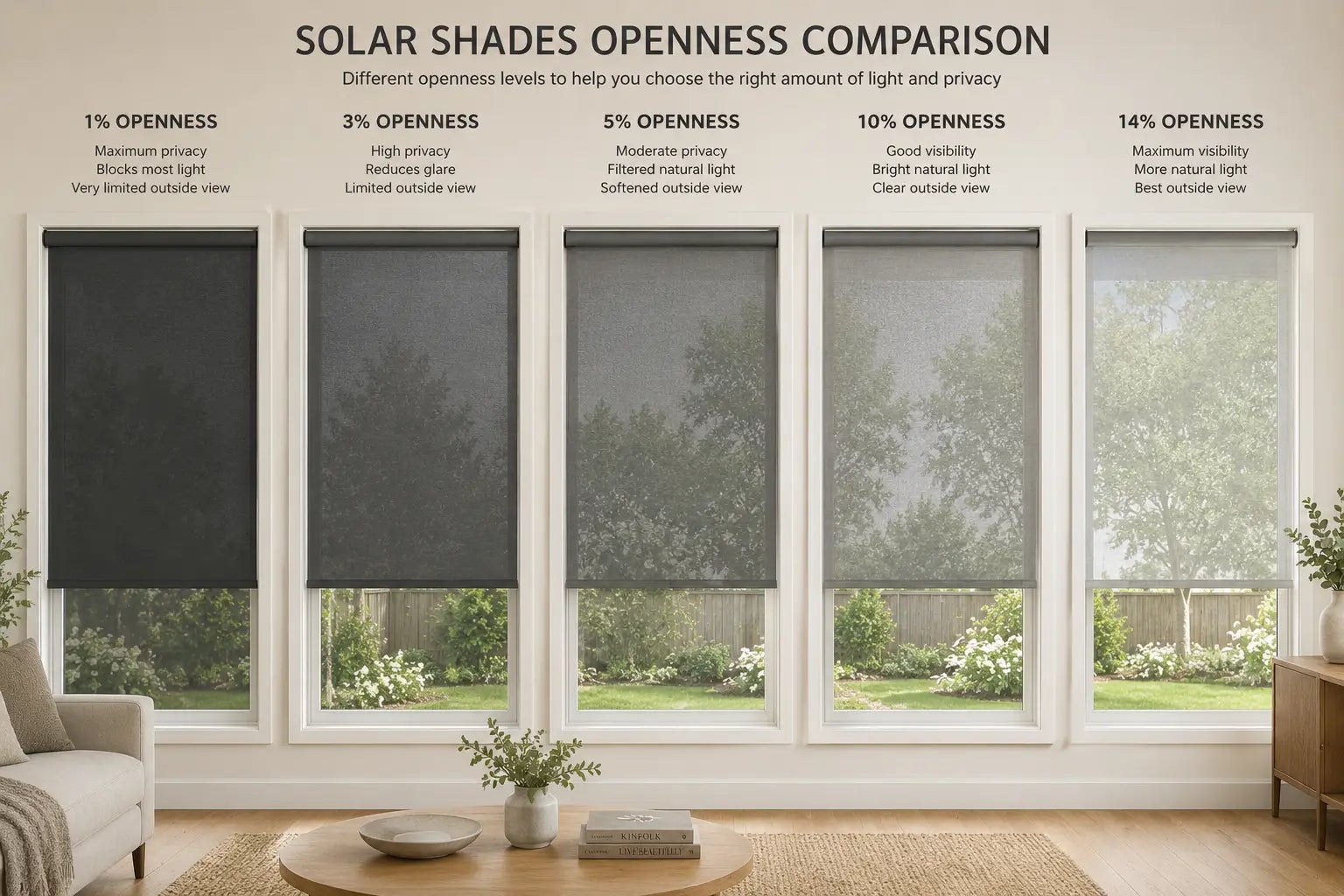
Not all roller shade fabrics are equal from an indoor air quality standpoint. GREENGUARD GOLD certification (administered by UL Environment) is one of the most rigorous standards for chemical emissions from building products and furnishings. Products carrying this mark have been tested for more than 360 VOCs and chemical emissions, with limits set specifically for use in schools and healthcare environments. OEKO-TEX Standard 100 is a complementary certification that tests the finished textile itself for harmful substances including heavy metals, formaldehyde, pesticide residues, and allergenic dyes. Several fabric lines carried by World Wide Shades hold both certifications. Brands such as Phifer SheerWeave, Mermet, and Coulisse offer certified low-emission fabrics in openness factors from 1 percent to 10 percent — see the breakdown of roller shade fabric openness factors if you're unsure which transparency level suits your space.
Antimicrobial fabric finishes add a third layer of protection. Silver-ion treatments inhibit the growth of mold and mildew on the fabric surface, especially in rooms prone to humidity spikes above 50 percent relative humidity — the threshold at which dust mite populations grow most rapidly. These finishes extend the interval between deep cleans and reduce mold spore accumulation that can worsen asthma symptoms. Ask World Wide Shades to specify which antimicrobial options are available for the fabric you're considering — request swatches with certification documentation before placing your order.
Deep-Dive Cleaning Protocols for Allergen-Sensitive Households
The goal of a proper cleaning protocol is to remove allergen-bearing particles — not redistribute them. The AAAAI recommends using a HEPA-filtered vacuum whenever cleaning in allergy-sensitive spaces, because standard vacuum bags can exhaust fine particles back into the room air. For roller shades, a HEPA vacuum with a soft brush attachment at low suction is the safest first step — run it along the shade surface weekly, working from top to bottom.
Monthly damp wipe-downs should use a microfiber cloth moistened with plain water or a dilute solution of dish soap (no more than one teaspoon per quart of water). Microfiber cloths trap particles electrostatically, making them significantly more effective than cotton rags for allergen removal. Wring the cloth thoroughly — roller shade fabrics should never be saturated, as excess moisture encourages mold growth at the hem bar. Quarterly deeper cleaning should include inspecting bracket hardware, the hem bar channel, and the headrail for dust accumulation. If your household includes a child with asthma, also review the guide on child-safe window treatments for additional best-practice guidance.
How Window Treatments Interact with Your HVAC System
Forced-air HVAC systems create pressure differentials that cause dust-laden air to move toward and through soft furnishings. Heavy drapery panels hung directly in front of supply or return registers act as improvised air filters — accumulating particulate matter at a rate far higher than smooth fabric positioned away from airflow. A 2019 study published in Building and Environment measured total suspended particulate (TSP) concentrations adjacent to drapery panels near return registers and found concentrations averaging 38 micrograms per cubic meter — nearly double the 20 mcg/m³ baseline measured in the center of the room.
Roller shades sit close to the window glass and are generally positioned away from HVAC registers when properly installed. Their flat profile does not create eddies or pockets where dust accumulates the way a gathered drape does. Integrating motorized roller shades with a smart home system adds another allergen-management benefit: automated shade schedules can keep shades deployed during peak pollen hours (typically 5 a.m. to 10 a.m.). See the guide on smart home motorized shade setup for automation options. World Wide Shades offers motorized options across all fabric lines — contact us or call (844) 674-2716 to discuss a motorized build.
Cost Comparison: Standard vs. Low-Allergen Certified Fabrics
At World Wide Shades, standard polyester roller shade fabrics typically start in the $45–$65 per shade range for a 36 × 72 inch unit including hardware. Fabrics with GREENGUARD GOLD or OEKO-TEX Standard 100 certification generally add $15–$40 per shade, bringing the per-unit cost to approximately $60–$105. Fabrics that combine antimicrobial treatment with one or both certifications fall at the higher end, typically $80–$120 per shade. For a two-bedroom apartment with six windows, the total upcharge for fully certified low-allergen fabrics versus standard fabrics runs approximately $90–$330 — weighed against the AAAAI's estimate that allergy medication averages $300–$700 per year for a single sufferer, the investment is modest.
For property managers, certified fabrics reduce maintenance callbacks and can be documented in lease addenda as a value-added amenity. For a detailed cost analysis including motorized options, see how much do custom roller shades cost and how much do motorized roller shades cost. To compare certified fabric options side by side, order free swatches from World Wide Shades. For bulk pricing on multi-unit projects, call (844) 674-2716 — World Wide Shades offers project pricing that can reduce per-shade cost by 10–20 percent on orders of 20 or more units.
Real-World Impact: Families Managing Asthma
Consider a family with two school-age children, one of whom has moderate persistent asthma triggered by dust mites and cat dander. Before switching window treatments, the family had floor-length linen drapes in the living room and bedrooms — attractive, but a significant allergen reservoir. After an allergist visit where indoor allergen control was specifically recommended, the family ordered OEKO-TEX-certified solar screen roller shades from World Wide Shades for all six windows: a 3-percent openness fabric in living areas and a blackout option in the children's bedrooms. The total cost was approximately $620 installed. Within eight weeks, the asthmatic child's symptom diary showed a 40 percent reduction in nighttime cough episodes — a metric their pediatric pulmonologist tracked as a proxy for overnight allergen exposure.
For families in similar situations, the practical starting point is to order swatches of two or three certified fabric options and compare them in your actual lighting. Request your free swatch kit from World Wide Shades, or use the online builder to configure a shade with your window dimensions and preferred fabric before calling (844) 674-2716 to confirm certification availability and lead times. Our team can also cross-reference fabric options against the best fabrics for roller shades guide to help you narrow the field quickly.
FAQ: roller shades for allergies and asthma
No window treatment is truly hypoallergenic, but roller shades often reduce dust-holding folds compared to curtains and can be easier to wipe and maintain.
Use a soft brush attachment on a vacuum at low suction, then wipe with a lightly damp microfiber cloth. Follow the step-by-step in how to clean roller shades.
Cordless controls reduce dangling cords and can simplify cleaning around the window. They also support child safety; see child-safe window treatments.
Not necessarily—dust load depends more on surface and folds than opacity. Choose smooth surfaces and keep a consistent cleaning schedule.
Prioritize easy-clean, low-odor fabrics and order swatches. World Wide Shades can help you compare options—use /contact or call (844) 674-2716.