Multi-unit projects live and die on repeatability: the same fit, the same finish, and the same performance window after window. This guide explains how to choose eco-friendly roller shades with fewer change orders, faster turns, and happier residents.
Design yours in minutes with our online builder to price out your first unit, then replicate it across the property.
What "eco-friendly" can mean for roller shades
Sustainability is a mix of materials, certifications, and longevity. World Wide Shades helps homeowners choose options that reduce VOCs, improve indoor comfort, and last longer—because the greenest shade is often the one you don't replace.
Start an eco-friendly configuration in the World Wide Shades builder.
Materials: the best sustainable fabric options
Recycled polyester can lower the need for virgin petroleum-based fibers while maintaining durability. It's a strong choice for high-use family rooms.
If you're sensitive to odor or want cleaner indoor air, prioritize low-VOC materials. If UV exposure is high, also see UV protection window shades.
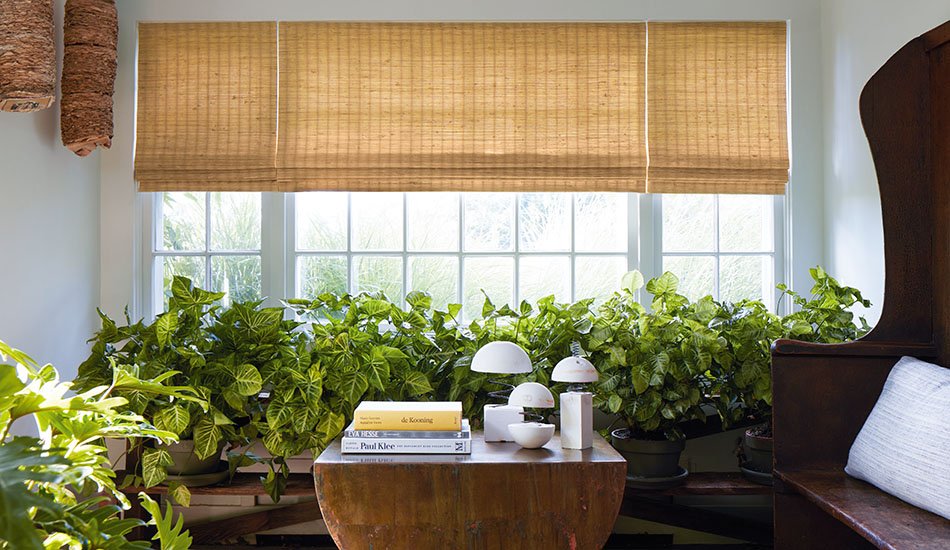
Woven textures can add warmth. If you like a natural look, you may also like our woven wood shades guide.
Order free swatches before you commit to compare texture and color in your lighting.
Certifications and claims: how to evaluate them
Certifications vary, but you can still ask good questions.
- Is the fabric low-VOC or certified for indoor air quality?
- Is it PVC-free?
- What is the expected lifespan and warranty?
World Wide Shades can walk you through fabric options and documentation. Talk to a shade specialist — Call (844) 674-2716 for a fast quote and spec check.
Energy performance: eco-friendly can also mean lower HVAC load
Shades can reduce solar heat gain and glare, improving comfort. For a deeper dive, read energy efficient window shades.
- South/west-facing: consider solar or light-filtering fabrics.
- Bedrooms: use blackout selectively to improve sleep without overbuilding.
If your windows get intense sun, see best shades for south-facing windows.
Longevity: design for durability to avoid replacement
Frequent replacement increases material impact.
- Quality clutches and brackets for wider shades
- Proper mounting height to avoid rubbing
- Easy cleaning routines For cleaning best practices, see how to clean roller shades.
Build a long-lasting shade with World Wide Shades. Call (844) 674-2716 for a fast quote and spec check.
Eco-friendly design tips that still look high-end
Sustainable doesn't have to look rustic.
Warm neutrals are timeless and reduce the urge to redecorate. Use our window shades color guide for neutral selection.
Minimalist rooms look great with clean, low-profile rollers. For style inspiration, see roller shades vs roman shades.
Certifications That Actually Matter: GREENGUARD GOLD, OEKO-TEX, GoodWeave, and LEED v4
Third-party certification is the single most reliable filter when evaluating sustainability claims for roller shade fabrics. Marketing language like "eco-conscious" or "green" is unregulated — certifications are not. GREENGUARD GOLD (administered by UL Environment) is widely regarded as the gold standard for chemical emissions testing in building materials and furnishings. To earn the mark, a product must pass testing for over 360 volatile organic compounds (VOCs) with limits designed for sensitive populations including children and the elderly. OEKO-TEX Standard 100 tests the finished textile for harmful substances — residual pesticides, heavy metals, formaldehyde, and allergenic dyes. Roller shade fabrics generally qualify under Class II or Class III, both of which carry meaningful restrictions. GoodWeave certification applies specifically to handwoven textiles, verifying that no child or bonded labor was used in production — relevant for woven roller shade options sourced from South or Southeast Asia.
For commercial projects, LEED v4 includes a Low-Emitting Materials credit that explicitly covers interior finishes and furniture. Roller shade fabrics with verified low-VOC emissions can contribute to that credit — World Wide Shades can provide emissions documentation to support LEED credit applications. A LEED project consultant can confirm whether your specified fabric qualifies. For a broader view of how window treatments contribute to building performance, see the guide on whether window shades increase home value. When evaluating certifications, always ask whether the certification applies to the full coated panel or only the base yarn — then verify the certificate number against the certifying body's public database. World Wide Shades maintains current documentation for certified fabrics and can email copies on request — contact our team or call (844) 674-2716 for documentation support.
Recycled-Content Fabrics: PET Solar Screens and What the Numbers Mean
Recycled-content solar screen fabrics — made from post-consumer PET (polyethylene terephthalate) plastic bottles — are among the most commercially mature sustainable options for roller shades. Several major fabric manufacturers have invested heavily in rPET solar screen production. Phifer's EcoVue line uses 100 percent recycled PET yarns in select openness factors, with each standard shade (36 × 72 inches) consuming the equivalent of approximately 18 to 22 recycled plastic bottles. Mermet's E-Screen Eco product uses a minimum of 65 percent recycled PET content by weight. Coulisse's BrightOut Eco blackout fabric achieves 50 percent recycled content while maintaining a smooth face finish.
Life cycle assessments published by fabric manufacturers suggest that a 65 percent rPET fabric reduces CO₂-equivalent emissions by approximately 30–45 percent compared to an equivalent virgin polyester fabric of the same weight. For a whole-home project with 10 shades, choosing 65 percent rPET over standard polyester represents a reduction of roughly 8–12 kg CO₂e. These numbers accumulate meaningfully across multi-unit residential or commercial projects. For commercial applications, see the overview of commercial roller shades for offices and roller shades for medical offices and dental clinics where certified material documentation is often required for building compliance records. World Wide Shades carries rPET options in both PVC and PVC-free configurations — request a swatch kit with certified fabric documentation included.
PVC vs. PVC-Free Fabrics: What the Distinction Actually Means
PVC (polyvinyl chloride) is used extensively in roller shade fabrics as a coating that adds stiffness, opacity, and moisture resistance. It is durable and cost-effective, which is why it dominates the entry-level and mid-range market. However, PVC has well-documented environmental drawbacks. During manufacturing, PVC production generates dioxins and other chlorinated compounds as byproducts. The plasticizers most commonly used to keep PVC flexible — phthalates — are classified as endocrine-disrupting compounds by the European Chemicals Agency (ECHA) and have been restricted in children's products in both the EU and the U.S. When PVC-coated fabrics reach end of life, they are not recyclable through standard material recovery streams, and incineration can release hydrochloric acid.
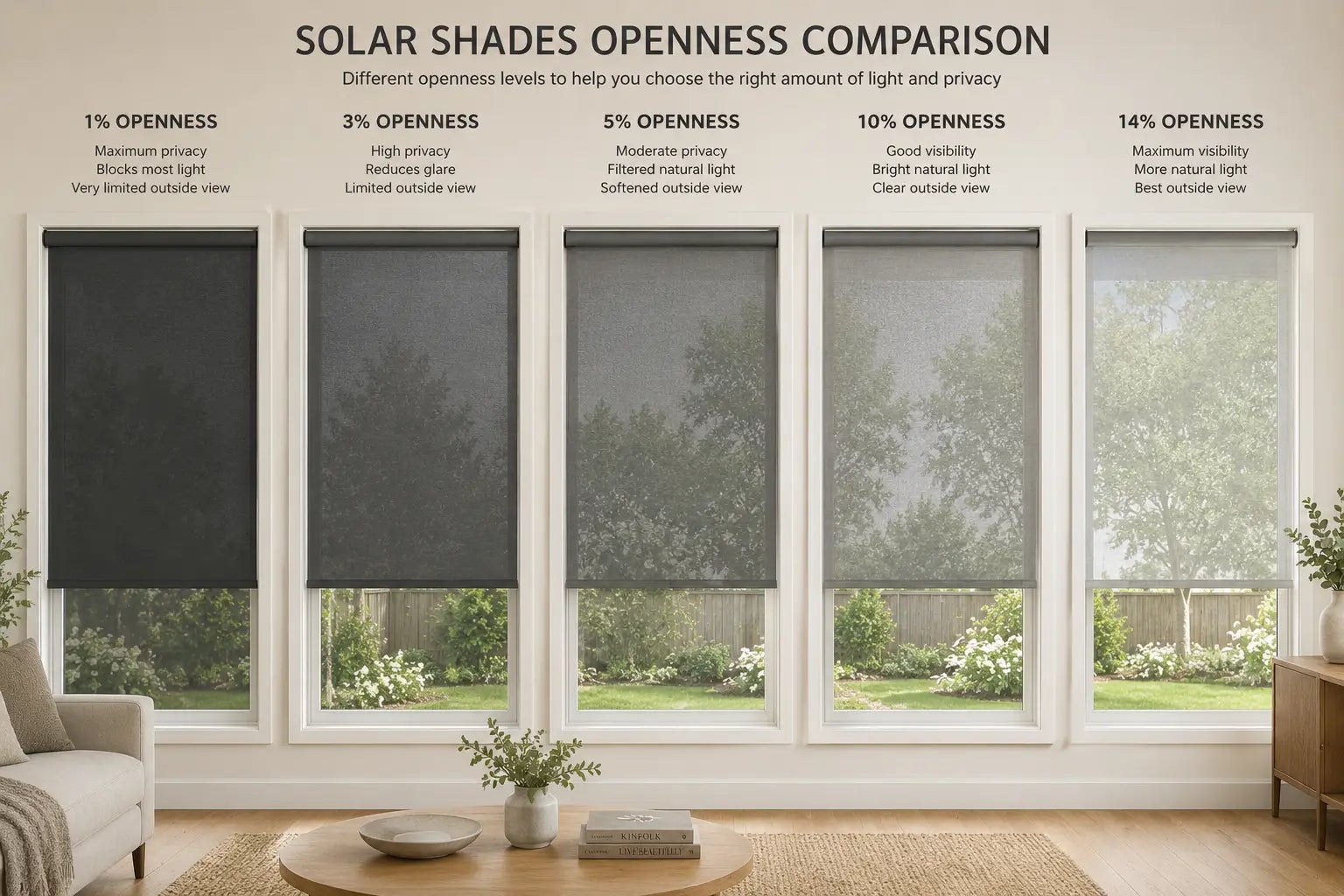
PVC-free roller shade fabrics use alternative coatings — most commonly thermoplastic polyurethane (TPU), acrylic, or polyester laminates — that achieve similar performance characteristics without the halogenated chemistry. TPU in particular is more flexible than PVC at equivalent thicknesses, passes REACH compliance testing more easily, and can be recycled in appropriate facility streams. The trade-off is cost: PVC-free fabrics typically carry a $10–$30 per shade premium over equivalent PVC-coated products. For light-filtering solar shades, several PVC-free options in the 3 percent to 5 percent openness range are available from World Wide Shades — see the breakdown of roller shade fabric openness factors to choose the right transparency level. World Wide Shades can specify PVC-free options for most standard and custom sizes — use the builder to configure your shade, or call (844) 674-2716 to speak with a product specialist.
Lifecycle Analysis and Cost Premium for Certified Eco Shades
A custom roller shade from a quality fabricator, properly installed and maintained, has an expected service life of 10–15 years. The fabric itself — if it holds GREENGUARD or OEKO-TEX certification — is typically produced to commercial-grade standards that can withstand 20,000 or more open-close cycles. In contrast, import roller shades sold at big-box retailers for $15–$40 commonly fail within 3–5 years. A household with eight windows could purchase and discard two full sets of retail blinds in the same period a single custom installation lasts — generating roughly 12–18 pounds of mixed plastic, metal, and fabric waste that goes to landfill in most municipalities. The aluminum tubes used in quality roller shade construction are fully recyclable through standard curbside programs; aluminum recycling requires only 5 percent of the energy needed to produce virgin aluminum.
At World Wide Shades, the premium for moving from a standard non-certified fabric to a GREENGUARD GOLD or OEKO-TEX certified option typically falls in the range of $15–$45 per shade for residential sizes. Moving to a PVC-free certified fabric adds another $10–$30 per shade. The top of the premium range — combining rPET recycled content, PVC-free coating, and GREENGUARD GOLD certification — typically lands $40–$80 per shade above the entry-level baseline. For an eight-window home, a full certified eco specification adds $320–$640 to the project cost. For a complete cost analysis, see how much do custom roller shades cost and custom roller shades vs. Home Depot. For commercial projects pursuing LEED v4 certification, the economics shift further in favor of certified fabrics — see our guides on roller shades for school classrooms for application-specific guidance. To get a precise quote for a certified eco project, start in the World Wide Shades builder or call (844) 674-2716 — our team can prepare a full specification sheet with certification documentation for any project requiring procurement records.
FAQ: eco-friendly roller shades
Yes, many recycled polyester fabrics are designed for heavy daily cycling and can perform similarly to virgin materials.
Low-dust, easy-clean roller shades are often easier to maintain than fabric curtains. See our allergy-focused guide at roller shades for allergies and asthma.
They can by reducing glare and solar heat gain. For strategies, see energy efficient window shades.
Yes—texture and color can vary, and lighting changes warm neutrals dramatically. Order free samples from World Wide Shades swatches.
Use the World Wide Shades builder and call (844) 674-2716 if you want a fast review of fabric certifications and options.