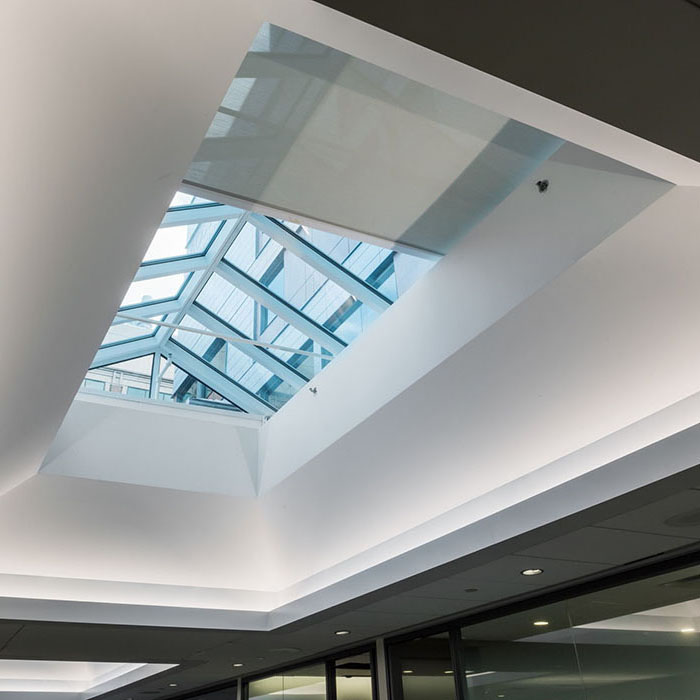
Skylights add daylight from above, but they also put the strongest part of the sun directly into a room. A roof window can create computer-screen glare, push afternoon temperatures several degrees higher, and expose flooring or upholstery to years of ultraviolet light. The right roller shades for skylights turn that opening into a controlled source of light instead of a permanent heat and privacy problem.
World Wide Shades helps homeowners match a skylight’s angle, size, fabric, and operating method to the room below. Start by comparing the skylight shades guide, then use the World Wide Shades builder to create a starting configuration. If your opening is unusually large or steep, contact World Wide Shades or call (844) 674-2716 for a second set of eyes.
Why skylights need a different shade plan
A vertical window receives direct sun for part of the day. A skylight can receive overhead radiation for much longer, especially on a low-pitch roof. That difference changes the priorities: glare control and solar performance often matter before decorative detail.
A shade also has to travel on a track or follow the skylight plane. A standard roller shade hanging from a wall is not a substitute for a system designed to stay aligned overhead. Measure the finished opening, note the slope, and photograph the frame before choosing hardware. World Wide Shades can use those details to guide you toward a practical configuration.
For rooms with nearby vertical glass, coordinate the skylight fabric with the rest of the house. The energy-efficient window shades guide explains how fabric and placement affect comfort, while best shades for south-facing windows is useful when the roof opening sits over a highly exposed room.
Choose the fabric by the problem you want to solve
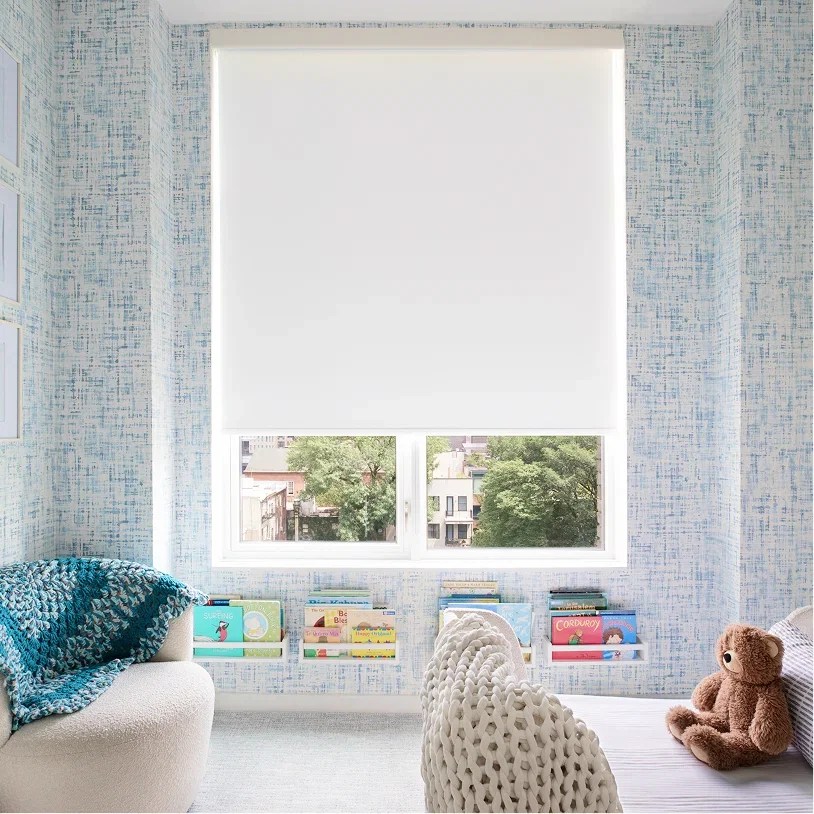
Light-filtering fabric diffuses sunlight rather than eliminating it. It is a strong choice for a kitchen, hallway, studio, or living room where you want daylight but not a bright patch on the floor. A mid-tone gray, beige, or warm white can soften contrast more effectively than a very bright white fabric.
Solar screen fabrics are rated by openness, commonly 1%, 3%, 5%, or 10%. A lower openness percentage generally blocks more direct glare and provides more daytime privacy, while a higher percentage preserves a brighter view. The exact result depends on the weave, color, and relative brightness outside. Read the UV protection window shades guide when fading is the primary concern.
A skylight above a bed can admit dawn light long before an alarm. Room-darkening fabric reduces visible light, while blackout fabric is designed for a deeper level of darkness. Because the fabric is not the only path for light, close attention to side gaps and the frame is essential. For a bedroom comparison, see best window shades for bedroom and blackout curtains vs. blackout shades.
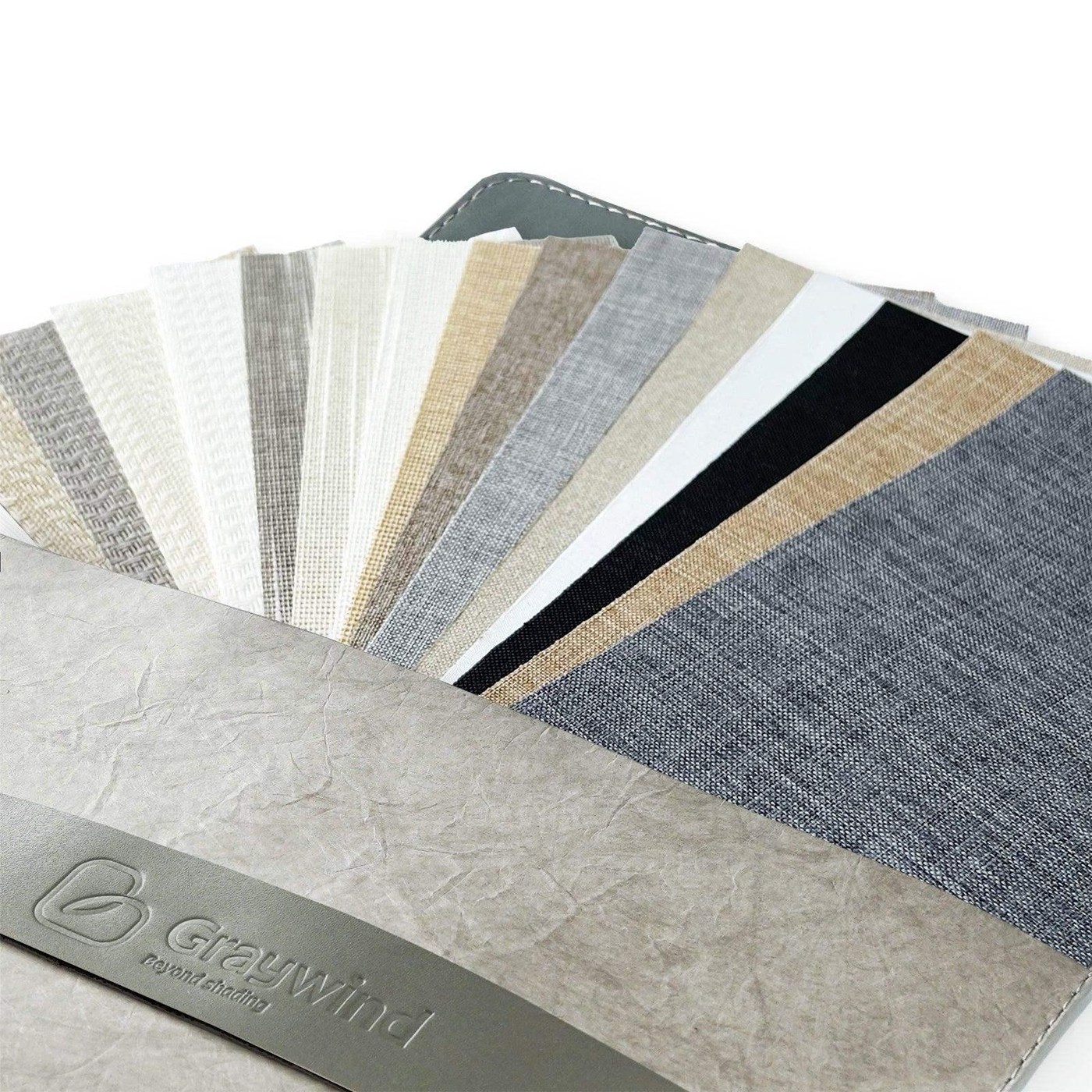
Order fabric swatches from World Wide Shades before committing. Hold them against the skylight frame at 9 a.m., noon, and late afternoon; the same neutral can look noticeably warmer when backlit. World Wide Shades can help compare opacity and color when you are not sure which sample will perform best.
Measure a skylight for a custom roller shade
Measure in inches and record the numbers in this order:
- Width: measure the finished opening at the top, middle, and bottom. Use the smallest number for an inside-fit application unless the manufacturer specifies a different deduction.
- Height: measure both sides and the center. A sloped opening may not be perfectly square, so record all three values.
- Depth: check the frame depth available for the cassette, roller, or track. A shallow frame may require an outside-fit solution.
- Angle and access: note the roof pitch, the direction of travel, and whether a ladder is required for operation or service.
A 1/8-inch discrepancy can matter on a narrow opening, while a large skylight may require a split or multiple shade sections. Never assume two roof windows are identical because they look the same from the floor. Upload your measurements in the World Wide Shades builder, and contact the team if the opening is out of square.
Motorized skylight shades are about access, not luxury
If a skylight is more than about 7 to 8 feet above the floor, manual adjustment becomes inconvenient. A motorized shade lets you close the opening during the hottest two hours of the afternoon, open it for morning light, or schedule privacy without a pole or ladder.
Useful controls include a handheld remote, a wall switch, a phone app, and smart-home scenes. A simple schedule might open at 7:00 a.m., pause at 10:30 a.m., and close at 2:00 p.m. on summer weekdays. Avoid a rigid schedule if clouds, season, or room use changes; a sensor or manual override keeps the system comfortable.
The smart home motorized shades setup guide covers planning, and motorized shades Alexa Google Home covers voice routines. World Wide Shades can help you choose a control method that will still be easy for guests and family members to use. Configure the starting point in the builder, or call (844) 674-2716 before ordering.
How to reduce heat without making the room dark
Heat control is a balance, not a single fabric label. A reflective or solar-control weave can reduce the amount of radiation entering the room while preserving a soft glow. Exterior shading, roof ventilation, glazing type, and ceiling insulation also affect the result, so an interior shade should be treated as one layer of the solution.
Use the shade when the glass is receiving direct sun, not only after the room becomes uncomfortable. Closing it 30 to 60 minutes before peak exposure gives the fabric a chance to limit solar gain. In a sunroom or office, compare the same fabric at the ceiling and on adjacent windows so the room does not feel visually mismatched. The sunroom roller shades heat and glare guide provides a useful room-level example.
Privacy depends on time of day
During daylight, a dark solar screen can make it harder for someone outside to see into a bright room. At night, interior lights reverse the contrast. If nighttime privacy is important, choose room-darkening or blackout fabric and close the shade before turning on lights.
A skylight may also look down into a neighboring roofline, upper-story window, or shared courtyard. Map those sightlines from the floor and from the exterior if safe. World Wide Shades can recommend a fabric that gives privacy without over-darkening a room that still needs daylight.
Common installation and design mistakes
- Using a standard vertical roller shade: it may sag or drift on a sloped plane.
- Ignoring the cassette depth: a headrail that collides with trim can prevent full travel.
- Measuring only once: a 1/4-inch difference across the opening may signal an out-of-square frame.
- Choosing white solely from a screen image: backlight changes perceived color and brightness.
- Forgetting maintenance access: batteries, tracks, and motors need a service plan.
- Specifying blackout fabric without closing gaps: edge leakage can undermine the desired darkness.
The fix is a complete opening record: three width measurements, three height measurements, depth, angle, control preference, and photos. Send that information through contact, or order swatches first so World Wide Shades can help narrow the selection.
A practical room-by-room recommendation
For a living room skylight, begin with a 3% or 5% solar screen if glare and a bright view are the main issues. For a south-facing home office, compare a lower-openness screen or light-filtering solar fabric and plan a daytime schedule. For a bedroom, prioritize room-darkening or blackout fabric, tight side control, and motorization if the shade cannot be reached.
There is no universal “best” skylight shade. The best option is the one you will operate at the right times, that fits the opening accurately, and that solves the dominant problem without creating another one. World Wide Shades can coordinate several rooms while changing opacity and control room by room. Begin with the online builder and request swatches to make the decision concrete.
FAQ: Roller shades for skylights
Yes, but the system must be designed for the slope so the shade remains aligned during travel. Record the angle, frame depth, and opening dimensions before ordering. World Wide Shades can review those details through contact.
A 1% to 3% screen usually prioritizes glare and solar control; 5% to 10% keeps more daylight and view. Room-darkening or blackout is better when sleep or projection quality matters. Order swatches because color and weave change the perceived result.
They are often worth considering when the opening is out of reach, used daily, or part of a heat-management schedule. The value is consistent operation without a ladder, not just convenience. World Wide Shades can help compare manual and motorized configurations.
They can reduce incoming glare and solar radiation, especially when closed before direct sun reaches the glass, but insulation, glazing, and roof design also matter. For a room-specific recommendation, contact World Wide Shades or call (844) 674-2716.
View a physical sample against the frame at several times of day. Skylight backlighting can make a fabric appear lighter or more saturated than it looks on a monitor. Request free swatches from World Wide Shades before finalizing.
Skylight systems are engineered for overhead or angled installation, often with tracks, tension, or specialized hardware. Regular wall-mounted shades are not automatically safe or stable on a roof window. Use the builder and ask World Wide Shades to confirm compatibility.
Turn an overhead problem into controlled daylight
Start with the dominant issue—glare, heat, fading, darkness, or access—then match fabric, fit, and operation to it. World Wide Shades provides custom options, sample support, and a clear path from measurement to ordering. Build your configuration at the World Wide Shades builder, order swatches, or contact World Wide Shades at (844) 674-2716 for guidance.