Quick take: which should you choose?
If you want the shortest summary:
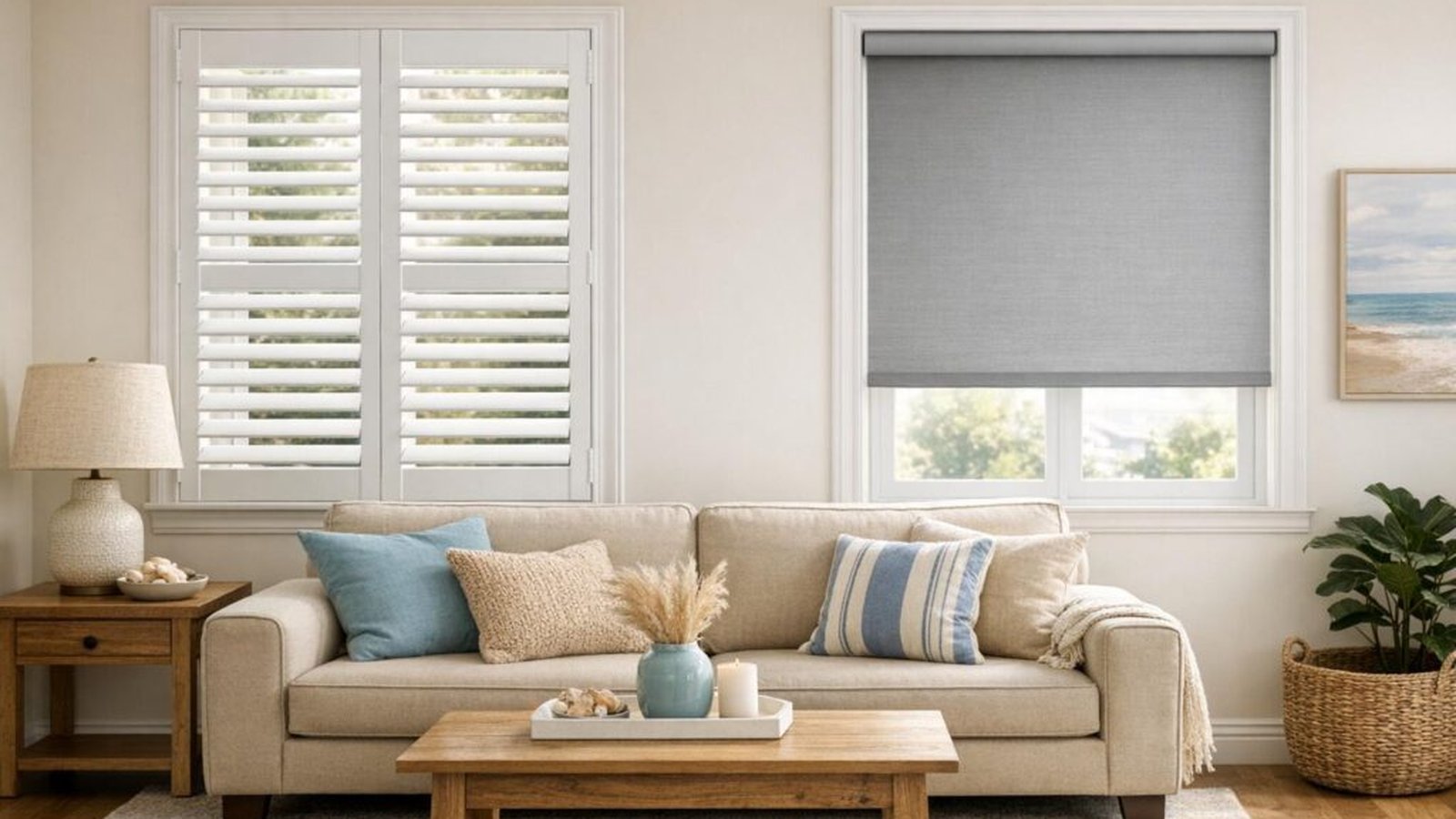
- Choose roller shades for clean modern lines, better glare control, easier customization, and typically lower upfront cost.
- Choose plantation shutters when you want a permanent architectural feature and love the look of wide louvers.
If you’re shopping right now, the fastest way to see real pricing for your windows is to configure roller shades with World Wide Shades in the Shade Builder and compare with local shutter quotes.
How roller shades and plantation shutters differ structurally
Understanding the construction explains the differences in price, coverage, and maintenance.
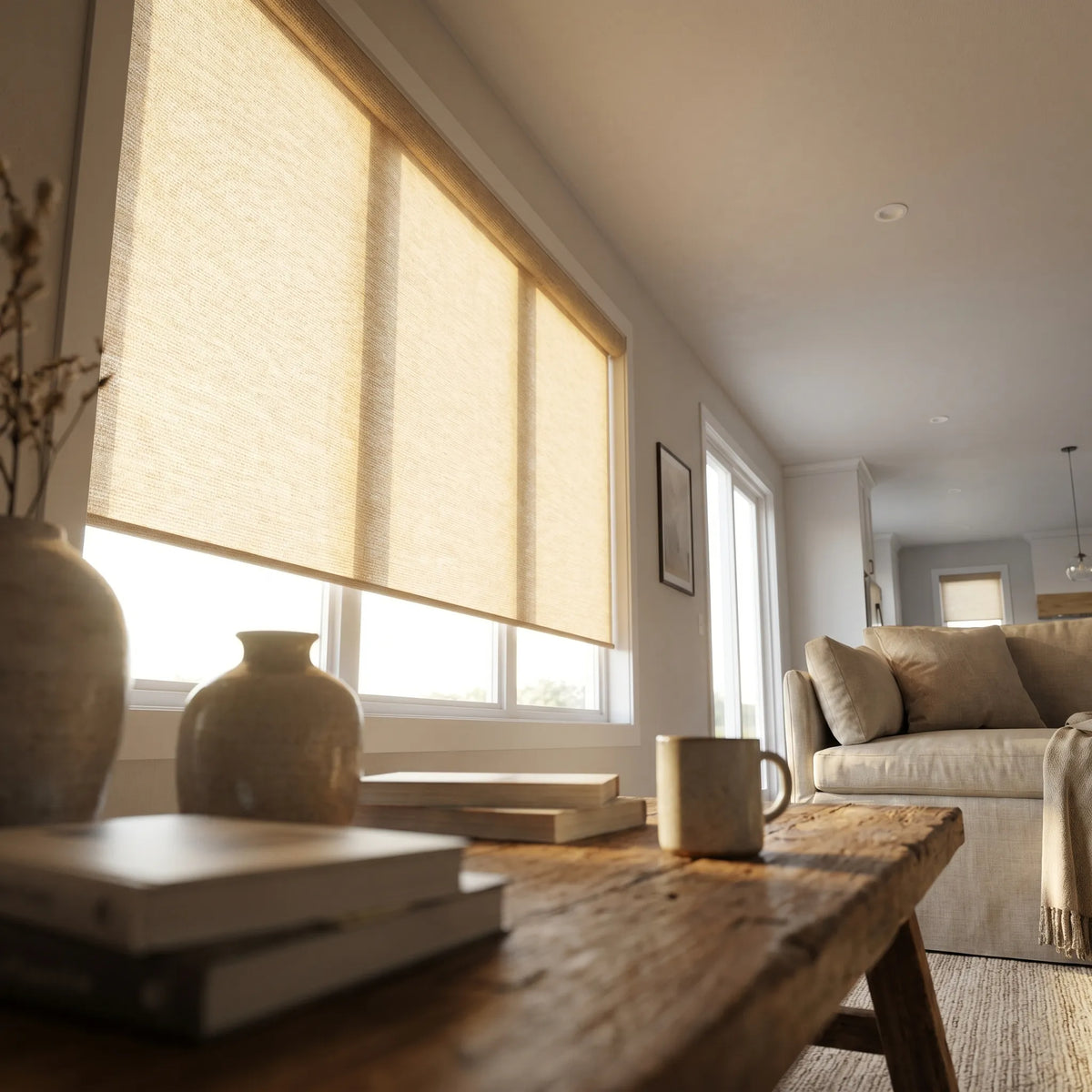
A roller shade is a single panel of fabric wrapped around a tube, with a bottom hem bar. Options include light-filtering, solar, blackout, cordless, and motorized.
If you want to see your fabric options first, order World Wide Shades swatches.
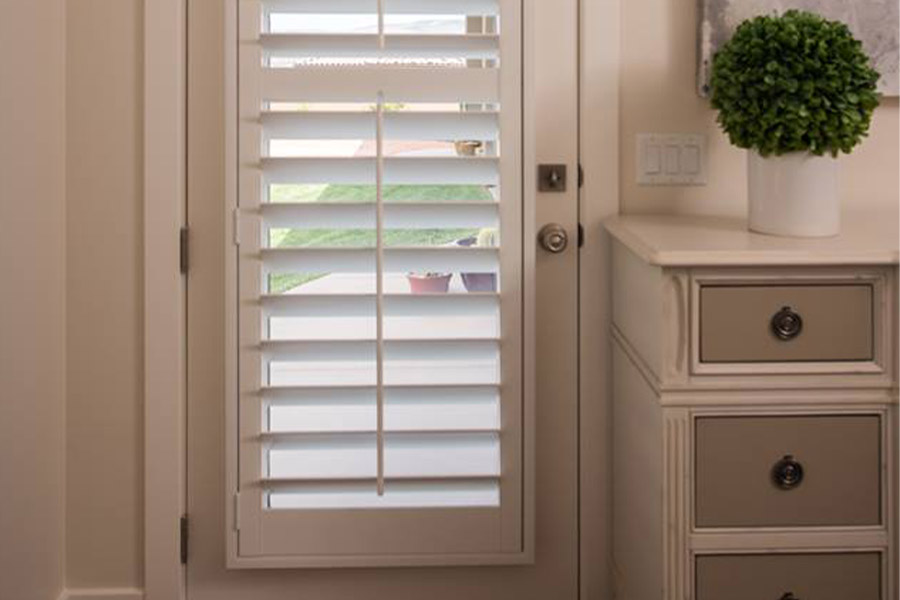
Plantation shutters are typically made from wood or composite materials and use hinged panels with adjustable louvers. They’re usually installed inside the window frame and become part of the window’s architecture.
Cost comparison: what to expect in 2026
Prices vary by region and window size, but you can plan with realistic ranges.
For most standard windows, custom roller shades commonly land roughly in the $150–$450 range per window for manual lift, with upgrades for premium fabrics.
Motorization often adds $200–$600+ per shade depending on power and smart control.
For a full breakdown and what changes price, read how much do custom roller shades cost.
To price your exact windows instantly, use the World Wide Shades Shade Builder.
Plantation shutters are often priced higher than shades because they’re a finished carpentry product. A common planning range is $20–$45 per square foot installed, with premium materials and specialty shapes running higher.
Because shutters are frequently sold with installation included, the labor component can be a big part of the total.
If you’re considering home value impact, read window shades increase home value.
Light control and privacy: who wins in real rooms?
- Roller shades: solar or light-filtering fabrics can preserve daylight while reducing visibility.
- Shutters: louvers can be tilted to block views while still letting in light.
If privacy is your main goal for bedrooms, see best window shades for bedroom.
- Roller shades: true blackout fabrics can significantly darken a room.
- Shutters: reduce light but often still allow slivers of light between louvers and around frames.
If you’re chasing the darkest possible setup, combine shade selection with fit strategies from blackout curtains vs blackout shades.
Insulation and energy efficiency
Both options can improve comfort compared to bare glass, but they work differently.
- Roller shades can reduce solar heat gain (especially solar fabrics) and help with winter drafts when mounted well.
- Shutters add a rigid barrier and can improve perceived insulation, especially with tight installation.
For a deeper energy breakdown, see energy efficient window shades.
Maintenance: cleaning time and long-term upkeep
A simple way to think about maintenance is surface area.
- A roller shade has one main fabric surface.
- Plantation shutters can have dozens of louvers per panel, plus edges and frames.
That extra surface area is why shutters can feel like a bigger weekly cleaning commitment in busy homes. This category surprises many buyers.
Most fabrics are low maintenance.
Typical care:
- Light dusting or vacuum with a soft brush
- Spot cleaning with mild soap and water (follow fabric guidance)
For detailed instructions, see how to install roller shades.
Shutters have more surfaces: multiple louvers, edges, and frames.
Typical care:
- Dusting louvers (often each slat)
- Deeper cleaning around hinges and frames
In high-traffic homes, cleaning time can easily be 2–4x longer than a single flat shade panel across the same opening.
Aesthetics: modern minimal vs architectural statement
Roller shades disappear visually. They’re excellent in:
- Minimalist and modern interiors
- Scandinavian and Japandi homes
- Spaces with statement furniture
See examples in window shade trends 2026 and roller shades rental apartment.
Plantation shutters are the feature. They’re popular in:
- Traditional homes
- Coastal interiors
- Mediterranean-style spaces
If you’re shopping by style, also see outdoor roller shades patio.
Specialty windows: arches, bays, and large sliders
Shutters can be beautiful in arches but can become expensive quickly.
If you’re thinking about arch solutions, also see skylight shades guide.
Both can work. Roller shades often win on cost and consistency.
See best roller shades living room.
Shutters are less common for wide sliders; roller shades (or modern alternatives) are often more practical.
See roller shades French doors.
Safety and daily usability
If you have kids or pets, lift type matters.
- Roller shades offer cordless and motorized options.
- Shutters have no cords, but louvers can be tempting for kids to play with.
For safety planning, read child safe window treatments.
Who should buy roller shades?
Roller shades are usually the better fit if you want:
- Faster lead time and easier updates later
- Better fabric-based glare control
- A clean, minimal look
- Lower cost for large window counts
Start with World Wide Shades: build your shade at /builder, compare fabrics with /swatches, and ask questions at (844) 674-2716 via /contact.
Durability and repairs over 10+ years
Both products can last a long time, but they age differently.
Over a decade, the most common issues are:
- Fabric getting dusty or stained in high-traffic rooms
- Chains or clutches wearing out on frequently-used shades
- Small alignment issues if a shade is pulled unevenly
The upside is that repairs are often localized: a clutch, chain, or fabric replacement can restore function without redoing the whole opening.
Over time, shutter owners often see:
- Finish wear on louvers and frames in sunny exposures
- Louvers loosening and needing adjustment
- Hinges and frames needing occasional tightening
Shutters can be extremely durable, but repairs can be more carpentry-like and sometimes require a specialist.
If you like the idea of simpler service and updates over time, roller shades are often the easier long-term ownership experience.
Who should buy plantation shutters?
Plantation shutters are a strong fit if you want:
- A permanent architectural statement
- A traditional or coastal look
- A hinged treatment you can open fully
If you’re also weighing other shade types, compare profiles in noise reducing window shades.
Real-world scenarios: which one fits your home?
If you’re still torn, use these common scenarios to make the decision quickly.
If curb appeal is the priority, shutters can look like custom millwork.
A balanced approach many homeowners use is shutters in front-facing rooms and roller shades everywhere else for cost control.
If the room needs to be dark, blackout roller shades usually win.
Pair a blackout fabric choice with good installation and consider reading blackout curtains vs blackout shades to understand why fit matters as much as fabric.
Roller shades are easier to keep consistent across 10–20 windows because fabric and hardware remain uniform.
If you want the quickest weekly upkeep, roller shades are typically easier because you’re dealing with one flat panel instead of dozens of louvers.
FAQ: Roller shades vs plantation shutters
Roller shades are usually cheaper upfront; shutters are often priced per square foot and typically cost more due to materials and installation.
Blackout roller shades generally darken a room more than shutters, especially when edge gaps are managed with good fit or light-blocking hardware.
Roller shades are usually easier because they’re a flat panel; shutters have many louvers and edges that take longer to dust and wipe.
Shutters can feel like a built-in upgrade, but value depends on buyer preference and install quality; read window shades increase home value for context.
Roller shades are often more practical for wide windows and slider walls; shutters can become heavy and expensive at large sizes.
Yes. Many homeowners use shutters in front-facing rooms and roller shades in bedrooms or media spaces for better light control.
Compare your options with World Wide Shades
If you want a clean look, great light control, and the ability to customize room by room, choose roller shades.
Build your custom roller shade with World Wide Shades:
- Configure and price in the Shade Builder
- Compare materials with swatches
- Get expert help at (844) 674-2716 via /contact