Why skylights need a different shade strategy
Skylights deliver useful daylight from above, but they also receive direct solar exposure for hours when a vertical window may be shaded by an overhang. That can create hot spots on floors, furniture, countertops, and computer screens. The right skylight roller shades reduce glare and solar heat without turning the room into a cave.
The best specification depends on the skylight’s pitch, orientation, dimensions, shaft depth, glass, and access. A shade that works on a 2-by-4-foot fixed skylight may be underpowered or difficult to operate on a 4-by-8-foot opening. World Wide Shades can coordinate fabric openness, cassette clearance, side channels, and motorization for the actual opening. Start a skylight shade design.
If the room also includes high clerestory glass, see transom window roller shades for mounting and privacy considerations.
For foundational measurements, use our skylight shades guide. If the room also has vertical glass, compare the recommendations with our energy-efficient window shades and UV protection window shades articles.
Start with the heat and glare problem
Ask what must improve. Is the room too warm at 2 p.m.? Is a television washed out? Are wood floors fading? Is the skylight above a bed or desk? These answers determine whether you need a solar screen, light-filtering fabric, room-darkening fabric, or blackout shade.
The U.S. Department of Energy explains that window coverings can reduce solar heat gain and glare, while performance varies with orientation, climate, and the covering itself (Energy Saver: Window Coverings). A dark or highly open skylight fabric can still admit substantial radiant heat, so do not choose by color alone. Ask for openness, backing, reflectance, and the expected visual effect.
A useful starting framework is:
- Solar screen, about 1% to 5% openness: preserves some view and daylight while reducing direct glare. Lower openness generally gives more glare control, but the view becomes more filtered.
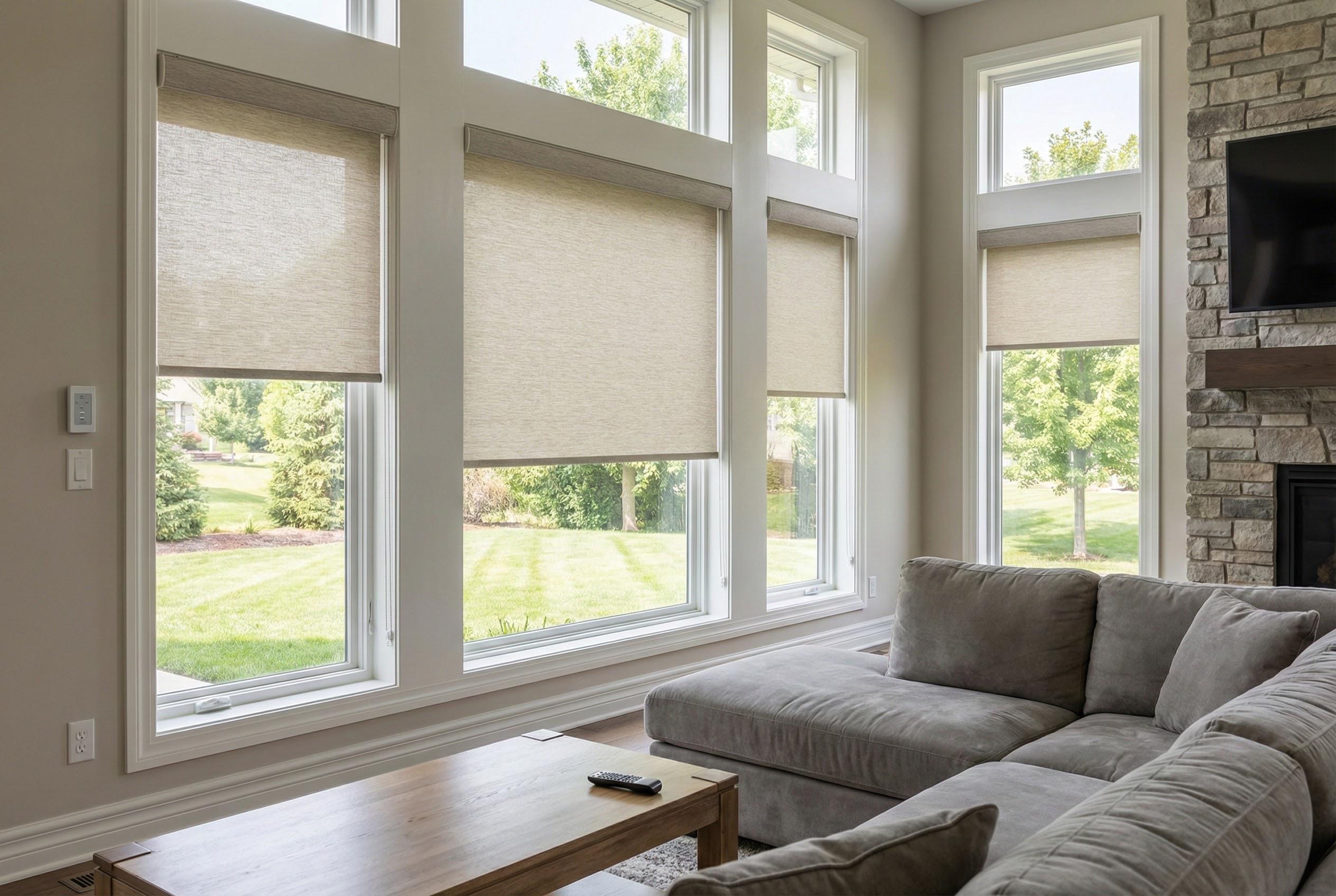
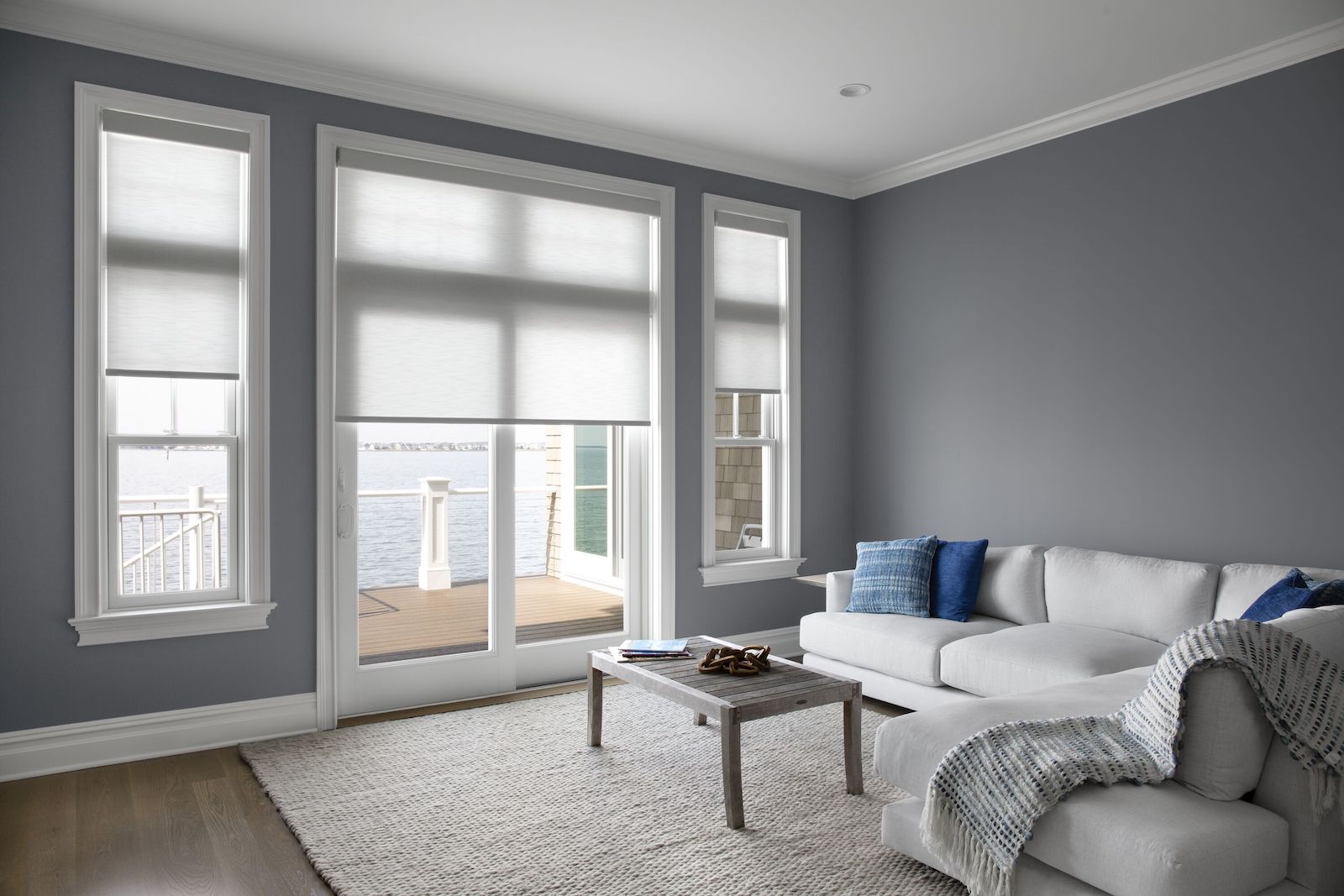
- Light-filtering fabric: diffuses overhead light and softens shadows. It works well in kitchens, stair halls, and living spaces where a view through the skylight is not the primary goal.
- Room-darkening fabric: makes bedrooms and media rooms more comfortable, though perimeter gaps can still admit a bright line of light.
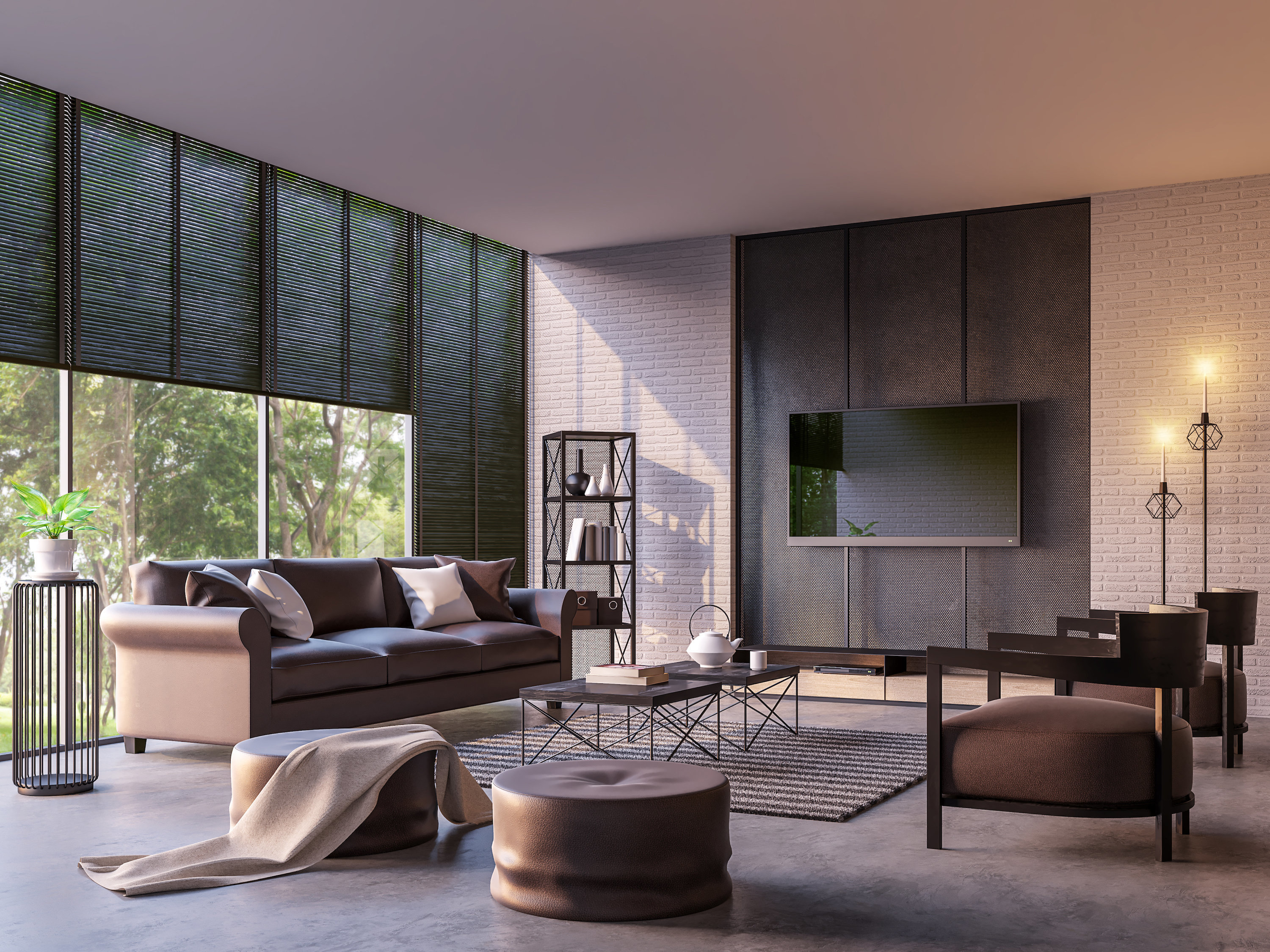
- Blackout system: best when darkness matters, such as a nursery or bedroom. A tight fit, side channels, and the right cassette are as important as the fabric itself.
World Wide Shades can send swatches so you can observe the difference under direct light. Request skylight fabric samples before committing to a large overhead opening. For motor and mount guidance, call (844) 674-2716 or contact World Wide Shades.
Measure the opening, shaft, and obstacles
Do not measure only the visible glass. Record the finished opening width and height at three points, the frame depth, shaft angle, trim projection, and any insect screen or hardware that could interfere. For a rectangular opening, note the smallest width and height. A difference of even 1/8 inch can change whether an inside-mounted cassette fits cleanly.
Photograph the opening from below and include a tape measure in the frame. Note whether the skylight is fixed or venting, because a venting unit may need clearance for the sash to open. Identify the nearest access point for a rechargeable motor, service visit, or power connection. A shade that requires a ladder every month is a poor candidate for a manual control.
For unusually wide or angled openings, confirm whether the system uses a tensioned side channel, cable guidance, or a track. The shade should stay aligned as it travels, especially on a sloped surface. World Wide Shades can review the dimensions and recommend an operating method before fabrication. Send your skylight measurements for review.
Motorization is often the practical choice
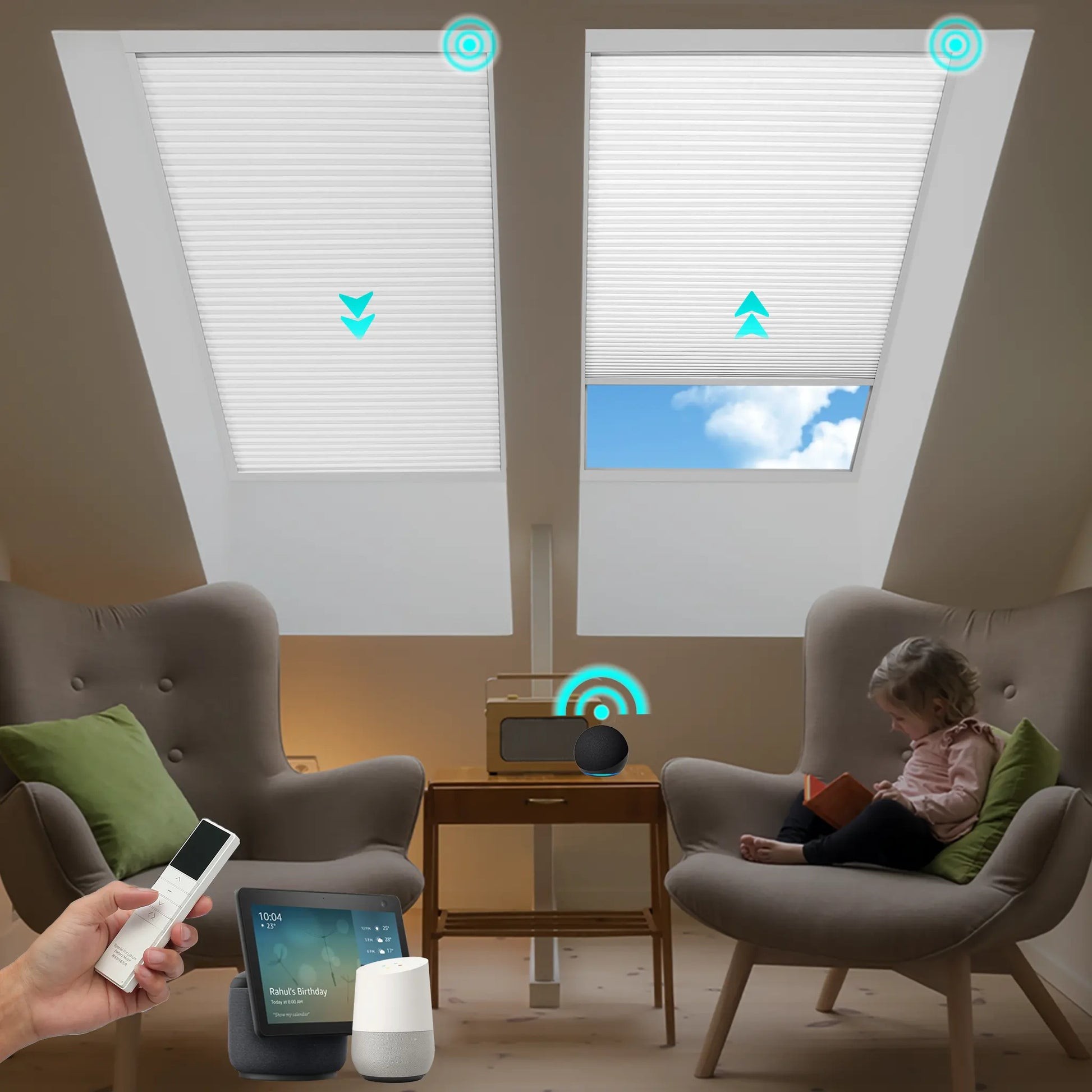
A skylight may be out of reach, so motorization is not merely a luxury. It makes daily use possible and lets the shade react to predictable heat and glare conditions. A rechargeable motor can suit an accessible shaft and moderate cycle count. A low-voltage or hardwired motor is worth considering when the shade is large, the skylight is high, or the room should not depend on periodic ladder access.
Choose the motor after the finished shade size and fabric weight are known. A 3-by-6-foot shade and a 5-by-10-foot shade are not equivalent loads. Ask how many open-close cycles per day the room will require, where the battery is located, and how the motor behaves if power is interrupted. For control options, compare our smart home motorized shades setup and motorized shade battery life expectations guides.
A shade schedule can close the skylight before peak afternoon heat and reopen it when daylight becomes comfortable. Add a manual remote or wall control for changing weather. If a smart sensor is used, set a maximum closed time or temperature condition so the room does not remain dark longer than necessary. World Wide Shades can help balance automation, access, and maintenance.
Preserve daylight without preserving the hot spot
Many homeowners assume the choice is fully open or fully closed. Intermediate positions are more useful. A solar screen at 50% can soften a bright shaft while keeping daylight distributed across the room. A light-filtering roller shade at 30% can cut the overhead spotlight without eliminating ambient light. Adjust in 5% or 10% increments during the hottest hour and watch the floor, seating, and screen rather than judging from the ceiling.
Color also changes performance. A lighter interior-facing fabric can keep the room feeling brighter, while a darker screen can reduce perceived glare on a display. The backing and openness determine much of the solar performance. Ask for side-by-side samples in the actual room; phone photographs are not a reliable substitute for direct observation.
Coordinate vertical windows so the room does not look visually divided. A skylight shade and a south-facing roller shade can use complementary neutrals and separate schedules. See our window shades color guide and best shades for south-facing windows for ways to keep the palette coherent.
Installation details that matter
The cassette should sit square to the opening and clear trim, drywall returns, and venting hardware. Side channels must remain parallel so the hem bar does not bind. On a sloped skylight, the system needs enough tension to prevent fabric sag without making the motor work harder than necessary. The installer should also confirm that the shade does not block a venting sash or interfere with the glass manufacturer’s service access.
Plan cable or power routing before drywall is closed on a renovation. Label the motor location, leave service access, and avoid placing a power supply where condensation could reach it. For a finished room, a rechargeable option may avoid disruptive wiring, but accessibility and charging frequency still matter. Talk with World Wide Shades about a clean installation plan before the ceiling is sealed.
A simple rule is to solve the worst hour first: close or lower the shade before direct sun reaches the room, then reopen it when the heat and glare pass. That approach usually delivers more comfort than leaving the shade open all day or closing it permanently.
Skylight roller shades FAQ
They can reduce solar heat entering the room, especially when the fabric, fit, and position are appropriate for the skylight. The result depends on glass, climate, orientation, shaft construction, and whether the shade is closed before peak sun. A shade is not a substitute for evaluating insulation or HVAC performance.
About 1% to 5% openness is a common starting range for glare control while preserving some daylight and view. Choose light filtering or blackout instead when privacy, sleep, or a dark media room is the priority. World Wide Shades can recommend a fabric after reviewing the room’s use and exposure.
They are often the most practical option because manual access may require a ladder. Motorization allows a schedule, remote, wall control, or smart-home scene to move the shade safely from the floor.
Often, but the shade must be checked for sash clearance and the correct frame geometry. Measure the venting path and follow the skylight manufacturer’s requirements before selecting an inside-mounted cassette or side channel.
They can create a much darker room, but small perimeter gaps, shaft reflections, and adjacent windows may still admit light. A tight fit, side channels, and coordinated vertical shades improve the result.
World Wide Shades designs overhead shades for heat, glare, access, and aesthetics together. Call (844) 674-2716 or build your custom solution, request swatches, or contact World Wide Shades for a detailed recommendation.