Transitional interiors combine traditional comfort with modern restraint. The window treatment has to do the same: too much ornament can feel formal, while a bare shiny roller can feel unfinished beside wood floors, molding, and upholstered furniture. Transitional roller shades create a calm base with clean geometry, warm neutrals, quiet texture, and optional layers for privacy and glare.
World Wide Shades designs custom shades for living rooms, bedrooms, dining rooms, offices, and open-plan homes. Explore transitional fabrics in the World Wide Shades builder, order World Wide Shades swatches to test undertones, or contact World Wide Shades for a room-by-room composition. Call (844) 674-2716 when windows vary in size or exposure but the finished look needs to feel unified.
For related planning ideas, compare guest-room blackout shades, French Country roller shades, industrial loft roller shades, and roller vs. Roman shades for large windows.
What makes a roller shade transitional?
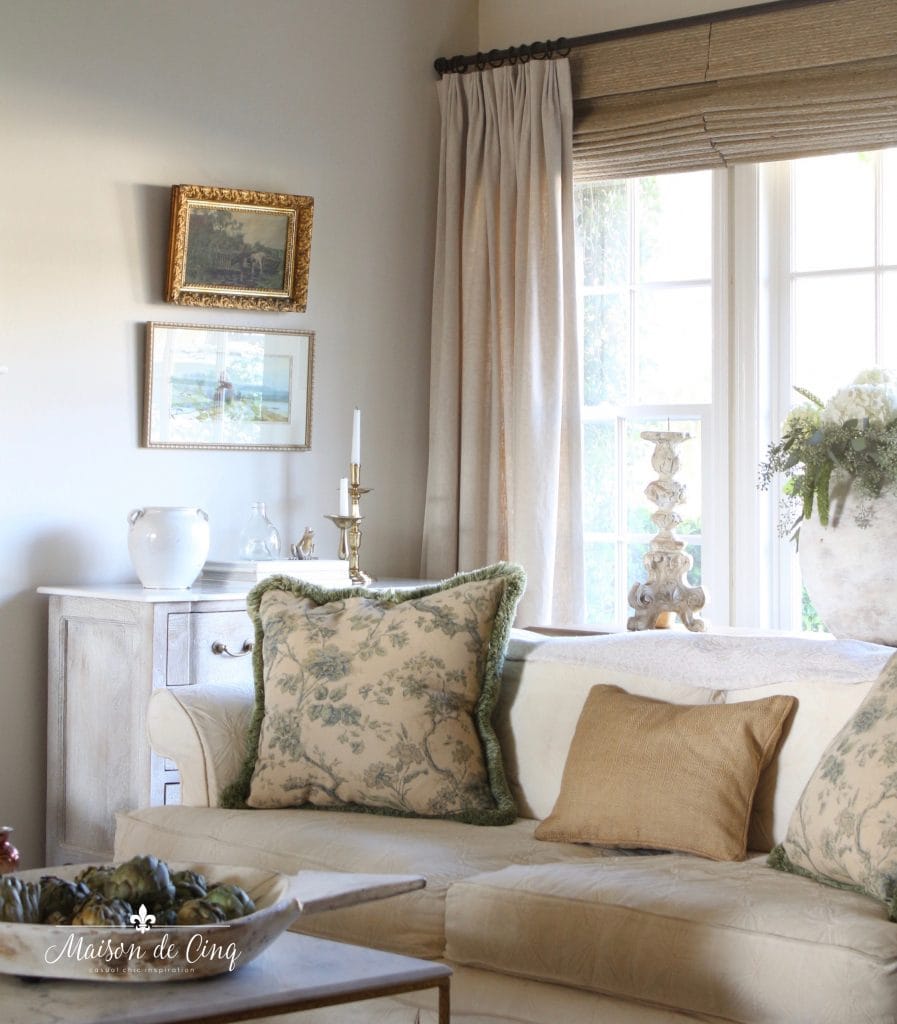
A transitional roller shade is tailored but not severe. It typically has a matte or linen-like surface, a restrained neutral, and a simple hem bar or cassette. The texture keeps a broad glass wall from reading as flat, while the roller profile avoids competing with artwork, millwork, or patterned upholstery.
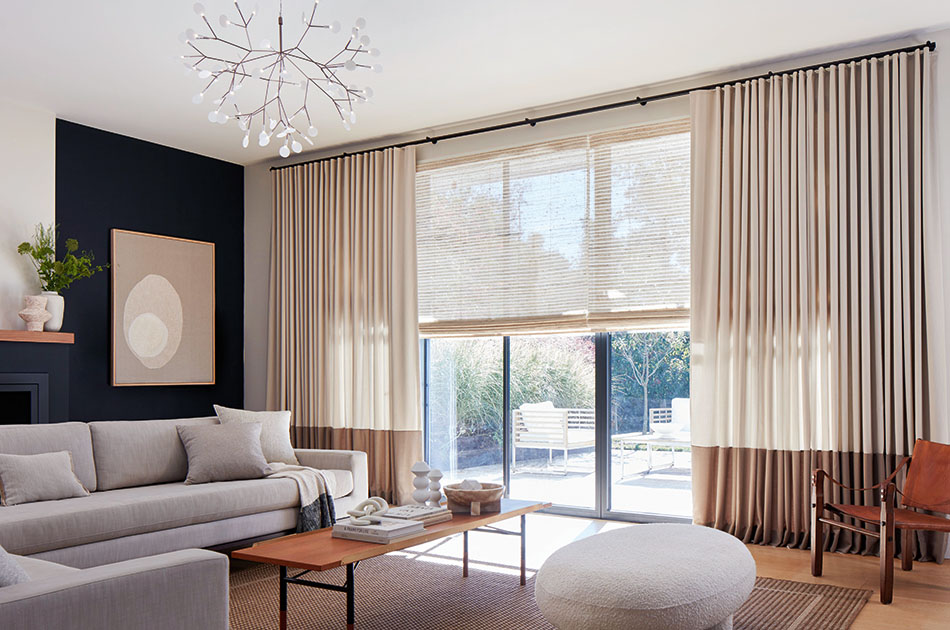
A dependable formula is one functional base layer plus one optional soft layer. Use a light-filtering roller with lined drapery for flexible living-room light; a solar roller with stationary side panels for glare; a textured roller with a privacy liner for warmth; or a room-darkening roller with drapery in a bedroom. Compare best fabrics for roller shades before narrowing a palette.
World Wide Shades can make the treatment visually disappear into the architecture or add just enough texture for the windows to feel finished. Start a room plan in the builder before selecting a color from a screen.
Build a neutral palette with enough contrast
Warm white, cream, oatmeal, mushroom, taupe, soft stone, greige, and balanced gray are useful transitional starting points. Choose by undertone, not just the name. A shade with a pink cast can fight a green-gray wall; a blue-gray may feel cold beside honey oak; a mushroom tone can bridge both.
A 70-20-10 distribution is a useful planning tool, not a rule: approximately 70% quiet base tones, 20% deeper secondary neutrals, and 10% accent color. The shade often belongs in the base or secondary group. Warm white walls with a taupe roller create low contrast, while a charcoal roller can act as a deliberate secondary element.
Do not match the wall exactly if the result makes the window disappear unintentionally. One value lighter or darker can give the treatment a finished outline. Order World Wide Shades swatches and view them beside trim, flooring, upholstery, and the wall at morning, afternoon, and lamplight.
Let function choose the fabric
Solar fabrics use openness factors such as 1%, 3%, and 5% to balance glare, view, and privacy. A 3% screen is a common living-room compromise; 1% provides stronger glare reduction for a south- or west-facing room, while 5% preserves more view. Solar screens can be visible from outside at night when interior lights are on, so add an opaque or drapery layer for dependable evening privacy.
Light-filtering fabric softens daylight and adds daytime privacy without making the room feel closed. A matte linen-look roller can echo upholstered furniture and natural fibers while maintaining the clean line transitional rooms need. The light-filtering shades guide explains how diffused daylight differs from room darkening.
Bedrooms need stronger control than living rooms. Room-darkening fabric supports rest while keeping a softer atmosphere; blackout is better for bright streetlights, shift workers, and media use. Pair a blackout roller with relaxed drapery if you want softness, but do not rely on curtains to correct a badly sized shade gap.
World Wide Shades can combine performance with a neutral finish. Compare opacity options or contact World Wide Shades if the same window needs both daytime and nighttime modes.
Layer with intention, not clutter
The transitional look depends on hierarchy. Start with the shade’s job, then add a soft layer only when it adds value. Lined drapery can bring vertical movement and evening privacy; stationary panels can frame a view without requiring daily operation; a relaxed roman can add gentle folds in a bedroom; and a woven layer can add natural texture in a dining room.
Repeat one characteristic rather than matching everything. The shade undertone can echo the sofa, the hardware can repeat a lamp finish, or the weave can relate to a rug. Avoid placing a roller, roman, drape, tassel, and ornate valance on the same opening. See roller-shade valance options if the top of the window needs a finished transition.
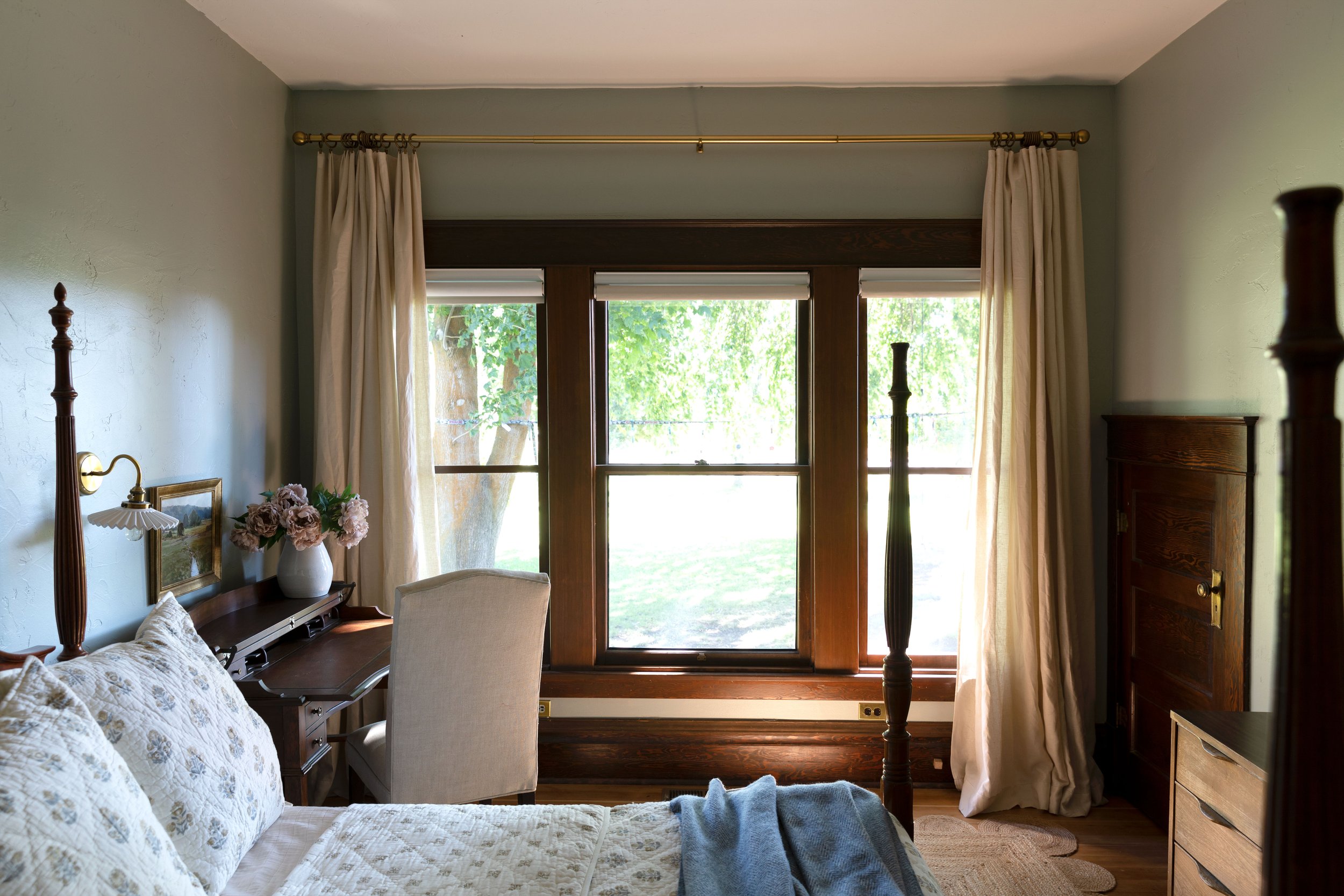
A practical drapery proportion is to mount the rod close to the ceiling or just above the frame and extend it about 6 to 12 inches beyond each side when wall space allows. That lets the glass remain visible when the panels are open. Confirm trim, casing, and return depth before installation.
Build a layered transitional look with World Wide Shades, or contact the design team when the shade and drapery need to clear deep molding.
Use mount proportions to keep the look tailored
Inside mount gives the cleanest connection to existing trim when the recess has enough depth. Measure width at the top, middle, and bottom and check the product’s deduction rules rather than guessing. Outside mount can make a small opening look larger and improves overlap when edge light is a concern.
As a starting range, an outside shade may extend 2 to 4 inches past each side and 3 to 6 inches above the frame, subject to hardware and casing. Wide openings often look more balanced as two or three coordinated shades rather than one heavy roll. A 96-inch opening might be divided into two approximately 48-inch units, but fabric weight, tube size, and motor limits decide the final layout.
World Wide Shades can keep headrails, hem bars, and control positions aligned across a wall. Send your dimensions through the contact page for a fit and proportion review.
Design room by room
In a living room, pair a 3% to 5% solar roller with stationary linen panels when view and glare are both important. In a bedroom, use a room-darkening or blackout roller with a soft layer that can close fully at night. In a dining room, a textured roller or woven shade with a privacy liner adds warmth without blocking every evening view.
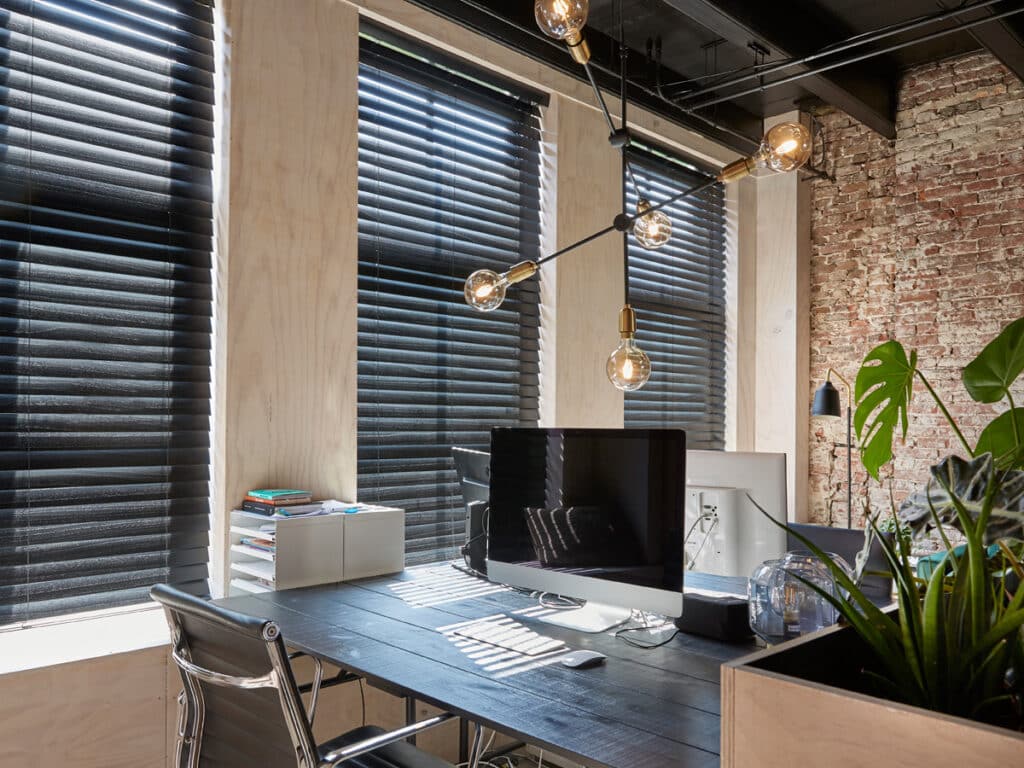
In an open kitchen and family room, use the same base roller across both zones and vary opacity only when the function changes. In a home office, choose a matte 1% to 3% solar fabric if the screen catches direct light; see best shades for south-facing windows. For a guest suite, keep the control intuitive and the finish forgiving. The same design logic applies to a rental, but roller shades for rental apartments covers approval and reversibility.
Choose hardware finishes quietly
Black, bronze, brushed nickel, white, and color-matched hardware can all work in a transitional interior. The finish should relate to existing lighting, door hardware, and furniture without becoming a new focal point. A hidden cassette creates an architectural line; an exposed tube can feel lighter and more economical when the roller is well proportioned.
Use a consistent hem bar across adjacent windows. If the room has ornate molding, keep the roller simple. If the room is mostly flat planes and neutral textiles, a subtle weave or front cassette can prevent the treatment from feeling generic. Test hardware and fabric combinations with World Wide Shades before committing to an entire floor.
Keep comfort part of the design
Window shades affect glare, privacy, and solar heat, not just appearance. The U.S. Department of Energy’s window-coverings guidance explains that coverings can help manage heat gain and loss when used appropriately. In a transitional room, those performance benefits can stay visually quiet.
Use solar or light-filtering fabric when daylight is valuable, and room-darkening or blackout when sleep or media viewing matters. For strong sun, the shade’s color, backing, openness, and mount all contribute to comfort. Test the fabric against the glass, not only under showroom light. Ask World Wide Shades for a fabric comparison when one open-plan room has multiple exposures.
Budget for layers and scale
As a planning range, a small manual roller may cost about $150 to $350. A larger textured or blackout roller with a cassette may land around $300 to $700, while motorization can add roughly $250 to $600 per shade. Drapery, side channels, dual rollers, tall openings, and installation add separate costs.
Transitional design rewards spending where it shows: consistent fit, a calm fabric, and hardware that operates smoothly. Use how much custom roller shades cost to understand the drivers, then price the actual windows in the World Wide Shades builder. World Wide Shades can help phase a multi-room project without losing the visual thread.
Maintain the quiet, finished look
Dust rollers with a soft brush or low-suction vacuum every few weeks. Spot-clean according to the manufacturer’s instructions and avoid saturating a blackout backing. Keep drapery from rubbing against a rough sill or furniture corner. If a shade skews, stop operating it and check whether a bracket is loose or fabric is contacting trim.
Save the final fabric name, control, and mount details so future additions can match. A simple record prevents a later replacement from introducing a different undertone or hem-bar style. For cleaning methods by material, see how to clean roller shades safely.
FAQ: transitional roller shades
Warm white, cream, oatmeal, mushroom, taupe, soft stone, greige, and balanced gray are versatile. Choose by undertone and use a subtle value contrast against the wall instead of assuming an exact match is best.
Yes. Choose a matte linen-look or quiet textured fabric, a simple hem bar, and a warm neutral. Pair the roller with lined drapery, stationary panels, or a woven layer when the room needs softness.
Use light filtering in living and dining rooms, solar in bright rooms where view and glare matter, and room darkening or blackout in bedrooms. A dual system can serve both daytime and nighttime needs.
It is a planning guideline of roughly 70% quiet base neutrals, 20% deeper secondary neutrals, and 10% accents. The shade can sit in the base or secondary group, depending on how much contrast the window needs.
Inside mount looks tailored when the recess is deep enough. Outside mount is useful for shallow or uneven recesses and can reduce edge light; it may extend 2 to 4 inches on each side, subject to hardware and trim.
A broad planning range is $150 to $350 for a small manual roller, $300 to $700 for a larger textured or blackout cassette, and $250 to $600 extra for motorization. Layers and installation increase the final total.
Create a room that feels settled, not staged
Transitional roller shades succeed when they are quiet in appearance and specific in performance. World Wide Shades can help match undertone, texture, opacity, mount, and hardware so the windows support the room instead of competing with it. Start your design, test the neutrals, or contact World Wide Shades; call (844) 674-2716 when you want a coordinated plan across multiple rooms.