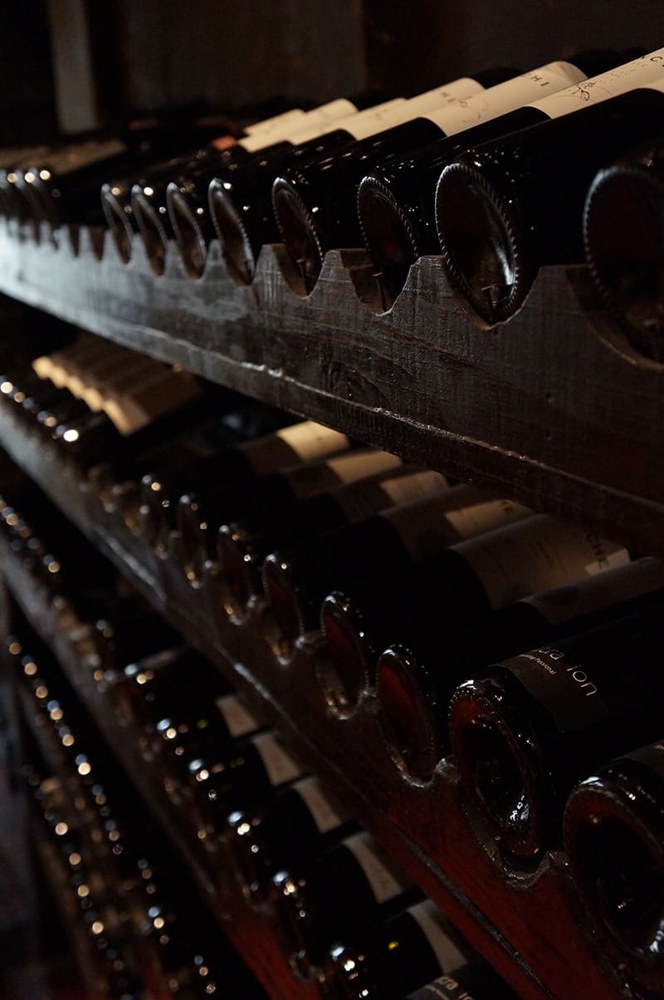
A window can make a home wine cellar feel inviting, but daylight is not neutral for wine, labels, wood racks, or temperature control. Window shades for a home wine cellar can reduce ultraviolet exposure, soften glare, limit solar heat near the glass, and protect the privacy of a valuable collection. The best solution still looks intentional when the room becomes a tasting space.
World Wide Shades builds custom roller, solar, blackout, dual, and motorized shades for compact under-stair cellars, glass-enclosed tasting rooms, and full-height wine rooms. Use the online shade builder to compare fabrics, order swatches against oak and stone, or contact World Wide Shades before ordering around racks and cooling equipment. The objective is controlled light, not simply darkness.
Why daylight matters in a wine cellar
Ultraviolet radiation and high-energy visible light can contribute to changes in wine over time, especially in clear bottles and in rooms with repeated direct sun. Heat is a separate issue: a west-facing window can warm the pane, nearby air, and rack surfaces even when the cellar cooling system is operating correctly. A shade helps at the window, but it does not replace insulation, vapor control, stable humidity, or mechanical cooling.
Start by recording the window direction, size, and direct-sun hours. A 36-by-48-inch north-facing window may need a different fabric from a 72-by-60-inch west-facing picture window. World Wide Shades can help connect the window's exposure to the collection layout. Request a project review if bottles sit within 12 inches of the glass or if the opening is part of a tasting-room door.
The UV protection window shades guide explains how fabric and openness affect exposure. For strong sun, compare it with best shades for south-facing windows and energy-efficient window shades.
Solar screen shades for daytime view
Solar shades are a strong option when you want to see a garden, patio, or landscape through the cellar window. Openness factors commonly range from 1% to 10%:
- 1%: strongest glare and view control, with a more private daytime appearance.
- 3%: a balanced choice for many tasting rooms.
- 5%: more outward view, but more light and glare.
- 10%: the brightest, most transparent option and the least private after dark.
These percentages describe the size of the weave openings, not a universal guarantee of UV or solar performance. Ask for tested specifications. A 1% charcoal screen may control glare effectively, while a light-colored fabric may reflect more solar energy but offer a different appearance. Build a solar shade specification and order samples beside actual labels and wood finishes.
Solar shades are not automatically private at night. Once the tasting-room lights are on, the room can become visible from outside. If the cellar is ground-level or faces a street, pair a daytime screen with an opaque or blackout layer.
Blackout and dual roller shades
Room-darkening fabric reduces visible light for a cellar that receives direct afternoon sun. Blackout fabric is better for a display window, a projector, or a collection where light control is a top priority. Edge gaps matter: an inside-mounted blackout shade may leave a bright border around the opening, while an outside mount, cassette, and side channels can improve coverage.
A dual roller system combines a screen or light-filtering shade with a room-darkening shade on one opening. Raise the opaque layer for tasting, lower the solar layer for a daytime view, and close both during bright storage hours. Compare the trade-offs in blackout curtains vs. blackout shades. World Wide Shades can coordinate the two fabrics so the hardware feels finished rather than improvised.
Lined woven wood shades add texture beside oak, walnut, stone, and brass. A liner is important where the window receives meaningful sun; an unlined weave can admit stripes and pinpoints of light. Read woven wood shades guide, then contact World Wide Shades for a liner and mounting discussion.
Privacy and security at night
Backlit bottles are easy to notice from a sidewalk or neighboring home. Nighttime privacy protects both the collection and the experience of the room. Close an opaque layer before interior lights go on, or use a timer that treats the cellar like a secure part of the home rather than an always-open display.
If the room includes a glass door, coordinate the shade with roller shades for French doors. For a broad opening, look at roller shades for wide picture windows. World Wide Shades can plan consistent fabric color across windows and doors while accounting for different handles, hinges, and clearances.
Managing heat around racks and cooling equipment
Lower the shade before direct sun reaches the glass. By the time a room feels hot, the pane and objects near it have already absorbed energy. For a west-facing window, a schedule may close the shade in late afternoon during summer and reopen it after sunset. A solar sensor can respond to conditions, but the cellar cooling system must still maintain its target temperature.
Use light-colored or reflective-backed fabrics when appropriate, and do not cover supply or return vents. Keep the bottom rail from striking bottles or rack faces. A motorized shade can protect a high clerestory without requiring a ladder. World Wide Shades can coordinate shade placement with racks, tasting tables, and mechanical equipment. Call (844) 674-2716 to discuss a high or obstructed opening.
Humidity, condensation, and cleaning
Wine cellars can run more humid than living spaces, and condensation may appear on poorly insulated glass. Do not allow a fabric shade to sit in repeated contact with water. Keep a clearance between the shade and a wet pane, and choose hardware and fabric suited to the room's conditions.
Dust with a soft brush or low-suction vacuum attachment. Do not spray cleaner directly onto fabric, and keep bottle-washing sinks and misting equipment away from the roll. If a vapor door or sealed enclosure is involved, make sure brackets do not compromise the door gasket. Order samples and ask World Wide Shades for care guidance before specifying a specialty textile.
Manual, cordless, and motorized operation
A cordless manual shade works on a reachable window and keeps the tasting area visually clean. Motorization is worthwhile for high openings, multiple windows, shades behind racks, or a daily protection schedule. A “storage” scene might close at 10 a.m. on bright summer days; an “entertain” scene can raise shades to 30% before guests arrive.
Rechargeable motors often add about $150 to $350 per opening. Hardwired systems can add $300 to $600 or more when electrical work is required. Hubs, remotes, and sensors add cost but can make consistent light control easier. Review smart-home motorized shades setup and motorized shades Alexa and Google Home.
Configure motorization for one difficult opening first, or contact World Wide Shades about a whole-cellar scene. Call (844) 674-2716 when a shade must clear a rack or be controlled from outside the cellar.
Measuring around racks and glass
Measure width at the top, middle, and bottom and record the narrowest inside-mount dimension. Measure height at three points. Record the distance from glass to bottle necks, rack faces, casing, handles, and door swings. A shade that rubs a rack can telescope, fray, or damage the bottom rail.
An outside mount may need at least 2 inches of side overlap where wall space allows. Add more for severe edge light or reflective stone. A cassette conceals the roll and protects the visual line above the glass. Review how to install roller shades, but use a professional when mounting into masonry or around a sealed wine-room assembly.
Cost planning
A custom manual solar or roller shade may start around $150 to $350 for a standard opening. Blackout material, dual rollers, cassettes, side channels, specialty shapes, and motorization can bring a larger opening to $400 to $1,000 or more. A two-window tasting room may range from $400 to $2,000 depending on dimensions and controls.
World Wide Shades can quote the same window at three protection levels so you can compare value rather than guessing. Start a quote in the builder, order cellar-friendly swatches, or contact World Wide Shades with the glass size and collection layout.
Home wine cellar shade FAQ
Not every cellar needs full blackout. A room with minimal daylight may use a 1% or 3% solar shade, while clear bottles, direct sun, or a display window may justify blackout or a dual system.
Usually not. Solar shades can provide daytime privacy when outdoors is brighter than indoors, but interior lights can reverse that effect. Add an opaque layer or close the shade after dark.
A 1% to 3% screen is a practical starting range for strong glare control. The best choice depends on direction, glass size, desired view, and the fabric's tested solar performance.
No. A shade can reduce solar exposure at the window, but it cannot replace insulation, vapor management, humidity control, or properly sized cooling equipment.
A rechargeable motor often adds roughly $150 to $350 per opening; hardwired work can add $300 to $600 or more. The final price depends on width, fabric, access, and controls.
World Wide Shades can protect the collection while keeping the room beautiful enough to host. Build the shade, compare fabrics, or contact World Wide Shades for a cellar-specific plan.