What geofencing adds to motorized shades
A time-based shade schedule assumes your routine is the same every day. Geofencing motorized window shades use a phone’s location state to respond when household members leave or approach a defined home boundary. That makes privacy more adaptive: shades can close when the last person leaves, open when someone returns, or remain closed when a room is unoccupied.
Geofencing is not a replacement for every schedule. It is one signal in a control plan, alongside time, daylight, occupancy, weather, and manual input. The best system uses geofencing for broad privacy actions and uses local scenes for predictable moments such as bedtime. World Wide Shades can help select fabrics and motors that work with both automation and everyday hand control. Plan your motorized shade system with World Wide Shades.
If you are starting with a hub, pair this guide with SmartThings motorized shades integration.
If you are comparing location triggers with scenes, read our smart home motorized shades setup guide and smart home shade scenes and automations. They explain the control architecture before you add presence conditions.
How a geofence trigger actually behaves
A geofence is a virtual radius around an address. The phone’s operating system may report “home,” “away,” entering, or leaving when the device crosses that boundary. The exact timing varies with GPS accuracy, Wi-Fi recognition, battery-saving settings, and the automation platform. A 500-foot radius may suit a compact neighborhood, while a 1,000- to 2,000-foot radius can reduce rapid toggling around a large property or cul-de-sac. Treat those values as starting points and test them at your actual driveway.
The automation platform may also wait for confirmation. A location event can arrive seconds or several minutes after the physical boundary crossing. That is why geofencing is excellent for “secure the home when everyone is away,” but less suitable for a shade that must close precisely as a neighbor walks past a window. Add a time condition, a short delay, or a manual override where privacy timing is sensitive.
A dependable architecture has four layers:
- Presence: which authorized phones are home, away, or unknown.
- Intent: whether the household wants privacy, daylight, cooling, or a welcoming arrival scene.
- Action: close, open, or move a shade group to a defined percentage.
- Fallback: a wall control, remote, or scheduled routine that works if location data is delayed.
Do not rely on one person’s phone if several adults, children, or caregivers use the home. A “last person leaves” rule is safer than “Alex leaves,” provided every relevant household device is included. Ask World Wide Shades about coordinated shade groups if one room has multiple windows or doors.
Privacy automations that feel human
When all approved household devices leave, close street-facing rooms, bedrooms, and bathrooms. Keep a small number of daylight-critical shades open if plants or pets need light. Use a 2- to 5-minute confirmation delay to prevent the shades from closing when a phone briefly loses signal in the driveway. A local wall switch should always be able to reopen the room.
Open entry-facing or living-room shades to a partial position when the first person arrives during daylight. A 40% opening can feel welcoming without exposing a dark interior at night. Add a sunset condition so the routine does not open shades after dark. This is where fabric selection matters: a light-filtering shade and a solar screen behave very differently from blackout fabric.
At sunset or a fixed evening time, close bathroom, bedroom, and street-facing shades whether anyone is home or not. Geofencing then acts as a backup rather than the only protection. For more complete coverage, see our child-safe window treatments guidance and the best window shades for a bedroom.
If the home is away for more than a day, combine a presence state with two or three randomized shade changes within a safe daylight window. Avoid moving shades during storms, extreme heat, or times when the motor would be hard to access. The goal is a lived-in pattern, not constant motion. A static privacy position may be better for a room with valuable furnishings.
Request swatches from World Wide Shades before you automate a room. A fabric that looks private in a sample can appear more transparent when backlit, especially after sunset. For a privacy review, call (844) 674-2716 or contact World Wide Shades.
Prevent false triggers and shade chatter
Geofencing fails most visibly when shades open and close repeatedly. This can happen when the boundary is too small, two phones disagree, a person turns off location permissions, or an automation triggers on both “enter” and “home.” Add a cooldown so the routine cannot run again for 10 or 15 minutes. Use a minimum dwell time: require a device to remain away for several minutes before closing a room.
Keep arrival and departure actions asymmetric. Departures can close a group after confirmation; arrivals can open only selected rooms and only during daylight. This avoids the awkward result of every shade rising when someone returns at 10:45 p.m. It also reduces cycles, which matters for battery-powered motors. A shade that moves six times per day will generally demand more charging attention than one that moves twice.
Name devices by room and elevation. “Living West,” “Living South Door,” and “Bedroom Front” are more useful than “Shade 1.” Build a test matrix with at least these cases: one person leaves, the last person leaves, a guest remains, a phone is offline, the internet is down, and someone manually overrides a shade. Record what happens before adding more logic.
For systems using SmartThings, review our SmartThings motorized shades integration guide. For voice or platform bridging, compare motorized shades with Alexa and Google Home. World Wide Shades can help you define the desired behavior first, then choose a control path that supports it.
Match the fabric to the location trigger
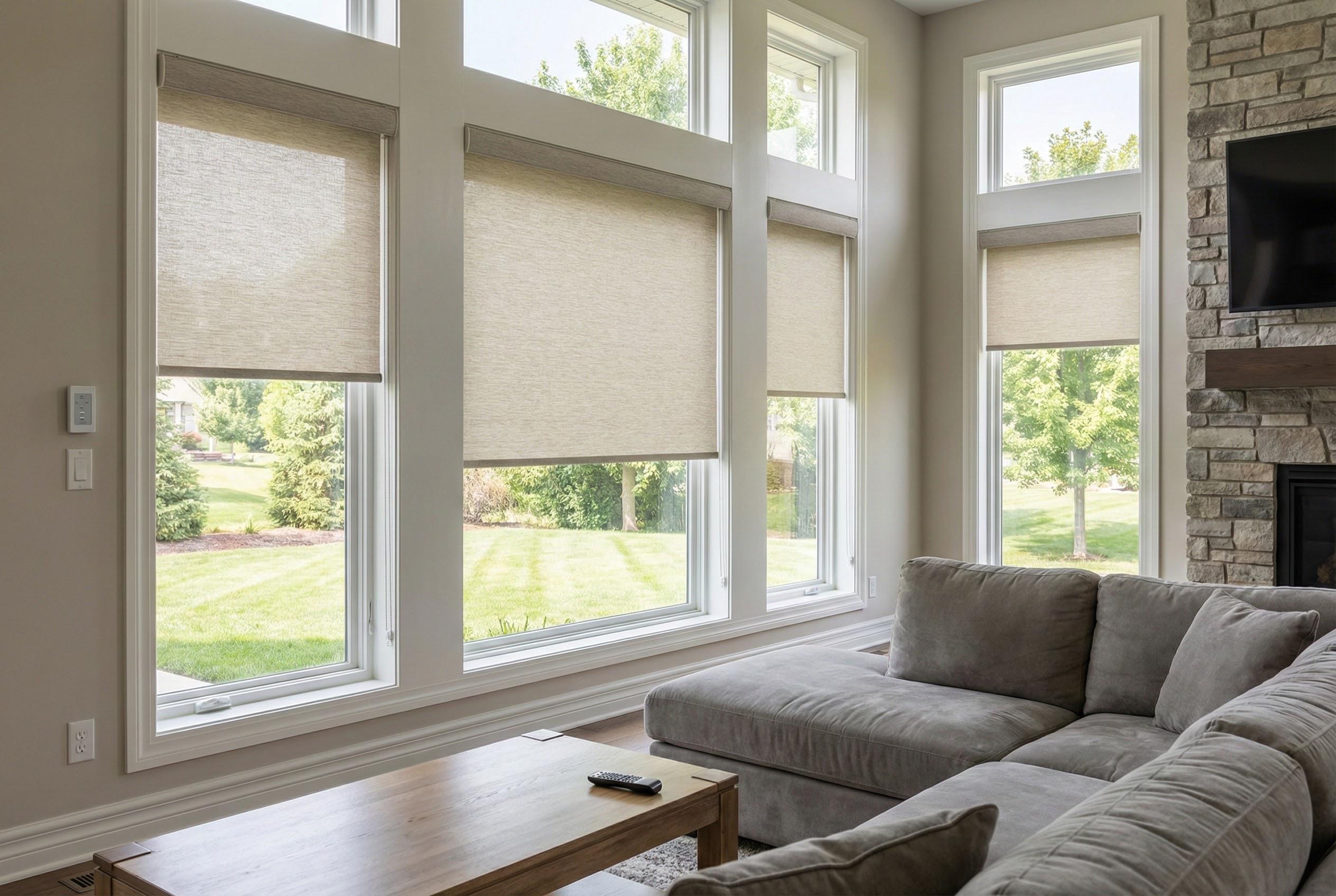
Geofencing tells the shade when to move, but the fabric determines what “privacy” means. A 1% or 3% openness solar screen can reduce daytime glare while preserving a view, yet it may reveal silhouettes after dark when indoor lights are on. A 5% openness screen gives a brighter view but less daytime control. Light-filtering fabric softens daylight, while blackout fabric is the better choice for sleeping, media rooms, and high-privacy bedrooms.
Orientation changes the answer. South-facing windows can need solar control over a broad part of the day; west-facing glass can create an intense late-afternoon problem; north-facing glass may prioritize privacy over heat. Our guide to UV protection window shades explains how fabric selection can protect floors, art, and upholstery. World Wide Shades can coordinate openness, color, and motorization so the privacy routine does not make the room feel permanently closed.
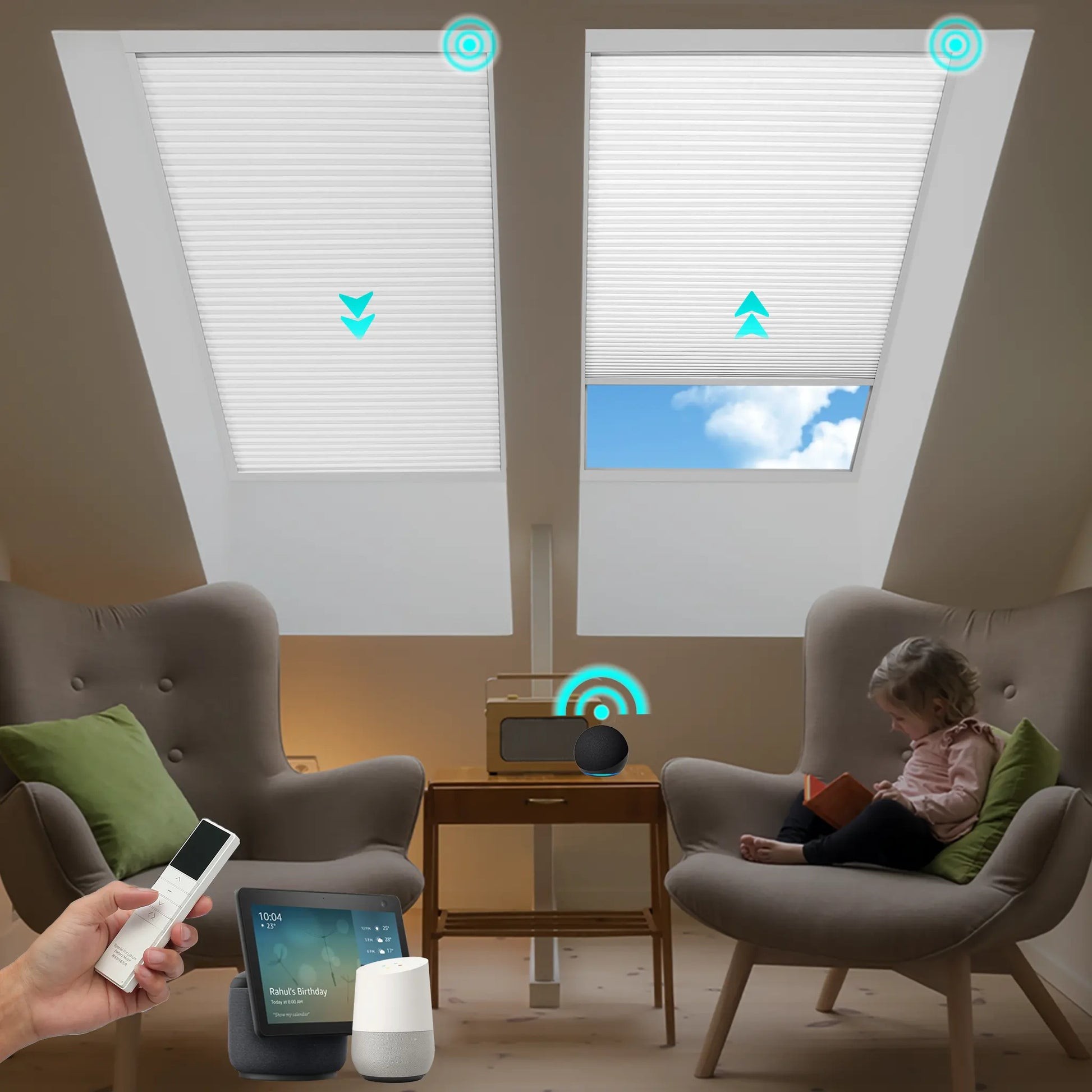
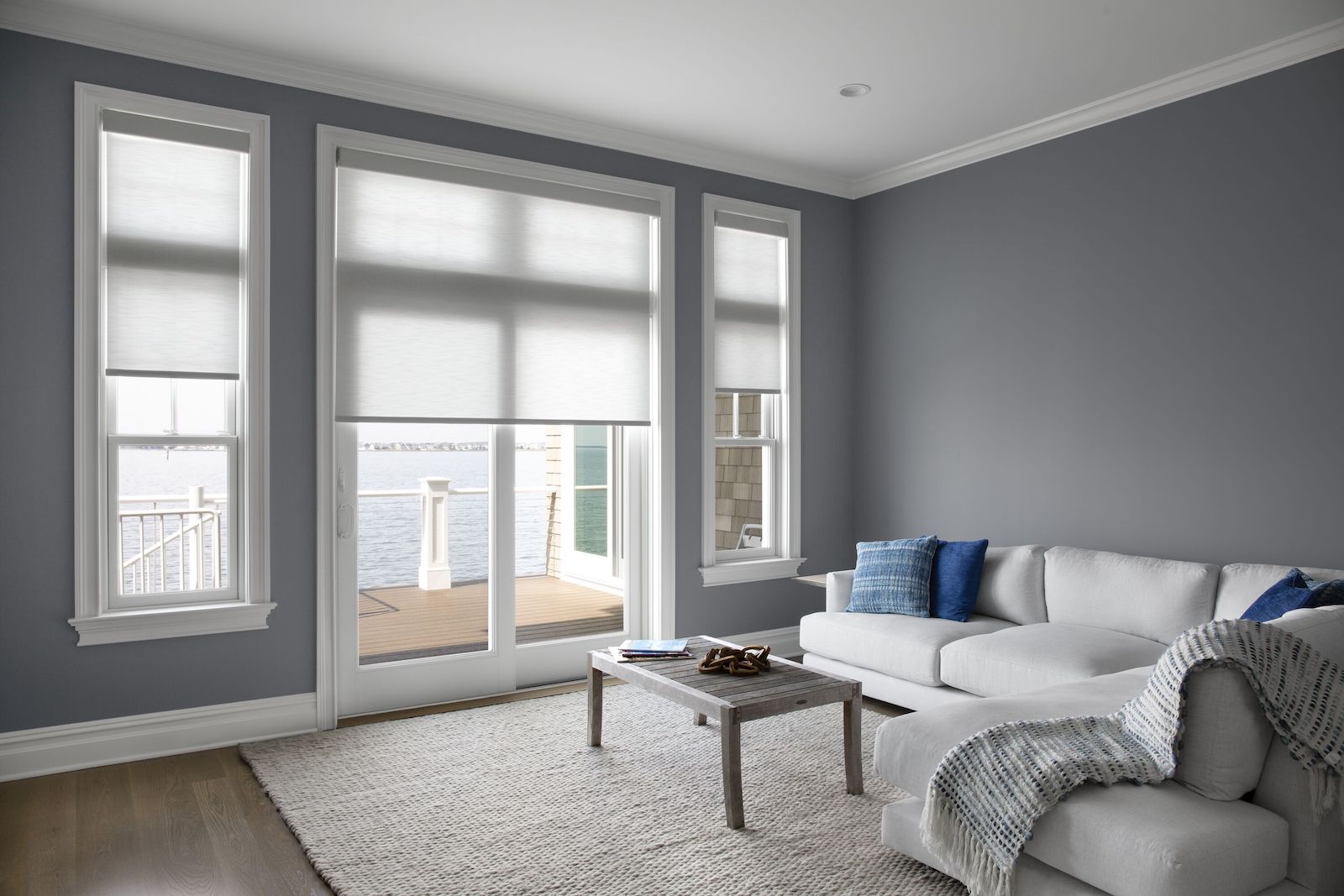
Large openings need additional planning. A sliding door may require two independently controlled shades, adequate handle clearance, and a split that aligns with the active panel. A skylight or high transom may need a dedicated motor because manual access is difficult. Start with a custom opening review before copying a standard-window automation to specialty glass.
A practical setup sequence
- Choose a geofence radius and test it on foot and by car.
- List every phone or presence device that should count as home.
- Assign rooms and create a “privacy” shade group.
- Set a departure confirmation delay of 2 to 5 minutes.
- Add a daylight condition to arrival openings.
- Keep bedrooms and bathrooms on a separate, higher-privacy routine.
- Test manual overrides, offline phones, guests, and late-night arrival.
- Review the first week of events and remove triggers that add motion without value.
If you are unsure whether a rechargeable motor can handle the cycle count, compare our motorized shade battery life expectations article with the case for hardwired motorized shades. Call World Wide Shades at (844) 674-2716 for help planning power, control, and privacy together.
Geofencing motorized window shades FAQ
Not always. Phone location, battery-saving modes, network availability, and the platform’s confirmation behavior can introduce delays. Use a short confirmation window and treat geofencing as a broad privacy signal rather than a millisecond-precise trigger.
Start around 500 to 1,000 feet, then test the boundary at the driveway, nearby roads, and the edge of the property. A larger radius can prevent repeated transitions on a long approach; a smaller radius can make arrival actions feel more immediate. The correct value depends on the home and phone behavior.
Yes, if the automation accounts for occupancy or includes a guest mode. Otherwise a last-person-leaves routine may close every room. Put guest spaces in a separate group and make the override easy to find.
No. A nightly schedule or sunset routine protects privacy even when a phone is left at home, loses permission, or reports the wrong state. Use geofencing as a responsive layer, not the only safety net.
Add a daylight or time condition to the arrival routine, and make the open position partial rather than fully open. Keep bedrooms and bathrooms on a separate rule that closes at sunset or a consistent evening time.
World Wide Shades builds privacy automation around the way your household actually moves. Call (844) 674-2716 or design the system, compare fabrics, or contact World Wide Shades to get started.