A sunroom can be the brightest, most comfortable room in the house—or an overheated glare box by noon. Sunroom shades for heat and glare control should reduce the most intense solar load while preserving the reason you built the room: daylight and a view. World Wide Shades designs around glass area, compass direction, HVAC behavior, and how the room is actually used. Explore a sunroom shade plan with World Wide Shades before choosing a single fabric for every wall.
Understand why sunrooms heat so quickly
A sunroom often has more glass, fewer shaded walls, and a roof or window orientation that receives long hours of direct sun. Heat can enter through south- and west-facing glass, while glare bounces off pale floors and furniture. A shade lowers the solar load at the opening, but comfort also depends on ventilation, glazing, roof insulation, and HVAC capacity.
Walk the room at 9 a.m., noon, 3 p.m., and sunset. Record when the sofa, table, or screen becomes uncomfortable. Send World Wide Shades those time notes so the fabric recommendation matches the heat pattern rather than a vague promise of “cooler.”
Compare solar openness levels
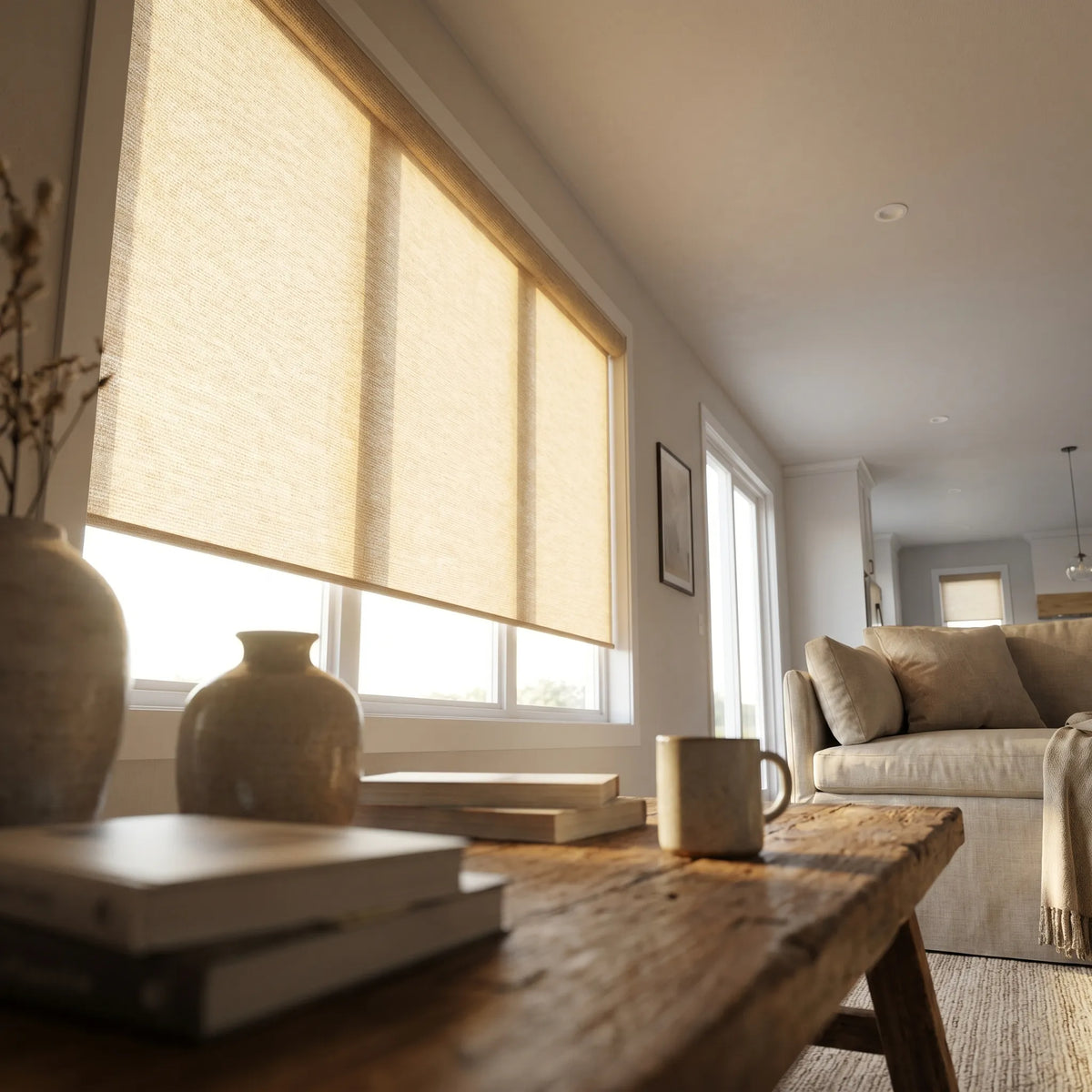
Solar fabrics are commonly available in 1%, 3%, and 5% openness. A 1% weave provides stronger glare and solar control with less outward visibility. A 3% weave is a popular balance for living areas. A 5% weave keeps the view brighter but allows more daylight and potential heat. In a west-facing sunroom with strong afternoon glare, begin with 1% or 3%; in a north-facing room, 5% may preserve the view comfortably.
Openness is only one variable. Exterior color, backing, glass type, and mount gaps change performance. Darker exterior-facing surfaces can absorb more heat, while reflective or light-colored backs may reduce solar gain. World Wide Shades can compare those tradeoffs through custom swatches, not just a color chart.
Keep the view without accepting glare
A sheer or very open shade can look beautiful when the sun is gentle but fail at the exact hour you want to use the room. Test samples against the real view and look toward the brightest glass. If you can see a sharp window reflection on a tablet or television, the shade is too open for that task or needs a second layer.
For mixed use, consider dual shades: a solar screen for daytime view and a room-darkening roller for naps, movies, or late-afternoon glare. The light-filtering shades guide and blackout curtains versus blackout shades comparison can help you weigh flexibility against bulk. Ask World Wide Shades for a layered recommendation.
Coordinate coverage across many windows
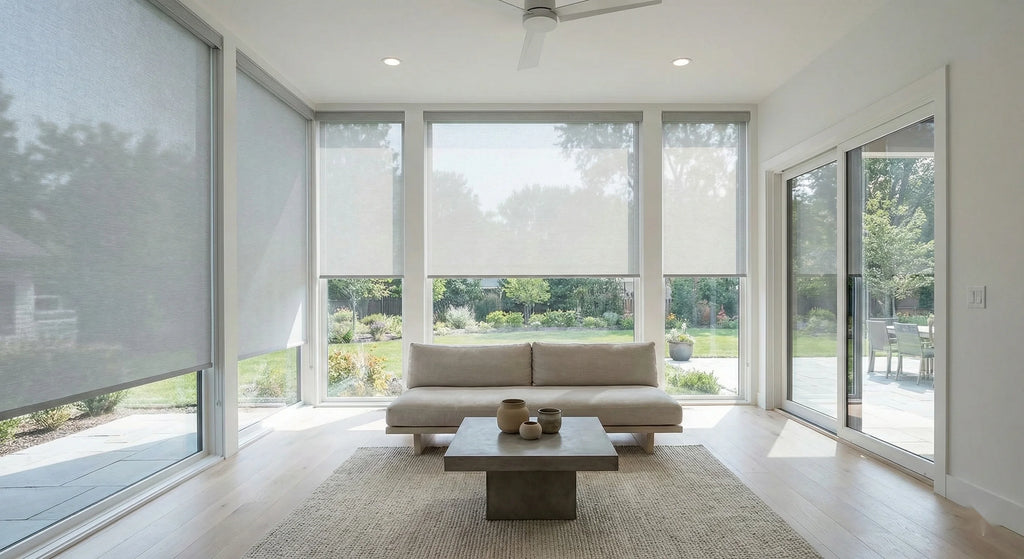
Sunrooms often have a wall of windows, corner glass, or a mix of fixed and operable panes. One giant shade can be heavy and difficult to align. Multiple shades give you zone control: lower the west wall while leaving the north wall open, or close only the panes over a reading chair. Keep the fabric and cassette visually consistent so the split lines feel intentional.
For corner windows, verify where shades meet and whether the roller tubes or brackets collide. The corner-window shade guide and large-window roller shade advice cover coordination issues. World Wide Shades can plan the meeting point before installation, when it is still easy to change.
Use motorization to manage the daily heat curve
Sunroom shades are often tall, numerous, or behind furniture, which makes motorization especially useful. A temperature or time-based routine can lower the west side before the room peaks, then raise the shades when the sun drops. A scene can preserve a view in the morning and prioritize glare control after lunch. Add a physical remote or wall switch so the room remains usable if the network is unavailable.
Battery motors can avoid opening walls in an existing sunroom; hardwired power is worth planning during construction or renovation. The smart-home motorized shades setup guide and motorized shade scene guide explain the control layer. Discuss motorization with World Wide Shades when the glass is tall or hard to reach.
Measure around architecture and HVAC
Record each opening separately at the top, middle, and bottom. Note beams, trim, mullions, handles, screens, transoms, ceiling fans, and supply vents. A shade that blocks an HVAC register can alter airflow, while a low-hanging roller can interfere with a door or a chair. Inside mounts look seamless when depth allows; outside mounts often reduce side gaps and cover irregular trim.
Sunrooms also reveal small alignment errors because the light is intense. Check whether the floor slopes, whether corner frames are square, and whether a shared headrail is within the system’s width limit. Have World Wide Shades review measurements before ordering a large group.
Add comfort without making false promises
A solar shade can reduce brightness and some solar gain, but no interior shade makes a single-pane glass room perform like an insulated wall. Pair shades with weatherstripping, efficient glazing, exterior overhangs, fans, and appropriate HVAC settings. Lower the shades before the heat arrives rather than after the room is already hot.
The energy-efficient window shades guide and south-facing windows guide show how orientation changes the strategy. World Wide Shades can help you select the shade as one part of a realistic comfort plan.
Budget by opening and control zone
Sunroom projects vary widely, but a broad planning range is $250 to $1,000 per opening for custom roller shades, with motorization, extra-wide spans, specialty cassettes, and difficult access increasing the total. A quote should show each shade’s width, fabric, openness, mount, motor, and installation assumptions. Dividing a wall into zones may cost more upfront but can reduce energy waste by letting you shade only the hot side.
Request a World Wide Shades estimate, or call (844) 674-2716 with the number of openings and their approximate dimensions. A useful quote begins with the sun path, not the room’s square footage.
A sunroom formula that balances view and comfort
For a west-facing sunroom, sample 1% and 3% solar fabrics in a neutral exterior finish, then test them at the peak glare hour. Use separate motorized shades on hot and cool walls. For a north-facing room, start with 5% openness and add a room-darkening layer only if the room doubles as a media space. Keep the view when it is comfortable; close the shade early when the glass starts storing heat.
World Wide Shades can help turn a beautiful but unpredictable room into a space you can use all day. The best choice is the one that makes the room’s light repeatable without hiding the landscape.
Test samples in the actual sun path
A sample viewed on a desk can be misleading because the strongest glare enters at an angle. Tape two or three fabrics to the glass and observe them for 15 minutes during the problem hour. Check the reflection on a phone, the temperature of the nearby chair, and whether you can still distinguish leaves or architectural details outside. Write down the result for each wall; a 3% fabric on the west wall may feel right while a 5% fabric on the north wall preserves a better view.
This small test also reveals whether the room-facing color feels too cool or too dark. Sunrooms often connect to kitchens or living rooms, so compare samples from the doorway as well as from the seating area. Share those observations with World Wide Shades for a recommendation grounded in your glass, furniture, and schedule.
FAQ: sunroom shades for heat and glare
Start with 1% to 3% solar openness for strong direct sun and glare. A 5% fabric can preserve more view in a milder or north-facing room, but it usually admits more light and heat.
They can reduce glare and some solar gain, especially when lowered before direct sun peaks. They are one part of a comfort plan that may also include glazing, ventilation, exterior shade, and HVAC.
Not necessarily. Different orientations and uses often benefit from separate fabrics or control zones. Matching the visible color and hardware can keep the room cohesive while performance varies by wall.
They are often worthwhile for tall, numerous, or furniture-blocked windows. Schedules and scenes can lower the shades before afternoon heat and raise them when the view is comfortable.
Yes. World Wide Shades can plan splits, corner meeting points, cassettes, and motorization for complex glazing. Call (844) 674-2716 or contact the team.
Note the sun direction, peak glare time, window sizes, and comfort problem, then compare World Wide Shades swatches. Build a tailored plan using those observations.