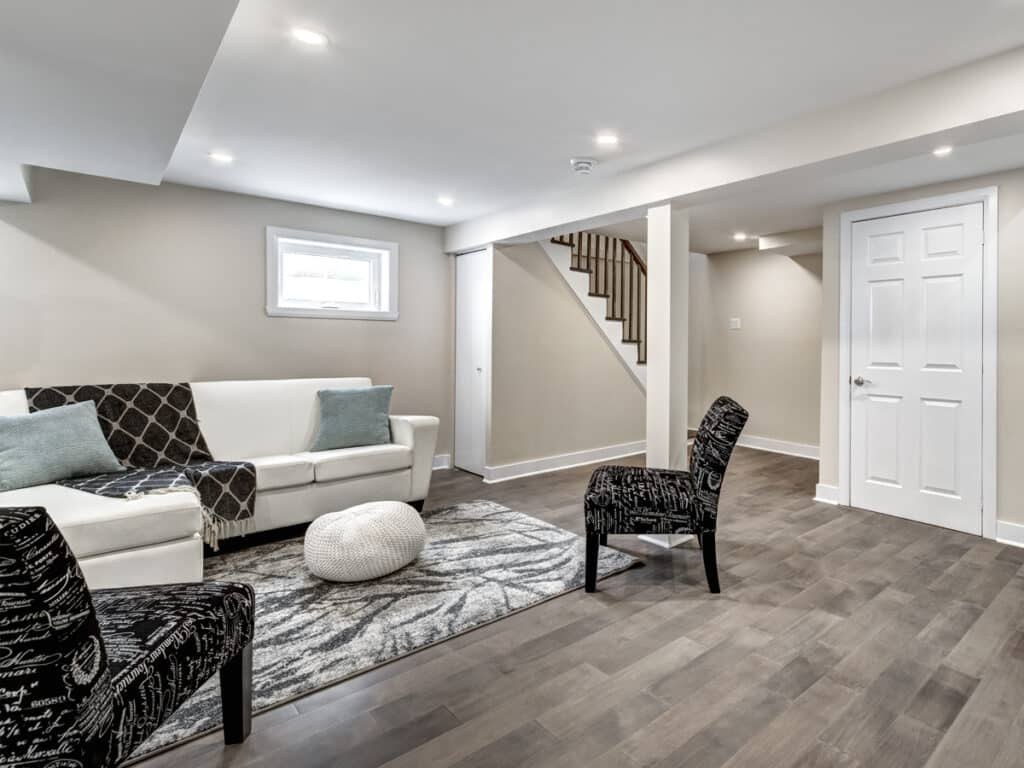
A basement bedroom has a different window problem than an upstairs room. It may need privacy from a walkway, more daytime brightness, protection from damp conditions, and a shade that never interferes with an emergency escape opening. Basement bedroom window shades should manage light and comfort while preserving clear access to the window hardware and egress path.
World Wide Shades designs custom roller, solar, light-filtering, blackout, cordless, and motorized shades for finished basements, garden-level bedrooms, and lower-level guest suites. Use the online shade builder to compare fabrics, order swatches against flooring and wall paint, or contact World Wide Shades for an opening with a window well, deep trim, or unusual sill. The shade is important, but it must never turn a safety opening into an obstruction.
Start with egress and access
If the basement room is used as a sleeping room, confirm the local building requirements for emergency escape and rescue openings before choosing a shade. Requirements vary by jurisdiction and window type, but the opening generally needs to be operable from inside without a key or special knowledge. A shade, blind, curtain, furniture piece, or security device should not prevent a person from reaching and operating the window.
Measure the handle location, the clear opening, the window well, and the route to the floor. Keep the bottom rail, headrail, and any side channel out of the operating path. Do not mount a shade so tightly over a casement crank that the operator cannot turn it. World Wide Shades can help coordinate a treatment, but the local code official or qualified contractor should confirm egress compliance.
For broader safety guidance, review child-safe window treatments and motorized vs. cordless shades safety. Contact World Wide Shades with a photo of the window hardware before ordering.
Why basement bedrooms need thoughtful light control
Basement rooms are often dim by day but exposed to bright security lights at night. A small window may create a high-contrast patch on a wall, while a garden-level opening can receive direct sun. A light-filtering shade can increase privacy without making the room feel darker. Blackout fabric is useful when the room faces a parking lot or a bright window well light.
A shade should be selected for the actual direction and depth of the window:
- North-facing: preserve as much diffuse daylight as possible.
- East-facing: manage morning glare near the bed.
- South-facing: control stronger solar heat and UV exposure in summer.
- West-facing: reduce low afternoon glare and late-day heat.
Compare best shades for south-facing windows, UV protection window shades, and energy-efficient window shades. Build a daylight plan with World Wide Shades rather than choosing a dark fabric simply because the room is below grade.
Privacy from window wells and walkways
A window well can put a basement bedroom directly at eye level with a visitor, neighbor, or person walking past the house. Even a small opening may feel exposed when the bed is nearby. Solar shades can work in daytime when the outside is brighter than the room, but interior lights can reverse the privacy effect at night.
If privacy is a priority, select room-darkening or opaque fabric that can close fully. An outside mount may cover edge gaps if the wall allows it, but keep the shade clear of the sill, well drainage, and window operation. For a ground-level door or adjacent glass, coordinate with sliding glass door roller shades or roller shades for French doors.
World Wide Shades can balance privacy with daylight. Order swatches and test them with the bedroom lights on after sunset. Contact the team for a window below grade or within a narrow well.
Fabric choices for basement conditions
Light-filtering polyester rollers diffuse daylight and can make a small room feel less cave-like. Warm white, sand, pale gray, or muted sage can reflect some light without looking stark. The light-filtering shades guide explains how translucent materials change the feel of the room.
Solar screens preserve a view and reduce glare on garden-level windows. A 1% or 3% openness factor offers stronger control; 5% or 10% preserves more view but admits more brightness and provides less nighttime privacy. Confirm the fabric's tested performance rather than relying only on the percentage.
Room-darkening is useful for sleep and streetlight control. Blackout can be appropriate when a security light shines directly into the room or the window faces a brightly lit well. Edge gaps matter, so consider an outside mount or cassette if the opening and egress geometry allow it. Read blackout vs. room-darkening roller shades.
A blackout shade must never prevent fast window operation. World Wide Shades can suggest a configuration that stays clear of handles and escape hardware. Start the specification and ask questions before fabrication.
Moisture, condensation, and air movement
Basements can have higher relative humidity and cooler glass. If condensation appears on the pane or frame, solve the underlying moisture and ventilation problem before installing a fabric treatment. A shade should not sit against wet glass for long periods. Keep the roll and bottom rail clear of damp sills.
Use a smooth, dustable fabric and follow care directions. Dust with a soft brush or low-suction vacuum; do not spray cleaner directly onto the material. If the room has a dehumidifier, do not block its air path with furniture or a shade. The roller shades kitchen and bathroom guide includes useful moisture-care principles, even though a bedroom is a different application.
Contact World Wide Shades if the room's relative humidity varies widely or if the shade will sit near a below-grade masonry opening. Call (844) 674-2716 for a complex window well, high transom, or casement crank.
Cordless and motorized options
Cordless manual shades are a strong choice for a reachable basement window. They avoid dangling cords beside a bed and keep the small room visually clean. Motorization is helpful for high windows, multiple basement bedrooms, or an opening that is difficult to reach behind a bed.
Rechargeable motors commonly add $150 to $350 per opening. Hardwired systems can add $300 to $600 or more when wiring must be routed through finished walls. A timer can close shades at dusk for privacy, while a sunrise schedule can open light-filtering fabric gradually. Review smart-home motorized shades setup and program motorized shade schedules.
World Wide Shades can plan automation without compromising egress access. Configure a cordless or motorized shade, or contact World Wide Shades for a safety-first review. Call (844) 674-2716 when the opening is above furniture or behind a bed.
Measuring a basement window correctly
Record the rough opening and the finished frame separately. Measure width at the top, middle, and bottom; use the narrowest inside measurement. Measure height at the left, center, and right. Note sill slope, casing depth, handle projection, crank clearance, window-well walls, and any trim that could prevent a flat shade from sitting correctly.
For an outside mount, plan side overlap without covering the window's release hardware. A cassette can hide the roll, but it must not reduce the clear opening or interfere with a casement arm. The how to measure windows for roller shades guide covers measurement basics; a basement egress opening deserves an extra verification step.
Send photos and measurements to World Wide Shades for a fit review. Order samples with the room's actual warm or cool LED lighting.
Making a dim room feel brighter
Light control is not the same as maximum opacity. If the basement bedroom needs more daytime brightness, use a light-filtering shade with a pale backing or a solar screen that preserves the view. Place a mirror perpendicular to the window rather than directly opposite it if glare becomes distracting. Use layered lamps so the room is not dependent on a single ceiling fixture.
A warm white or pale natural shade may reflect more light than charcoal, but the effect depends on the glass and fabric. The window shades color guide can help you avoid a color that makes the room feel colder. Order swatches and compare them at 8 a.m., midday, and after sunset.
Cost planning
A custom manual basement shade may start around $150 to $350 for a standard opening. Blackout fabric, cassettes, outside mounts, side channels, specialty casement clearance, and motorization can raise one opening to $400 to $1,000 or more. A two-window guest suite may range from $400 to $2,000 depending on size and control needs.
Do not save money by choosing a treatment that blocks egress or cannot handle the room's moisture. Build a quote, request swatches, or contact World Wide Shades for a window-by-window recommendation.
Basement bedroom shade FAQ
It can, but it must not prevent the window from opening or keep someone from reaching the handle. Confirm local egress requirements and choose a mount that leaves the clear operating path accessible.
They can be useful for streetlights, bright window wells, or daytime sleep. If the room is already dark, a light-filtering fabric may provide better daytime comfort while still protecting privacy.
Use a smooth, easy-care fabric suited to the manufacturer's environment guidance, and solve condensation or high humidity first. No shade should remain in contact with wet glass or a leaking sill.
Cordless operation avoids dangling cords and is a strong choice beside beds and furniture. Keep the window hardware accessible and follow installation instructions.
Custom manual shades often start around $150 to $350 per opening. Blackout, specialty clearance, outside mounting, cassettes, and motorization can raise the total to $400 to $1,000 or more.
World Wide Shades can create privacy and sleep comfort without compromising the basement's most important safety function. Start with the builder, order samples, or contact World Wide Shades for a careful fit review.