Why Sunrise and Sunset Scheduling Beats a Fixed Clock
A shade that always opens at 7:00 a.m. ignores the fact that sunrise changes by more than two hours across the year in many U.S. locations. Sunrise and sunset schedules follow local solar events, so they can support natural light in winter, privacy at dusk, and glare control without rebuilding the routine every month.
The most comfortable automation uses an offset rather than an exact event. Open a bedroom shade 10 to 20 minutes after sunrise, or close a street-facing shade 15 minutes before sunset. World Wide Shades designs motorized shades with the fabric, power source, and control system in one plan. Start with the World Wide Shades builder to configure rooms and positions before you automate them.
For connected-home basics, read our smart home motorized shades setup guide. If you already use Alexa, see roller shades with Alexa routines for voice and scene setup.
The Best Schedule for Each Room
A full open at sunrise can wake someone too early, especially with blackout fabric. Start at 10% or 20% open at sunrise, wait 15 minutes, then move to 50% or 70%. This two-step scene introduces daylight gradually and gives sleepers a manual override.
For a room that must stay dark, schedule the shade to remain closed until a weekday alarm or occupancy event. Fabric choice matters more than timing: compare best window shades for bedrooms and blackout options before assuming a schedule will solve early light.
Use a morning opening and a solar-position adjustment later in the day. A south-facing living room might open to 70% in the morning, lower to 40% during peak glare, and return to 60% after the sun moves. A west-facing room often needs the largest reduction in late afternoon.
Solar screen fabrics are available in openness values such as 1%, 3%, and 5%. A tighter 1% weave usually gives more glare control than a 5% weave, but view and nighttime privacy change with the room’s lighting. See best shades for south-facing windows and UV protection window shades when furniture or flooring is a concern.
Schedule front-room shades to close 10 to 20 minutes before local sunset, then reopen only after sunrise. The short lead time accounts for the fact that people can see into a bright room before the outdoor sky is completely dark. Set a 70% position if the fabric gives enough privacy, or use 100% when sight lines are direct.
Do not use “sunset” as a synonym for “everyone is home.” A household may be away, entertaining, or still working near the window. Combine the event with home/away status where your platform supports it, or use a manual privacy scene.
Lower blackout shades at sunset or 15 minutes before a movie routine. If a small beam remains around the fabric, a schedule cannot fix it; an outside mount, cassette, or side channel is needed. Our blackout curtains versus blackout shades comparison covers the tradeoffs, and our roller shade side-channel guide explains perimeter coverage.
Add Offsets, Limits, and Safety Rules
Most platforms allow an offset such as “at sunrise plus 15 minutes” or “at sunset minus 10 minutes.” Use one offset for a group only when the rooms share a goal. A bedroom may need sunrise plus 20 minutes, while a kitchen can open at sunrise. Separate scenes are more predictable than one universal schedule.
Set a lower and upper position for each shade. Positions such as 0%, 50%, and 100% are easy to understand, but fabric roll diameter and motor calibration can make the visible result vary. Calibrate limits with the shade fully installed, then test the partial position in bright daylight and at night.
Add these safeguards:
- Do not move a shade when a door, handle, plant, or furniture blocks the path.
- Avoid schedules that cycle a shade repeatedly within a short period.
- Keep a remote or app override available in every occupied room.
- Use quiet speed or a delayed start in sleeping spaces when supported.
- Keep charging cables and remotes out of children’s reach.
Our child-safe window treatments guide covers cordless and motorized safety. If you need frequent movement but do not want battery maintenance, compare power options in battery versus hardwired motorized shades.
Seasonal and Regional Adjustments
A sunrise event changes with latitude and season, but the shade’s job also changes with weather and room use. In summer, closing west-facing shades before peak afternoon sun can reduce glare and solar heat. In winter, opening a south-facing shade during daylight may admit useful warmth, while closing it after sunset adds a privacy and insulation layer.
Cloud cover is another reason not to over-automate. A light sensor or solar-irradiance rule can complement sunrise and sunset events, but the sensor must be positioned and calibrated so a lamp does not fool it at night. If your platform has no sensor, use a conservative position and let occupants adjust manually.
For cold climates, see cold-climate shade energy efficiency. For hot or humid rooms, use the fabric advice in roller shades for kitchen and bathroom before scheduling frequent cycles.
Set Up and Commission a Schedule
- Confirm the home’s address, time zone, and daylight-saving setting in the smart-home platform.
- Name each shade by room and window so the schedule targets the right device.
- Set one test schedule for a single shade at a safe partial position.
- Verify the reported sunrise or sunset time against a trusted local weather or astronomical app.
- Add an offset, then observe the actual light and privacy result for three days.
- Copy the pattern to similar windows, but do not assume north, east, south, and west rooms need the same position.
- Review battery level, motor noise, and obstructions after the first week.
A schedule is not finished when the app saves it. It is finished when the shade moves at the intended time, reaches the intended position, and does not create glare, privacy, or safety problems. World Wide Shades can help translate those goals into a motorized shade specification. Contact World Wide Shades with window direction, room use, and desired open positions. Call (844) 674-2716 if you want to test a sample position with a specialist before ordering.
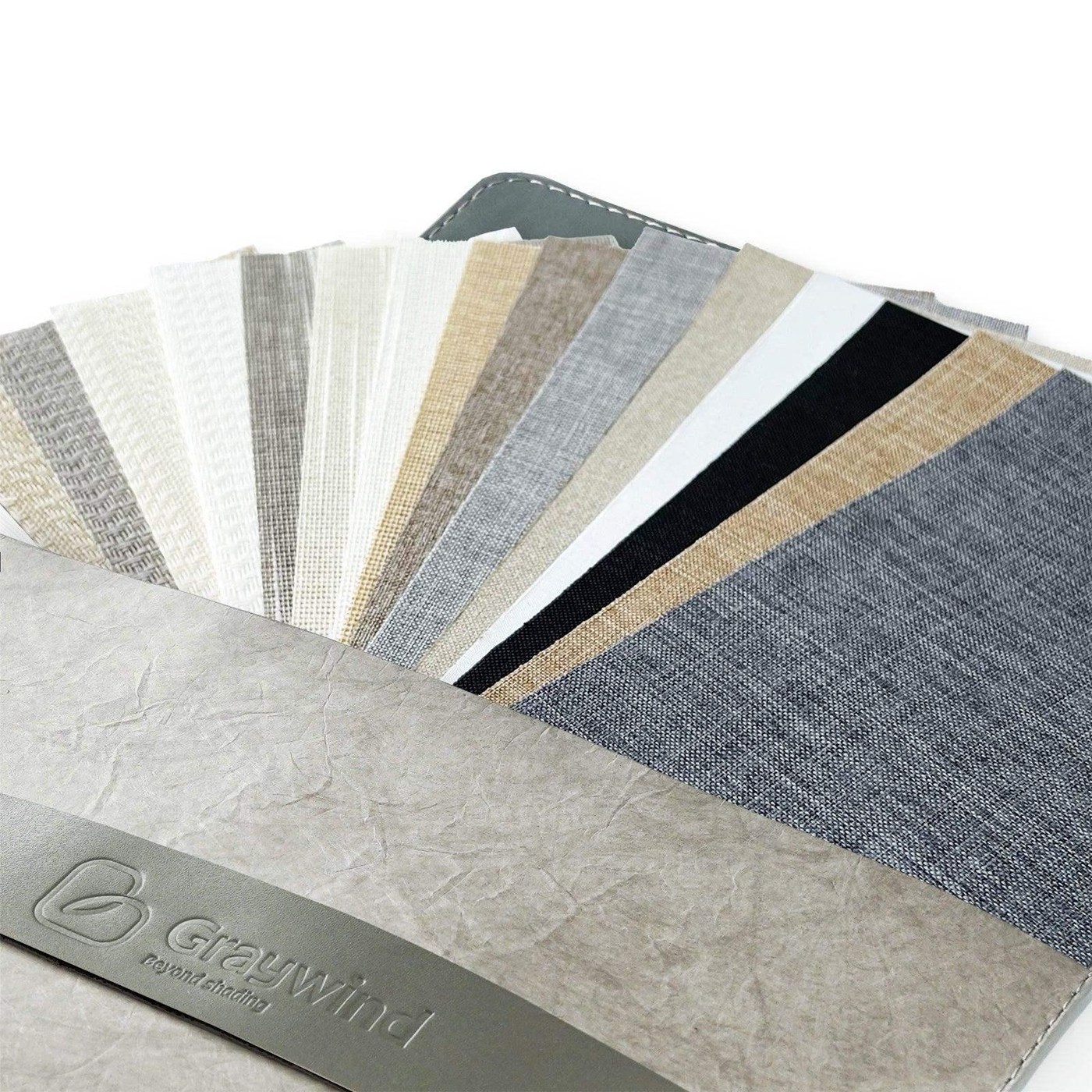
Use free World Wide Shades swatches to compare the fabric’s daytime appearance before committing. If you want position-aware scenes in every room, build your motorized shade plan and include the desired sunrise and sunset offsets in your notes.
FAQ: Sunrise and Sunset Shade Schedules
Start 10 to 20 minutes before local sunset for street-facing rooms, then adjust after observing the view from outside. A bright interior can be visible before the sun is fully below the horizon, so the best offset depends on window direction, floor height, and fabric.
Not necessarily. Opening 10 to 20 minutes after sunrise, or in two gradual steps, is often more comfortable. Blackout fabric, seasonal sunrise time, and the household’s wake time should determine the position.
They should when the platform has the correct address and time zone, but verify the setting after a move, router replacement, or account change. A fixed clock schedule will not follow seasonal solar changes the way a true sunrise or sunset trigger does.
They can help manage solar heat gain and some winter heat loss, but results depend on window orientation, glazing, climate, fabric, and HVAC behavior. Use schedules as one layer alongside appropriate fabric and normal thermostat settings, not as a guaranteed savings percentage.
Check the home address, time zone, daylight-saving setting, sunrise/sunset offset, and whether another routine or geofence also controls the shade. Then check hub connectivity and battery level. Duplicate schedules are a common cause of unexpected movement.
Ask World Wide Shades to build a schedule-ready motorized shade system, or call (844) 674-2716 for help selecting fabrics, positions, and power options. Call (844) 674-2716 again before finalizing the order if your home has several orientations or mixed control platforms.