Why a den needs more than a dark window treatment
A den often serves three jobs: reading room, television room, and occasional home office. A shade that makes the screen readable may leave the room flat and dim; a shade that preserves the view may put a bright reflection across the monitor. The right den window shades reduce the contrast that causes glare while keeping the room's texture and warmth.
Start with the screen, the viewer, and the sun path. World Wide Shades can map where the television, desk, and favorite chair sit before recommending a fabric. Plan glare control for your den when you want comfort without turning the room into a blackout box.
For related rooms, see best roller shades for a living room, home library window shades for glare, and home office shades for glare and Zoom cameras.
Find the source of the glare
If a sunbeam reaches the television or monitor, close the shade before the beam arrives. A 1%, 3%, or 5% solar screen can reduce direct brightness while preserving some view. A lower openness fabric generally offers more control, but the best choice depends on direction, glass, and how much daylight you want.
Use a phone compass or a simple note of morning and afternoon conditions to identify direction. East-facing windows create early glare, south-facing windows can stay bright for hours, and west-facing windows are often hardest during late-day viewing. Our best shades for south-facing windows and energy-efficient window shades guides add orientation context.
Even without direct sun, a bright window behind the viewer can reflect in a glossy screen. Move a sample shade to the window and compare the image on the screen from the main chair. A light-filtering roller can soften the window-to-room contrast; a solar screen can retain the outside view while reducing the bright field.
Dark interior finishes can make reflections look stronger. A gray or charcoal screen may preserve contrast better than a bright white fabric, while a light backing can reduce solar heat. Ask World Wide Shades for a den glare test instead of choosing by color alone.
Glare may come from a white wall opposite the screen, a lamp behind the viewer, or a glass cabinet. Temporarily turn off lights and cover reflective surfaces to isolate the window's contribution. Window shades are most effective when the room layout and lighting support them.
Choose the right shade fabric
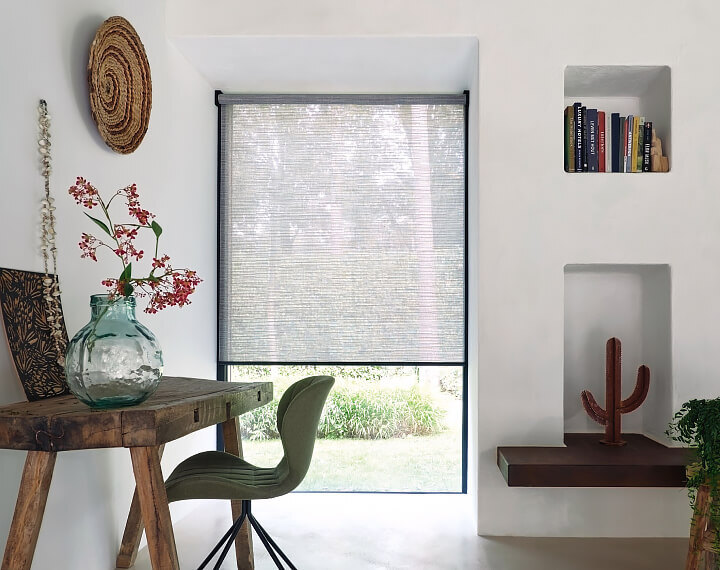
Solar screens use an open weave to soften sunlight and preserve an outward view. Common openness values include 1%, 3%, 5%, and 10%. A 3% or 5% screen is often a practical starting point for a den because it balances glare control and daylight, but a darker or tighter screen may be needed for a west-facing window.
Solar screen privacy reverses at night: if the den is brighter inside than outside, silhouettes may be visible. Use a second layer or a more closed fabric when the room faces neighbors. Compare solar shades versus blackout shades and solar shades versus roller shades before deciding.
Light-filtering fabric diffuses the view and creates an even glow. It can make a reading den feel softer than a technical screen, particularly when the room has wood shelves or woven upholstery. It will not usually preserve the same clear exterior view, but it can hide visual distractions and reduce harsh contrast.
Read light-filtering shades guide for the difference between diffusion and darkness. Browse World Wide Shades swatches to compare texture next to the den's bookcases and flooring.
If the den is primarily a projector room or movie room, a blackout roller may be appropriate. A shade can block light through the fabric, but side gaps and the bottom edge still matter. Outside mounting with overlap or a cassette with side-channel options can improve performance.
For a dedicated theater, compare blackout shades for a home theater and blackout curtains versus blackout shades. World Wide Shades can recommend a layered system when the room has to switch from daylight reading to a dark film environment.
Match the shade to the den's activities
Readers need enough diffuse light to see a page without a hot patch on the table. A light-filtering shade or a higher-openness screen can keep daylight useful. Place a floor or task lamp beside the chair rather than relying on a bright window behind the book.
Reduce reflections at the screen's viewing angle. Lower the shade before the sun reaches the glass, then raise it when the glare period ends. If the den has multiple windows, control the troublesome opening separately rather than darkening the entire wall.
For a monitor, look for even illumination on the face and keyboard. A shade that stops a bright strip across the screen may still leave a camera facing a high-contrast background. Pair the shade with a front-facing lamp and a motorized preset if the desk is used on a schedule. The smart home motorized shades setup guide explains grouping and scenes.
The den should not feel like a technical workspace all evening. Warm neutrals, a subtle weave, and a clean fascia can keep the treatment residential. Use the same headrail color on adjacent windows and vary only the performance fabric if required.
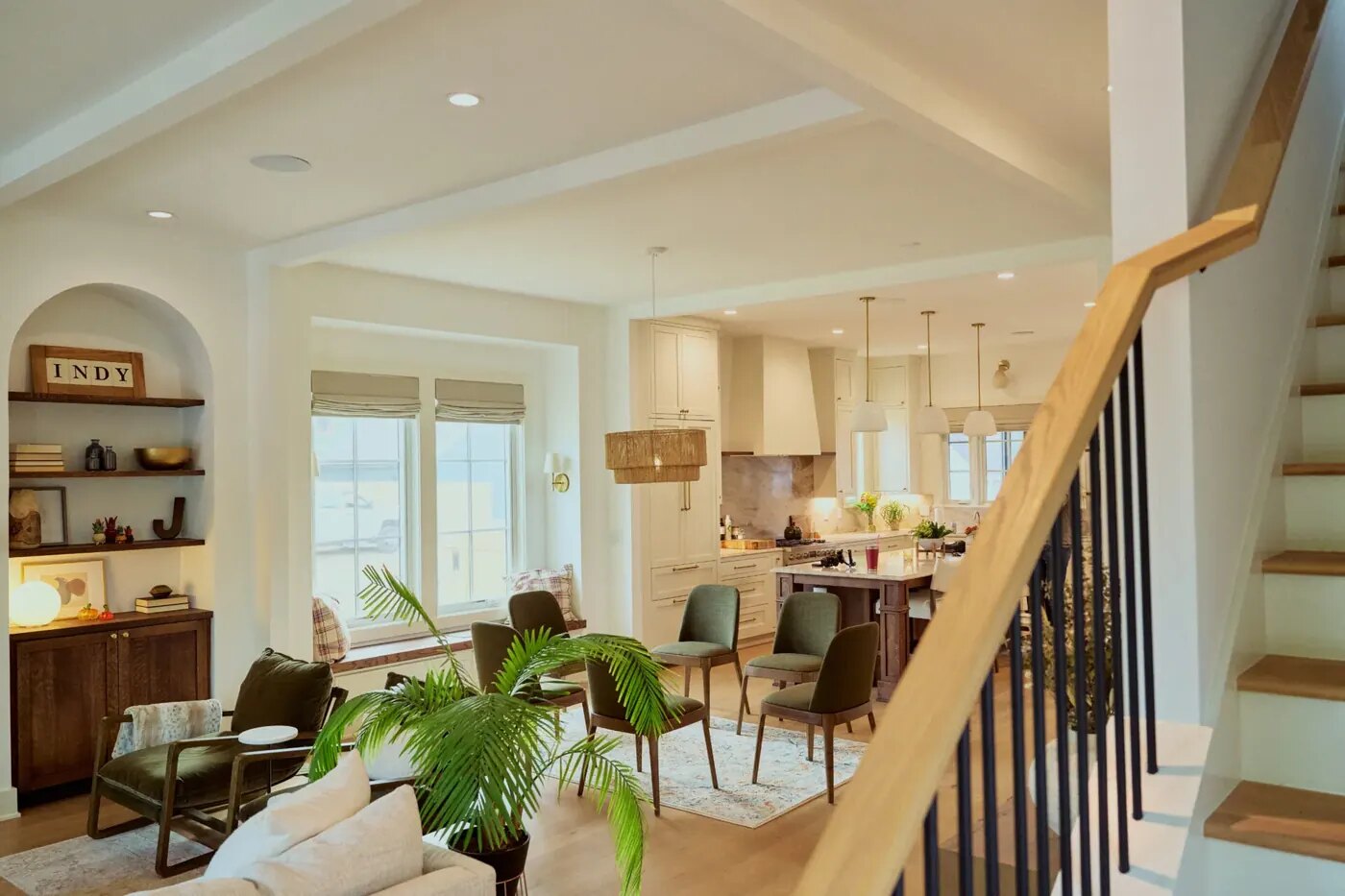
World Wide Shades can coordinate den shades with living, dining, or hallway windows. Start a whole-home window plan or call (844) 674-2716 if the den is part of a connected open floor plan.
Measure glare, not just the window
Record the window width at the top, middle, and bottom and height at the left, center, and right. Note trim depth, handles, nearby shelves, and the distance from the glass to the television or desk. Photograph the den from the main seating position with the screen visible.
Mark the intended shade coverage with painter's tape. An inside mount may leave side gaps that are acceptable for reading but distracting for a projector. An outside mount can improve coverage but may need clearance above the trim. For a wide window, split the shade at a mullion or a natural break rather than placing a seam in the screen's reflection path.
If a door shares the wall, review roller shades for French doors. If the den has an unusual corner, see corner window dual shades. Send measurements to World Wide Shades for a mount and panel recommendation.
Control the shade with your routine
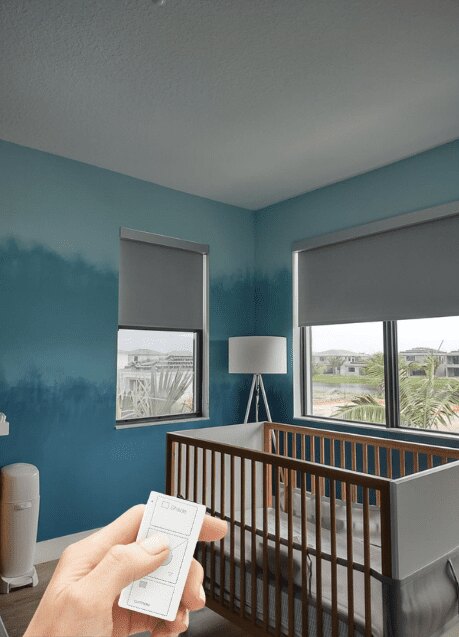
Manual operation is fine when the window is reachable and the den is used casually. Motorization becomes useful when the shade is behind a sofa, the room has two layers, or the west-facing glare arrives at a predictable hour. Program a “reading” position, a “screen” position, and an “evening privacy” position.
Rechargeable motors can avoid opening a wall, while hardwired power makes sense during a remodel or on a large bank of windows. Keep remote controls out of the seating clutter and use a wall control where guests can find it. World Wide Shades can coordinate quiet motors and group control without making the den feel like a commercial installation. Discuss motorized options with World Wide Shades or call (844) 674-2716.
Design details that keep the room warm
Shade color is only one part of warmth. A fine weave, a fabric with a soft reverse, and a narrow cassette can look calmer than a shiny white roller. Match the room side to wood tones, upholstery, and wall color rather than the exterior view. The window shades color guide helps compare warm, cool, and neutral palettes.
Consider UV exposure if the den has books, art, leather, or wood near the window. A shade that reduces direct sunlight can slow fading, although no window treatment eliminates all exposure. Review UV protection window shades and woven wood shades guide when texture and material protection matter together.
Mistakes that make glare worse
A privacy fabric can still produce a bright reflection on a screen. Test the material with the screen on and from the actual chair.
A very dark shade solves one moment but can make a reading den feel closed during the rest of the day. Layer a screen or light-filtering fabric when the room needs more flexibility.
Bookcases, picture frames, trim, and handles can stop a roller from lowering fully. Measure the hardware and mark the cassette depth before ordering.
Solar screens do not provide the same privacy after dark. Add a closed layer or choose a more private fabric when the den faces a close neighbor.
FAQ: den window shades and glare control
A 3% or 5% solar screen is a strong starting point when you want view and glare reduction. Choose a tighter or darker screen for stronger sun, or add a room-darkening layer when the den also functions as a theater.
They can reduce direct brightness and window-to-screen contrast, but results depend on the sun angle, screen finish, room layout, and fabric openness. Test a sample from the viewing position at the worst hour.
Not necessarily, but they may be excessive if the room is also used for reading or conversation. A dual shade can provide a screen layer for daytime and a blackout layer for films.
Inside mount is neat when the recess is deep and square. Outside mount generally offers more overlap and light control, which can matter for glare-sensitive screens, but it needs clear wall space around the window.
They can reduce direct sunlight and UV exposure, which may slow fading, but performance varies with glazing and fabric. Combine shades with sensible placement for valuable books, art, and leather.
World Wide Shades can review photos, sun direction, screen position, measurements, and samples to recommend a fabric, mount, and control plan. Start a den project, request swatches, or call (844) 674-2716.
Keep the den comfortable in every mode
The right shade lets a den shift from bright reading room to low-glare screen space without losing its residential character. Test the fabric at the screen, choose coverage that fits the opening, and program the control around the sun. World Wide Shades can coordinate performance and style across the den and the rest of your home. Contact World Wide Shades to begin.